A team of researchers in London believes it can predict future gentrification. The model is built on evidence of social diversity, which is often thought of as a positive outcome.



According to an article by Nathan Collins, data scientists from the University of Cambridge think they're found a way to predict gentrification, using data collected on Twitter and Foursquare. According to the model, the most likely places to gentrify attract the most socially diverse crowds.
The article details the process of building the data archive that informed the model, especially with regard to attention paid the differences between geographic networks and social networks.
Another important metric contributing to the research: the United Kingdom's Index of Multiple Deprivation, which, according to Collins, "takes into account income, education, environmental factors such as air quality, and more to quantify the socioeconomic state of affairs in localities across the U.K., including each of London’s 32 boroughs." Collins explains in more detail how that data keyed into the research findings on how social diversity predicts gentrification.
Read the full story: How to See Gentrification Coming
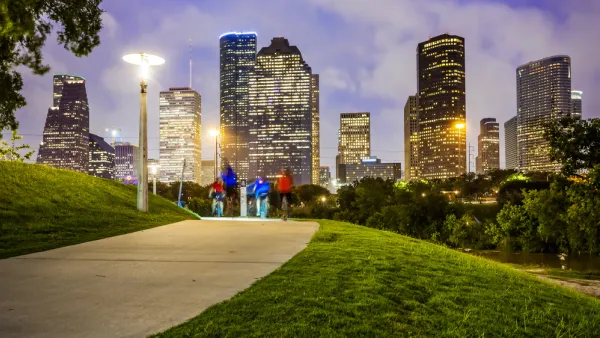
The Gentrification Effect of Urban Parks
New research finds that different types of parks correlate with different gentrification effects, adding to the complexity of urban change.
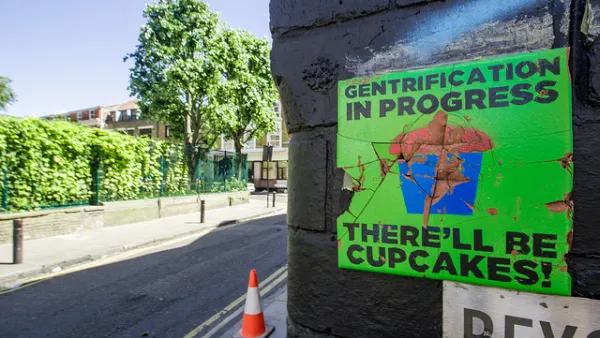
Review: 'The Handbook of Gentrification Studies'
A book by Loretta Lees and Martin Phillips, published in 2018, is reviewed and recommended to "graduates studying anthropology of cities, urbanism, geography, and new urban identities."

'Climate Gentrification' Is Exacerbating Economic Inequality in Miami
A new study shows that over the last several decades the price of real estate has been heavily influenced by the actual and anticipated effects of climate change.

Washington state to charge fee to drivers with fuel-efficient cars
Revenue from the fee will go towards supporting the state’s highways.

Illinois considers spending $1 billion in taxpayer money on data center
A quantum computing campus and data center are currently under construction in Chicago.

Trump to blast ‘hydrocarbon highway’ through ‘world’s longest art gallery’
Environmental and historic preservation groups are suing to stop the project.

NYC, state sue feds over mixed-immigration-status housing assistance rule
The state’s lawsuit argues that the rule change violates the Administrative Procedure Act.

Michigan to turn neighborhood into virtual power plant
Residents will soon be able to divert their excess energy to the grid in exchange for compensation.

Data center, mining project swarm to long-awaited Alaska railroad line
The state-owned railroad approved final plans for the spur line this week; the project is expected to cost $311 million, mostly funded by the federal government

FREE Course: Walkable City 1: Why Walkability?
After describing his path towards focusing on walkability as the essence of good planning, Jeff Speck marches through his five principal reasons for making more walkable places.
Reinventing Malls: Planning Alchemy—Turning Gray Fields Into Gold
The course focuses on the opportunities and imperatives that shape reinvention of mall sites.

City of Charlotte
City of Rosemead
Rutgers University, Edward J. Bloustein School of Planning and Public Policy
University of Michigan School for Environment and Sustainability (SEAS)
Hunter College, City University of New York (CUNY)
The Architects Foundation
University District Partnership