Thanks to the elimination of minimum parking requirements downtown, a vacant one-story building "could be transformed into a 30-story tower with 135 luxury apartments, office space, a restaurant and a bar," reports the Austin-American Statesman.


Recently there have been reports showing that millennials are no different than preceding generations in that that they prefer suburbia over living in cities and would own cars if they could afford them, thus it's reassuring to read about urban developments that dispel those findings, particularly in Texas. Unlike a study, Congress Development Partners Ltd., has purchased a property to house carless millennials (or any other age group) who do indeed want to live downtown.
"The project — called The Avenue — won’t include a parking garage or any space for auto parking," writes Shonda Novak, Austin American-Statesman real estate reporter.
It is being billed by its developers as the first “truly car-free luxury development in downtown Austin,” designed to encourage biking, walking, ride-sharing and public transportation.
Richard Suttle Jr., an Austin attorney representing the developers in the city review process, said the demographic the project is targeting — people who live and work downtown — is on the rise.
“They move into this project knowing that there won’t be a place for a car,” Suttle said. “There are a lot of people living downtown now that don’t have a car. The downtown workforce is getting younger, and the younger generation is moving away from having to have a car. There is a (bike rental) facility adjacent to this site, and it will probably expand.”
The zoning change to eliminate downtown parking requirements was initiated on April 26, 2012, when the "City Council passed a resolution directing staff to develop an ordinance to reduce or eliminate minimum parking space requirements in the Central Business District and Downtown Mixed Use District." [Ordinance Amendment Review Sheet (MS Doc)].
"Supporters of the move say the minimum requirement has caused a parking surplus downtown, encouraging people to use their cars rather than bikes, buses and rail," wrote Austin American-Statesman transportation reporter Ben Wear on Dec. 12, 2012.
Take away that requirement, they say, and eventually garage parking will become a more scarce (and expensive) resource, encouraging people to use alternative transportation.
Financing
"Nelsen said developers hope to break ground by May 1, 2017," writes Novak.
The project is expected to take two years to build. Brad Nelsen [President of Nelsen Partners, which has offices in Austin and Scottsdale, Ariz.], said his team is still working to secure financing for the project, which he estimates will cost $55 million to $60 million.
It will be interesting to see if financing is secured. It's been said that the lending industry is wary of developments providing what they believe to be insufficient parking.
"In many parts of America, efforts to build transit-oriented, walkable communities are foiled because financing can't be secured for projects that differ from the templates lenders have become used to since World War II," wrote Noah Kazis for Streetsblog in 2010.
In Salt Lake City, for example, the local government's push for transit-oriented development has been stymied because local banks won't lend to projects without huge parking lots.
The apartments
"The planned high-rise would have apartments ranging from 420 square feet to 970 square feet with efficient designs to allow people to live comfortably in a smaller footprint, Brad Nelsen said," writes Novak.
With their smaller size, units will have rents that are about 15 percent lower than the going rate downtown, where a one-bedroom can range from $2,100 a month to $2,300 a month, the developers said
Plenty of transportation options allow for car-free living in downtown Austin.
“Our transit system is more robust than it has been in the past, and there are more options today for on-demand transit such as Car2Go, Uber and Lyft and B-Cycle,” said Jerry Rusthoven in the city’s Planning and Zoning Department.
Correspondent's note: Article reprinted here by American Planning Association.
Hat tip to Len Conly, Sierra Club transportation forum.
FULL STORY: 30-story ‘car-free’ apartment tower planned on Congress Avenue

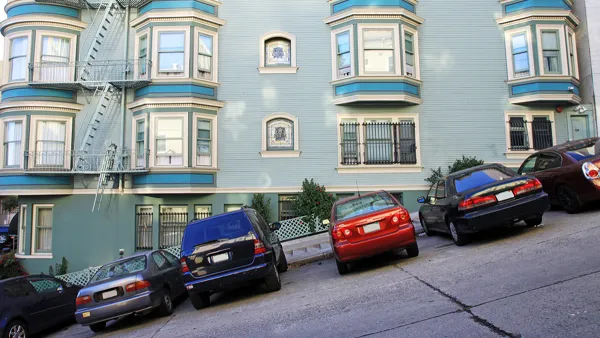
San Francisco's Housing Craze: More People Fewer Cars
Something strange is taking place in the City by the Bay. It's not just experiencing a growth in carless households—carless households are actually replacing those with cars.
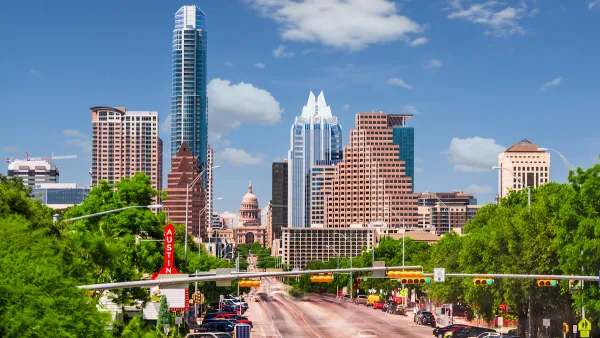
Austin Ends Parking Minimums
The city approved changes called for by a May resolution that eliminate parking requirements in all neighborhoods.
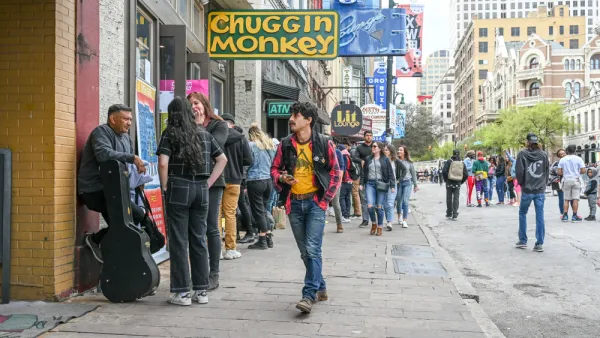
Austin Could Eliminate Parking Minimums for Bars
Proponents of the resolution say the city’s parking mandates encourage drunk driving and drive up construction costs for small businesses.

The state-sanctioned urbicide of Austin
People don’t kill cities. Freeways do.

US to reduce Colorado River water deliveries to Mexico
A new Colorado Treaty amendment reduces Mexico’s Colorado River water allocation by 250,000 acre feet.

New Jersey’s second-largest city bans standalone data centers
Jersey City will continue to allow co-location facilities, such as those meant for research institutions that store their own data.

Amtrak not solely to blame for New Jersey commuter rail's unreliability, report finds
A new study from the Garden State Initiative found that NJ Transit’s budget grew 20% across a 4 year period, but reliability declined significantly over the same period.

EPA erases limits on planet-warming pollution from power plants
Under Monday’s plan, power plants would still have some limits on how much mercury, arsenic and other contaminants they can emit.

Phoenix announces new on-demand transit service, more frequent RAPID buses
Both new services will launch in October, and are part of Phoenix's Project Effective Access Solutions for Easing Congestion.

FREE Course: Walkable City 1: Why Walkability?
After describing his path towards focusing on walkability as the essence of good planning, Jeff Speck marches through his five principal reasons for making more walkable places.
Reinventing Malls: Planning Alchemy—Turning Gray Fields Into Gold
The course focuses on the opportunities and imperatives that shape reinvention of mall sites.

Eagle County Government
Harvard University Graduate School of Design
Nashville Planning Department
The Architects Foundation
University of Cincinnati Online
The Pocatello Development Authority
The Urban Renewal Agency of the City of Pocatello
Journal of the American Planning Association