A new zoning law in Toronto could enable its hundreds of suburban tower developments to become vibrant and active communities.


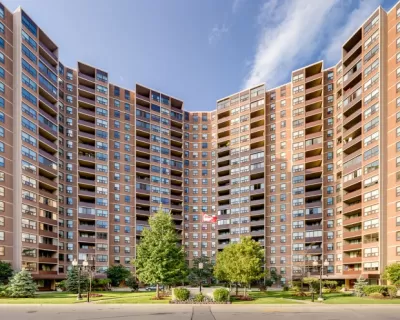
Cities all over the world need to take a close look at their suburbs. In many cases, low-density development correlates with a lack of transit and other infrastructure. Often, neighborhoods struggle to achieve the critical mass of human activity required for thriving small economies and healthy communities.
Many of Greater Toronto’s inner suburbs grapple with exactly these issues. But they are about to see dramatic change: a new zoning bylaw could mean that hundreds of neighborhoods go from being underused concrete deserts to vibrant communities, teeming with activity.
This creative approach to zoning provides an instructive case for urban areas in all parts of the globe.
The problem
Uniquely for a North American city, Toronto’s inner suburbs contain about two thousand towers. They currently house almost a million residents — about a sixth of the metropolitan area’s population. Until this point, zoning in these neighborhoods has made simple things like cafés, grocers, and community gardens illegal. This outmoded and highly restrictive policy has affected countless lives.
Read the full story: How to rethink the suburbs: A lesson from Toronto


Editorial: Toronto’s Snow Clearing Plan Isn’t Fair
The city’s plan for dealing with snow and ice on sidewalks this winter doesn't address past problems and won't meet the needs of residents, say critics.
Toronto Sets More Ambitious Climate Change Goals
The city is considering a proposal to reduce greenhouse gas emissions even more by aiming for carbon neutrality by 2050.
In Canada, Suburban Transit-Oriented Development on the Rise
Transit expansions are providing incentives to companies to locate outside of city centers, upending traditional housing, work, and commute patterns.

Planetizen Federal Action Tracker
A weekly monitor of how Trump’s orders and actions are impacting planners and planning in America.

California plans to bury El Niño’s downpour
If the state plays its cards right, it may be able to store a billion acre-feet of El Niño’s water in aquifers.

Chicago breaks ground on $3 billion megadevelopment
The new neighborhood, titled Foundry Park, will one day host 3,700 residences.

California High-Speed Rail Authority CEO resigns after $600,000 scandal
Under Ian Choudri, the authority used taxpayer dollars to fund first class flights and trips to nightclubs.

Want to study the Missouri River? Soon, you may need unanimous approval from 10 states
Legislation would require 10 governors’ permission to study or build projects moving water outside the basin.

Desperate measures: Advocates weigh draining Lake Powell to fill Colorado River
Draining the reservoir could reduce evaporation losses by a couple hundred thousand acre-feet.

FREE Course: Walkable City 1: Why Walkability?
After describing his path towards focusing on walkability as the essence of good planning, Jeff Speck marches through his five principal reasons for making more walkable places.
Reinventing Malls: Planning Alchemy—Turning Gray Fields Into Gold
The course focuses on the opportunities and imperatives that shape reinvention of mall sites.

City of Rosemead
Rutgers University, Edward J. Bloustein School of Planning and Public Policy
One Hundred Miles
Hunter College, City University of New York (CUNY)
The Architects Foundation
University of Cincinnati Online
City of Cambridge
Montrose County
The Pocatello Development Authority