As Los Angeles weighs the merits of more major funding for Metro Rail projects, the current slate of new routes is already coming online. This graphic depicts median household incomes along existing and future rail lines.


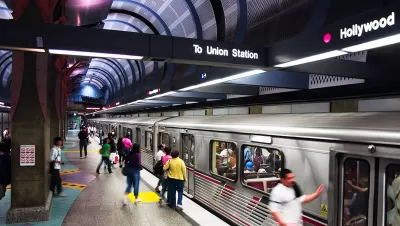
L.A.'s ongoing rail renaissance may kick into high gear if voters approve a $120 billion measure to fund (among other projects) further additions to the Metro Rail system. Even if the measure doesn't succeed, major developments like the Expo Line extension to Santa Monica, the Crenshaw Line, and the Purple Line extension are already in the works or nearly complete.
While L.A. transit use is still defined—to a certain extent—by class and racial lines, that reality is changing. As the infographic shows, Metro hasn't been shy to expand into affluent areas, including Santa Monica, parts of the San Gabriel Valley, stops along the Green Line, and what will be the Purple Line's eventual path past Beverly Hills to Westwood.
The graphic highlights the city's segregation by wealth, but also the potential for transit to bridge some of those long-established divisions.
Read the full story: Measuring income along L.A.'s Metro stations

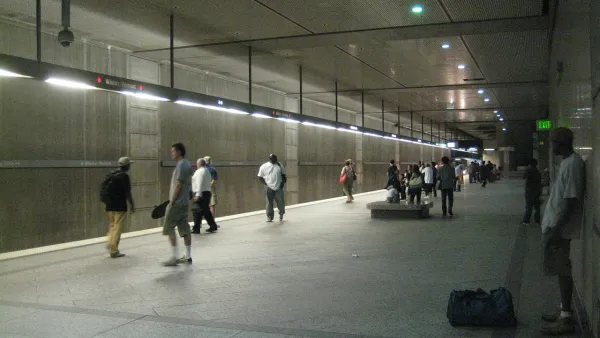
Op-Ed: Los Angeles Needs a Vermont Avenue Subway
As the second busiest bus corridor in the area, Vermont Avenue is currently a candidate for bus rapid transit. But would rail be a better choice?
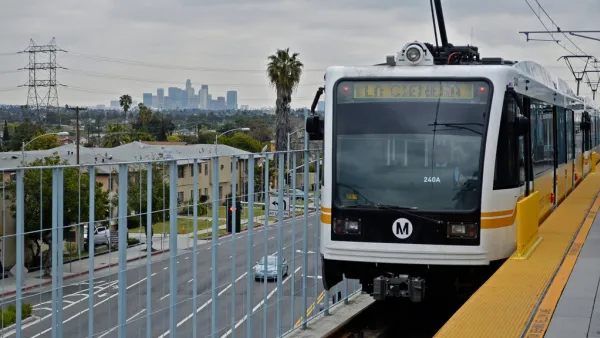
Proposed New Zoning Around the Los Angeles Expo Line
Los Angeles' proposed transit neighborhood plan for the Expo Line corridor includes minor changes, but nothing earth-shattering. Many of the line's stations remain underutilized.
Auto Companies Prepare for Decline of Car Ownership
It's no longer just transit agencies that are trying to meet the first mile-last mile challenge—auto companies have also jumped in by offering "mobility services." And it's more profitable than selling cars!

Planetizen Federal Action Tracker
A weekly monitor of how Trump’s orders and actions are impacting planners and planning in America.

‘Going backwards:’ Baltimore mayor, students rally against state's transit funding plan
Maryland's proposed six-year plan provides no funding for Baltimore’s BMORE bus program and reduces its road maintenance funding.

Detroit to transform waterfront with $2.2 billion investment
Developers will convert about 18 acres of unused parking lot space into civic spaces.

Newsom vetoes high-speed rail supervision bill after agency receives condemnatory audit
The audit found the CHSRA approved almost $600,000 in unallowable travel expenses.

Nation sees first electric plane-boat hybrid take off in public demo
The Viceroy Seaglider can fly at speeds of 180mph for up to 180 miles.

One of nation’s poorest counties to receive $6 billion data center
The developers estimate the project will create 200 permanent jobs and 1,000 temporary construction jobs.

FREE Course: Walkable City 1: Why Walkability?
After describing his path towards focusing on walkability as the essence of good planning, Jeff Speck marches through his five principal reasons for making more walkable places.
Reinventing Malls: Planning Alchemy—Turning Gray Fields Into Gold
The course focuses on the opportunities and imperatives that shape reinvention of mall sites.

City of Thousand Oaks
City of Wisconsin Rapids
Harvard University Graduate School of Design
The Architects Foundation
University of Cincinnati Online
Northern Illinois Transit Authority (NITA)
The Pocatello Development Authority
The Urban Renewal Agency of the City of Pocatello