According to the real estate website, urban home values are growing faster than those in the suburbs, bucking a longtime trend. This isn't exactly surprising, but it has serious social justice implications.


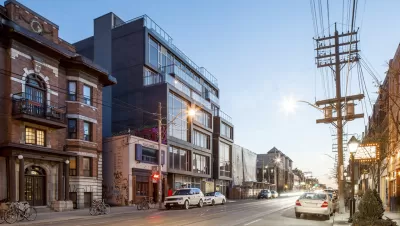
Current demographic trends have well-off households returning, at long last, to urban centers across the nation. Marc Stiles writes, "The result, according to Zillow, is suburbs will change to become more like cities to attract residents. This already is happening in Seattle suburbs, such as Burien, Bothell and Redmond, whose downtowns are adding residential units and urban amenities."
It can be safely said that the era of white flight—or wealth flight at least—from the cities has come to a close. "Nationally, suburban home values grew 5.9 percent in 2015, while urban homes gained 7.5 percent in value. In 1997, urban home values grew at 3.8 percent – slower than suburban values, which grew 4.1 percent that year."
If suburbs do not court density and employment corridors, as Zillow indicates they must, their eventual lower-income residents may be doubly handicapped. "Zillow has found that in San Francisco and Seattle, high-income people now have shorter commutes to downtown, while low-income folks are traveling much farther to get to downtown jobs."
Read the full story: Role reversal as home values now climb faster in cities than suburbs

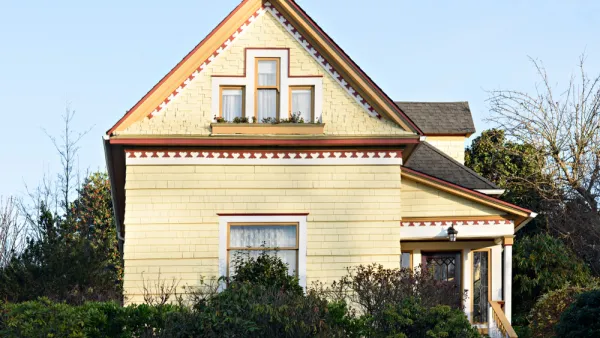
Zoned Out: Seattle Prioritizes Single-Family Residential
In Seattle, most (88 percent) of the city's new housing is being developed in a few small, already dense areas around the city. Most of the city is reserved for single-family housing.
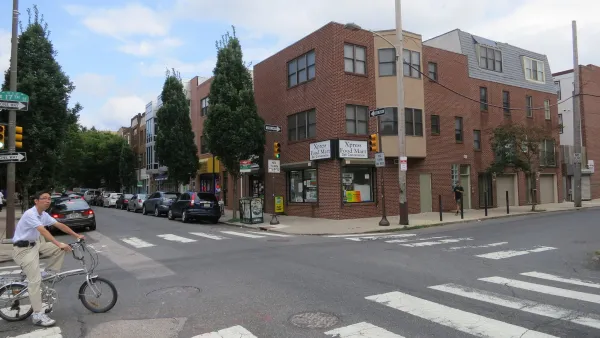
AIA: Demand for High-Density Development Is Down
For the first time in four years, a quarterly survey indicates “market saturation in urban areas.”
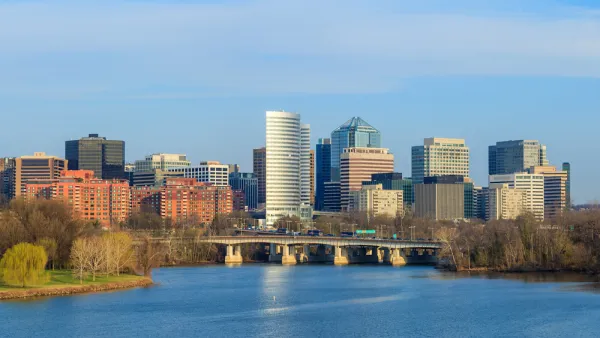
Cities Suburbanize While Suburbs Urbanize
As the internet makes retail more widely accessible, and poverty and density move to suburbs, the difference between cities and suburbs is shrinking, narrowing lifestyle choices.

Planetizen Federal Action Tracker
A weekly monitor of how Trump’s orders and actions are impacting planners and planning in America.

California plans to bury El Niño’s downpour
If the state plays its cards right, it may be able to store a billion acre-feet of El Niño’s water in aquifers.

Chicago breaks ground on $3 billion megadevelopment
The new neighborhood, titled Foundry Park, will one day host 3,700 residences.

Satanic Place Names
From streams and lakes to valleys and canyons, I mapped more than 1,000 places named after the Devil.

California High-Speed Rail Authority CEO resigns after $600,000 scandal
Under Ian Choudri, the authority used taxpayer dollars to fund first class flights and trips to nightclubs.

Want to study the Missouri River? Soon, you may need unanimous approval from 10 states
Legislation would require 10 governors’ permission to study or build projects moving water outside the basin.

FREE Course: Walkable City 1: Why Walkability?
After describing his path towards focusing on walkability as the essence of good planning, Jeff Speck marches through his five principal reasons for making more walkable places.
Reinventing Malls: Planning Alchemy—Turning Gray Fields Into Gold
The course focuses on the opportunities and imperatives that shape reinvention of mall sites.

City of Rosemead
Rutgers University, Edward J. Bloustein School of Planning and Public Policy
One Hundred Miles
Hunter College, City University of New York (CUNY)
The Architects Foundation
University of Cincinnati Online
City of Cambridge
Montrose County
The Pocatello Development Authority