Metro Transit officials announced the opening date for the A Line—the first of potentially many more rapid bus routes featuring platform level boarding and signal priority.


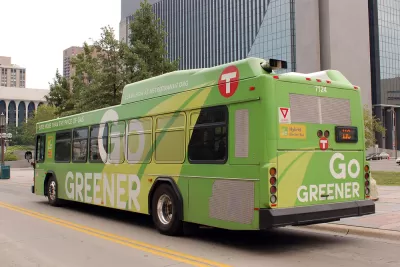
"The Twin Cities’ first arterial version of Bus Rapid Transit, or BRT, is set to begin passenger service on June 11," reports Peter Callaghan. Met Council Chair Adam Duininck announced the news earlier this week.
"The A Line route will begin at Rosedale, pass through St. Paul via Snelling Avenue and Ford Parkway and end in Minneapolis at the 46th Street light rail station," adds Callaghan.
The article begins by pitching Bus Rapid Transit as an alternative to rail transit—both in cost and in the hearts of "transit snobs." The article eventually goes into detail about the features of this bus line, which will include some, but not all, of the perks of Bus Rapid Transit. All in all, the A Line is expected to complete its route 20 percent faster than existing buses. If riders take to the new A Line, "Metro Transit would like to build 11 BRT alignments on its most heavily traveled corridors by 2030," adds Callaghan.
Read the full story: Seeking rail snobs: With BRT, Metro Transit aims to get more people onto buses

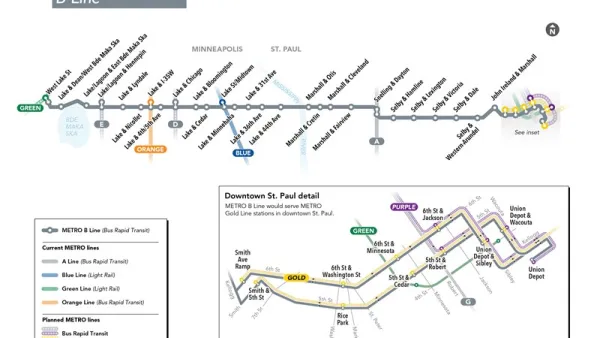
New Bus Rapid Transit Route Breaks Ground in the Twin Cities
The Twin Cities are on a mission to become the bus rapid transit capital of the United States. The latest improvement to advance that ambition broke ground earlier this week.
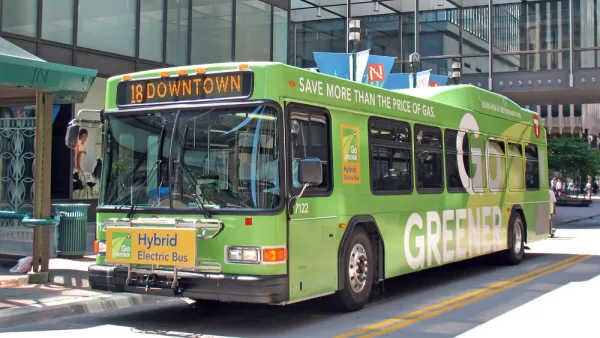
Gold Line Busway Planning Moves Forward in Suburban Minnesota
The cities of Oakdale and Lake Elmo made their opposition to a proposed busway connecting to St. Paul known by withdrawing their support for the project. Now Gold Line transit planners are refocusing their efforts on station location decisions.
Twin Cities Suburbs on an Anti-Bus Crusade
Residents of suburbs located east of St. Paul in Minnesota have coalesced to oppose the Gateway Corridor Gold Line project, which would connect 12 stops along a bus rapid transit line.

Planetizen Federal Action Tracker
A weekly monitor of how Trump’s orders and actions are impacting planners and planning in America.

Amtrak, CN end decades-long dispute with eight-year agreement
The new operating agreement establishes an updated framework for the companies to work together, including processes to resolve disputes.

Judges permit Denver to divert 77,000 acre feet from the Colorado River for reservoir expansion
Overuse and climate change have caused the Colorado River’s water levels to plummet.

NYC DOT wants faster, more permanent street upgrades
The city is examining ways to build more concrete infrastructure without getting entangled in 'decades-long' projects.

'Something we’ve never seen before:' rising utility rates could strain city finances nationwide
Data centers, climate change and other factors have caused utility rates in the United States to increase by 38% since 2020.

Trump to overrule local leaders, lease millions of acres of America’s Pacific Island territories’ seafloors to mining companies
International law says that the Indigenous people of America’s territories have a right to prior and informed consent regarding projects that impact their countries.

FREE Course: Walkable City 1: Why Walkability?
After describing his path towards focusing on walkability as the essence of good planning, Jeff Speck marches through his five principal reasons for making more walkable places.
Reinventing Malls: Planning Alchemy—Turning Gray Fields Into Gold
The course focuses on the opportunities and imperatives that shape reinvention of mall sites.

Harvard University Graduate School of Design
KFH Group Inc.
Greater Baltimore Committee
The Architects Foundation
University of Cincinnati Online
The Pocatello Development Authority
The Urban Renewal Agency of the City of Pocatello