The Twin Cities are on a mission to become the bus rapid transit capital of the United States. The latest improvement to advance that ambition broke ground earlier this week.


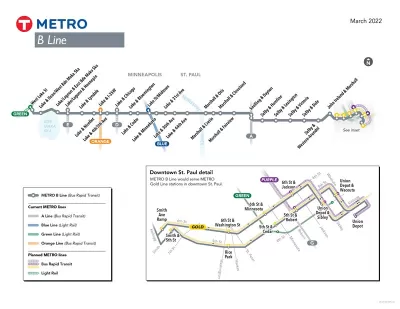
“Metro Transit held a ceremonial groundbreaking on Monday for the B Line, a bus rapid transit route that will soon link Uptown in Minneapolis to the Union Depot transit hub in downtown St. Paul,” reports Frederick Melo for the Pioneer Press.
The new B Line is the latest addition to the Twin Cities’ growing bus rapid transit (BRT) system, part of an ongoing effort to make the Twin Cities the “BRT capital” of the United States. The C Line BRT route opened in 2019 and the A Line in 2016. Metro Transit is operating five BRT lines in all, with plans for expansions of six lines, including the B Line, according to the Metro Transit website.
As for the B Line, “Service, which will largely replace the Route 21 corridor, the state’s busiest local bus route, is scheduled to roll out in late 2024,” writes Melo. “The goal is to improve travel times on the 11-mile corridor by up to 20% through bus-only lanes, transit signal priority, all-door boarding and advance or off-board fare payments.”
Read the full story: Metro Transit breaks ground on the B Line from downtown St. Paul to Uptown Minneapolis

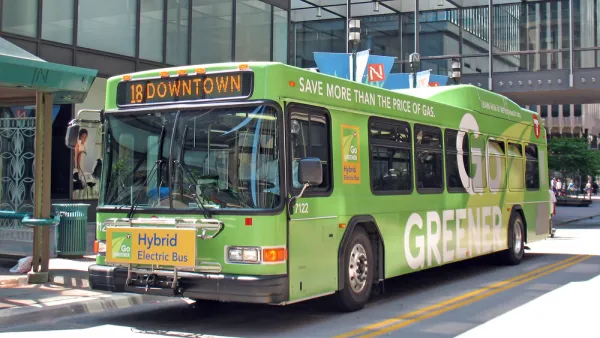
Twin Cities Set Ambitious Target for Electric Buses
The planned opening of a new bus rapid transit line is the impetus for a larger-scale shift to electric buses by Metro Transit.
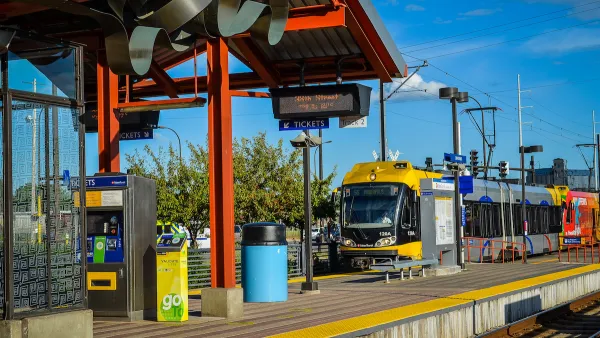
Twin Cities Trains Move to Fewer Cars, Higher Frequency
Headways will drop from 15 minutes to 12 minutes.
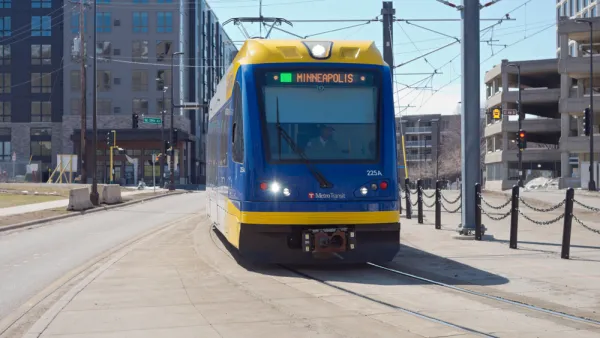
Three New Programs to Increase Transit Ridership in the Twin Cities
With peak hour commuter travel not expected to rebound to pre-pandemic levels, Metro Transit is getting creative in its efforts to attract new riders.

Planetizen Federal Action Tracker
A weekly monitor of how Trump’s orders and actions are impacting planners and planning in America.

California plans to bury El Niño’s downpour
If the state plays its cards right, it may be able to store a billion acre-feet of El Niño’s water in aquifers.

Chicago breaks ground on $3 billion megadevelopment
The new neighborhood, titled Foundry Park, will one day host 3,700 residences.

California High-Speed Rail Authority CEO resigns after $600,000 scandal
Under Ian Choudri, the authority used taxpayer dollars to fund first class flights and trips to nightclubs.

Want to study the Missouri River? Soon, you may need unanimous approval from 10 states
Legislation would require 10 governors’ permission to study or build projects moving water outside the basin.

Desperate measures: Advocates weigh draining Lake Powell to fill Colorado River
Draining the reservoir could reduce evaporation losses by a couple hundred thousand acre-feet.

FREE Course: Walkable City 1: Why Walkability?
After describing his path towards focusing on walkability as the essence of good planning, Jeff Speck marches through his five principal reasons for making more walkable places.
Reinventing Malls: Planning Alchemy—Turning Gray Fields Into Gold
The course focuses on the opportunities and imperatives that shape reinvention of mall sites.

City of Rosemead
Rutgers University, Edward J. Bloustein School of Planning and Public Policy
One Hundred Miles
Hunter College, City University of New York (CUNY)
The Architects Foundation
University of Cincinnati Online
City of Cambridge
Montrose County
The Pocatello Development Authority