From his home in Brainerd, Minnesota (population 13,500), this fiscally conservative engineer leads a growing movement. His slow-and-steady approach to urban development has real bipartisan appeal.


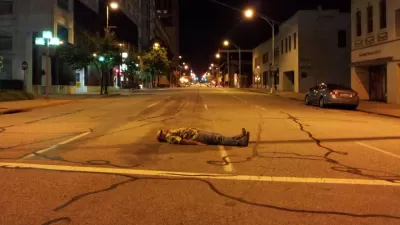
As a civil engineer, Charles Marohn used to oversee projects that widely overshot the mark, providing unnecessary infrastructure and saddling towns with inflated costs. He realized that the suburban mainstream offered "solutions that not only encouraged sprawl, but also created places that were financially unsustainable."
Peter Callaghan reports on the man behind Strong Towns, first a blog and now a non-profit dedicated to the economic viability of existing communities.
Marohn is anti-suburb, but he doesn't fit the typical urbanist profile. "He describes himself as a fiscally conservative Republican; most of those who share his philosophy are liberal Democrats. Also, he was a civil engineer first, not a city planner."
"It's a perspective that has led Marohn to conclude that the nation's 70-year experiment with suburban development is a failure — because it is economically unsustainable. That is, the lack of density does not produce tax revenue necessary to cover current services, let alone the long-term costs of maintaining and replacing those services."
In Marohn's words, "Woodbury is going away, no matter what. There is no renewal process. There is no next step in its evolution." He sees both parties as complicit in an "infrastructure cult" dedicated to top-down projects, be they highways or transit. Instead, he says, we should look to the period before the postwar suburban boom for wiser models.
Read the full story: Why a conservative Republican from northern Minnesota wants to kill the suburbs

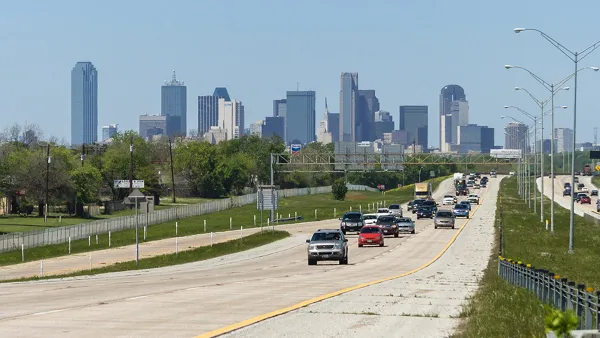
Induced Demand: Why Highways Still Reign in Dallas
Regional planners and Dallas officials aren't confident that the area's highway-centric worldview (and budget) will change anytime soon. The city's competitiveness in the national job market may be on the line.
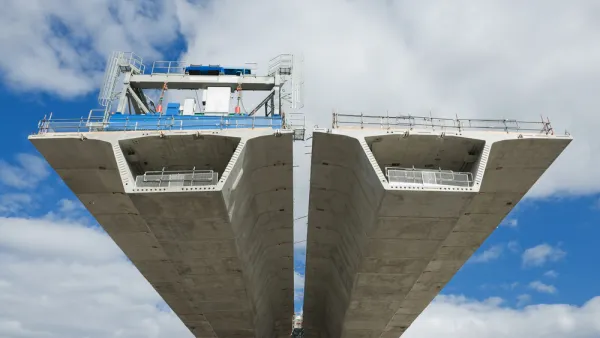
Op-Ed: On the Pitfalls of Federal Spending
Charles Marohn of Strong Towns makes the case that whoever's in the White House, simply increasing federal spending on infrastructure isn't the wisest move.

Midburbs: A New Definition of Suburbs
When the name “suburb” just doesn't quite fit.

Planetizen Federal Action Tracker
A weekly monitor of how Trump’s orders and actions are impacting planners and planning in America.

Chicago breaks ground on $3 billion megadevelopment
The new neighborhood, titled Foundry Park, will one day host 3,700 residences.

This MA town is drowning in its own sewage — and residents like it that way
Susan Murcott, a waste water expert, said if Carlisle didn't address their leaking sewage, the problem could turn “deadly.”

Iowa taxpayers are paying thousands to clean manure out of their water
While the Clean Water Act makes states responsible for regulating factory farms that discharge pollutants, Iowa has turned a blind eye to the polluting farms.

Amtrak cuts ribbon on Seattle Airo maintenance facility
The $250 million, nearly 100,000-square-foot building can house an entire Cascades Airo trainset.

To power data centers, Google seeks autonomous control of thousands of homes’ electricity
The tech company has signed a deal to indirectly pay Mid-Atlantic residents to reduce their power demand when the grid is strained.

FREE Course: Walkable City 1: Why Walkability?
After describing his path towards focusing on walkability as the essence of good planning, Jeff Speck marches through his five principal reasons for making more walkable places.
Reinventing Malls: Planning Alchemy—Turning Gray Fields Into Gold
The course focuses on the opportunities and imperatives that shape reinvention of mall sites.

City of Rosemead
Rutgers University, Edward J. Bloustein School of Planning and Public Policy
One Hundred Miles
The Architects Foundation
University of Cincinnati Online
Montrose County
The Pocatello Development Authority
The Urban Renewal Agency of the City of Pocatello