Out of sheer necessity, the state of California has embarked on a new process for regulating the use of groundwater.


Tim Hearden reports on the "first milestone in carrying out groundwater regulations passed by lawmakers last year." Those new regulations are the result of the Sustainable Groundwater Management Act, "a package of bills passed by the Legislature and signed by Gov. Jerry Brown last fall."
The milestone of concern a year after the Sustainable Groundwater Management Act was signed: the creation of a mechanism "to resolve discrepancies over the boundaries of basins that will be affected by the new rules." The need for such a mechanism implies just how much work is left to be done in settling the new groundwater regime in this drought-stricken state. Identifying basins and sub-basins was one of the major provisions of the bill.
Hearden also offers more details about the package of bills, including a requirement for "local groundwater management agencies to be set up by 2017, sustainability plans for overdrafted basins to be in place by 2020, plans for other high- and medium-priority basins to be established by 2022 and sustainability in all high- and medium-priority basins to be achieved by 2040…"
FULL STORY: Calif. reaches first milestone in crafting groundwater regulations

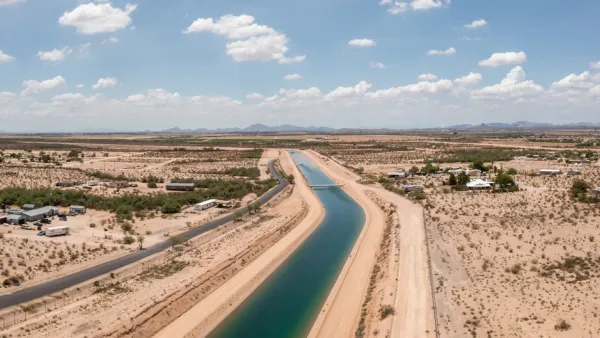
Arizona Governor Takes Steps to Modernize Water Policy
A newly released report warns of rapidly dwindling groundwater resources as developers plan to build hundreds of thousands of new homes.
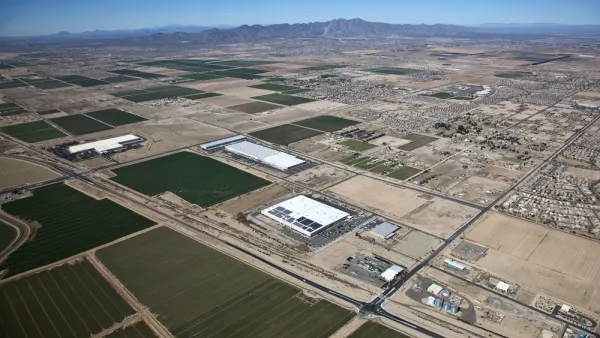
Arizona Tapping Groundwater to Fuel Suburban Growth
Critics say Arizona’s growth patterns are unsustainable and dangerous, given the depleted Colorado River and the state’s deepening reliance on groundwater.
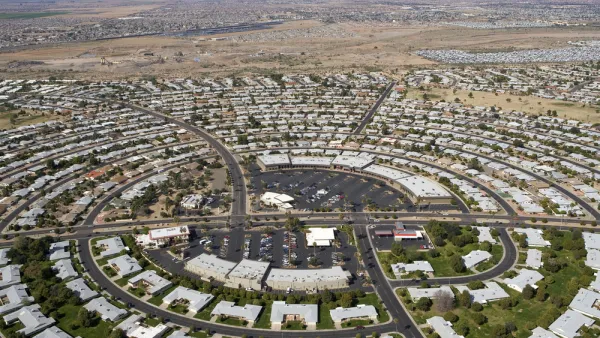
Arizona’s Growth Threatens Water Supplies
New communities are popping up across Arizona’s desert, evading water consumption restrictions and straining the state’s groundwater supplies.

The state-sanctioned urbicide of Austin
People don’t kill cities. Freeways do.

US to reduce Colorado River water deliveries to Mexico
A new Colorado Treaty amendment reduces Mexico’s Colorado River water allocation by 250,000 acre feet.

New Jersey’s second-largest city bans standalone data centers
Jersey City will continue to allow co-location facilities, such as those meant for research institutions that store their own data.

Amtrak not solely to blame for New Jersey commuter rail's unreliability, report finds
A new study from the Garden State Initiative found that NJ Transit’s budget grew 20% across a 4 year period, but reliability declined significantly over the same period.

EPA erases limits on planet-warming pollution from power plants
Under Monday’s plan, power plants would still have some limits on how much mercury, arsenic and other contaminants they can emit.

Phoenix announces new on-demand transit service, more frequent RAPID buses
Both new services will launch in October, and are part of Phoenix's Project Effective Access Solutions for Easing Congestion.

FREE Course: Walkable City 1: Why Walkability?
After describing his path towards focusing on walkability as the essence of good planning, Jeff Speck marches through his five principal reasons for making more walkable places.
Reinventing Malls: Planning Alchemy—Turning Gray Fields Into Gold
The course focuses on the opportunities and imperatives that shape reinvention of mall sites.

Eagle County Government
Harvard University Graduate School of Design
Nashville Planning Department
The Architects Foundation
University of Cincinnati Online
The Pocatello Development Authority
The Urban Renewal Agency of the City of Pocatello
Journal of the American Planning Association