Critics say Arizona’s growth patterns are unsustainable and dangerous, given the depleted Colorado River and the state’s deepening reliance on groundwater.


“Water supplies are shrinking throughout the Southwest, from the Rocky Mountains to California, with the flow of the Colorado River declining and groundwater levels dropping in many areas. The mounting strains on the region’s water supplies are bringing new questions about the unrestrained growth of sprawling suburbs,” writes Ian James for the Los Angeles Times.
Population growth in Arizona continues to lead the nation, even as federal regulators force states to implement the largest ever reduction in water diversions from the Colorado River. To make up the difference, according to James, Arizona communities are increasingly turning to groundwater.
“[Arizona State University’s Kyl Center for Water Policy researcher Kathleen] Ferris and others warn, however, that allowing development reliant solely on groundwater is unsustainable, and that the solution should be to curb growth in areas without sufficient water,” writes James.
The state’s ongoing growth plans—build in suburban patterns dependent on groundwater—are exemplified in the article by a Phoenix suburb called Buckeye.
“According to its 2020 water resources plan, 27 master-planned communities are proposed in Buckeye, which depends primarily on groundwater. If all the proposed developments are fully built, the city’s population, now 110,000, would skyrocket to about 872,000,” writes James.
The article was published the same day as a video available on YouTube, posted above, supplementing the article.
FULL STORY: In Arizona, Colorado River crisis stokes worry over growth and groundwater depletion

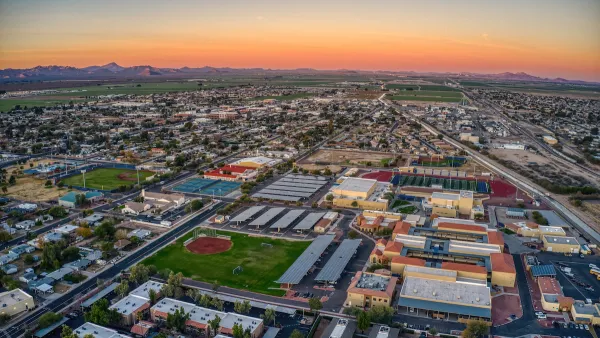
Arizona Town Looks for New Water Sources, Insists Development ‘Full Steam Ahead’
While many Southwest cities are looking for ways to conserve water and limit growth as water supplies become strained, one town is pressing ahead with rapid development.
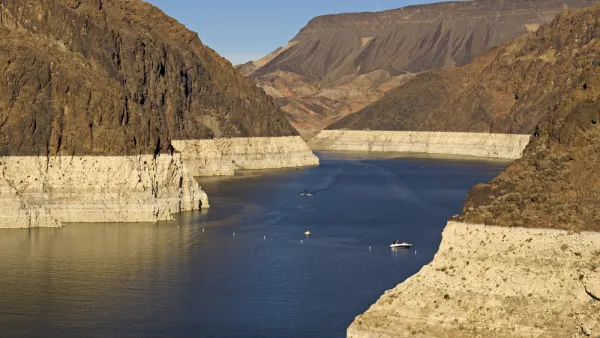
How Arizona Is Preparing for the Coming Water Shortage
Arizona will lose one-fifth of its water allotment from the Colorado River in 2022 as cuts from the river's Drought Contingency Plan take effect.
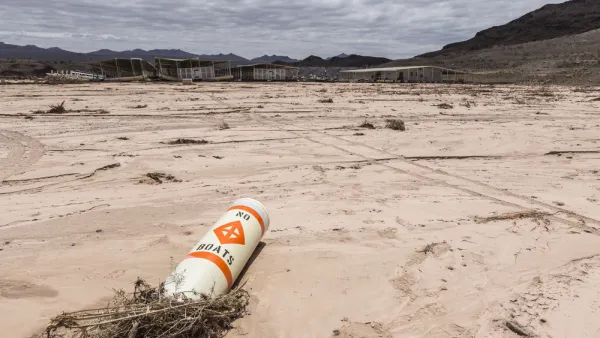
Arizona Struggles to Balance Demand for Water
Two case studies exemplify the extreme economic and legal pressures surrounding water supply in the state of Arizona.

The state-sanctioned urbicide of Austin
People don’t kill cities. Freeways do.

US to reduce Colorado River water deliveries to Mexico
A new Colorado Treaty amendment reduces Mexico’s Colorado River water allocation by 250,000 acre feet.

New Jersey’s second-largest city bans standalone data centers
Jersey City will continue to allow co-location facilities, such as those meant for research institutions that store their own data.

Amtrak not solely to blame for New Jersey commuter rail's unreliability, report finds
A new study from the Garden State Initiative found that NJ Transit’s budget grew 20% across a 4 year period, but reliability declined significantly over the same period.

EPA erases limits on planet-warming pollution from power plants
Under Monday’s plan, power plants would still have some limits on how much mercury, arsenic and other contaminants they can emit.

Phoenix announces new on-demand transit service, more frequent RAPID buses
Both new services will launch in October, and are part of Phoenix's Project Effective Access Solutions for Easing Congestion.

FREE Course: Walkable City 1: Why Walkability?
After describing his path towards focusing on walkability as the essence of good planning, Jeff Speck marches through his five principal reasons for making more walkable places.
Reinventing Malls: Planning Alchemy—Turning Gray Fields Into Gold
The course focuses on the opportunities and imperatives that shape reinvention of mall sites.

Eagle County Government
Harvard University Graduate School of Design
Nashville Planning Department
The Architects Foundation
University of Cincinnati Online
The Pocatello Development Authority
The Urban Renewal Agency of the City of Pocatello
Journal of the American Planning Association