Regardless of how San Francisco's proposed Bike Yield Law fares, all California cyclists who are ticketed for not stopping at stop signs may have the option to pay a reduced fine if they opt to attend bike school thanks to a new law signed Sept. 21.


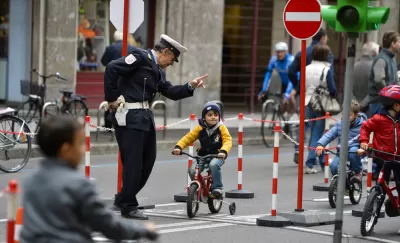
[Updated 09/29/2015] "Assemblymember Richard Bloom from Santa Monica introduced bill A.B. 902 back in February to address the discrepancy between options for motorists and bicyclists when dealing with an identical ticket," writes Curbed LA, following original reporting by Melanie Curry of Streetsblog LA. The bill was sponsored by the California Bicycle Coalition and supported by the California Police Chiefs Association.
"When a bicyclist is ticketed for a moving violation in California, they by default receive the same monetary fine as when driving a motor vehicle. This means that with court fees added a stop sign violation can cost around $200, and running a red light around $400," said Bloom.
Motorists can get the fine substantially reduced if they opt to attend traffic school (called a 'diversion program'), though they pay the courts an administrative fee and the school a fee as well, explains Traffic School To Go. The only cyclists who get a break are minors according to current legislation, as they can attend a diversion program.
A.B. 902 "(r)emoves the age limitation on the use of locally adopted diversion programs for Vehicle Code infractions not involving a motor vehicle, allowing such programs to be offered to adults," notes the summary in the last legislative analysis for the bill.
The importance of the bike school option can not be overstated. As the analysis explains, these diversion programs can save lives.
A recent report [also posted here and here] from the Governor's Highway Safety Association on bicycle safety found that bicyclist fatalities increased 16% nationwide between 2010 and 2012. California had the highest number of fatalities of any state during that time period at 338.
Among other recommendations for reducing bicyclist/motor vehicle collisions and the resulting injuries and fatalities, the report recommends "education of bicyclists and motorists about lawful and otherwise appropriate behavior regarding motorist/bicycle interactions." Diversion programs would provide an opportunity for this type of education.
However, there's one more step required in order for the bill to be implemented on a local basis. "AB 902 goes into effect on January 1, 2016, and it’s up to us and our local partners, advocacy groups and you to make sure that our local police departments adopt diversion programs in our city," writes Cynthia Rose for Santa Monica Spoke.
Meanwhile, here's a progress report from San Francisco on "legalizing the 'Idaho Stop,' which, legal in a few places around the country, allows bikers to treat stop signs as yield signs and red lights as stop signs," as noted here last month, and here in Velo News in May. It's origins are described in BicycleLaw.com in 2009.
"At least six of the 11 members of the San Francisco Board of Supervisors back a proposed ordinance that would, in effect, allow bicyclists in the city to roll through stop signs as long as they take care to “safely yield” to pedestrians and other traffic," writes Ted Goldberg for KQED News. The ordinance appears on page 2 of 5 [PDF]:
150943 [Administrative Code - Bicycle Yield Enforcement Policy] Sponsors: Avalos; Breed, Campos, Kim, Mar and Wiener Ordinance amending the Administrative Code to add Chapter 110 to establish the “San Francisco Right-of-Way Policy” to promote safety, tolerance, and harmony among all users of City Streets; make arrests and citations of bicyclists for failure to stop at a stop sign the lowest traffic enforcement priority, provided that the bicyclist first slows to a safe speed and yields the right-of-way to any other vehicle or pedestrian in the intersection; require quarterly reports from the Police Department on statistics related to traffic enforcement, injuries, and fatalities; and require notification of state officials of this Ordinance. ASSIGNED UNDER 30 DAY RULE to Rules Committee.
Unlike with AB 902, the police are not supportive.
“Stop signs are pretty simple. They say stop,” Police Chief Greg Suhr said during a visit to the University of San Francisco. “They don’t say yield, they don’t say slow down.”
No word on where Mayor Ed Lee is on the ordinance. Should he veto it, *eight votes will be needed to override.
*This post was updated to reflect the correct number of votes necessary to override a veto.
Read the full story: Streetsblog California: California Assembly: Bill Would Allow “Traffic School” for Bicycle Violations - Mar 30

San Francisco Bikers Score a Point for the Idaho Stop
Last week, along a popular San Francisco bike route, a group of protestors took to their bikes to advocate for new laws, such as the Idaho Stop, that make it easier to bike in the city.
D.C. Could Legalize ‘Idaho Stop,’ Ban Right Turns on Red
Proposed legislation would allow cyclists to treat stop signs as yield signs and eliminate right turns on red in an effort to reduce cyclist and pedestrian fatalities.
Starting Today: The Idaho Stop Is Legal in Washington State
A law passed in March allowing people on bikes to treat stop signs as yield signs when conditions permit takes effect today in Washington State.

Planetizen Federal Action Tracker
A weekly monitor of how Trump’s orders and actions are impacting planners and planning in America.

The state-sanctioned urbicide of Austin
People don’t kill cities. Freeways do.

US to reduce Colorado River water deliveries to Mexico
A new Colorado Treaty amendment reduces Mexico’s Colorado River water allocation by 250,000 acre feet.

Nation's most wind-powered state turns to coal as data centers increase energy demand
For the first time in decades, Iowa has increased its generation of coal power.
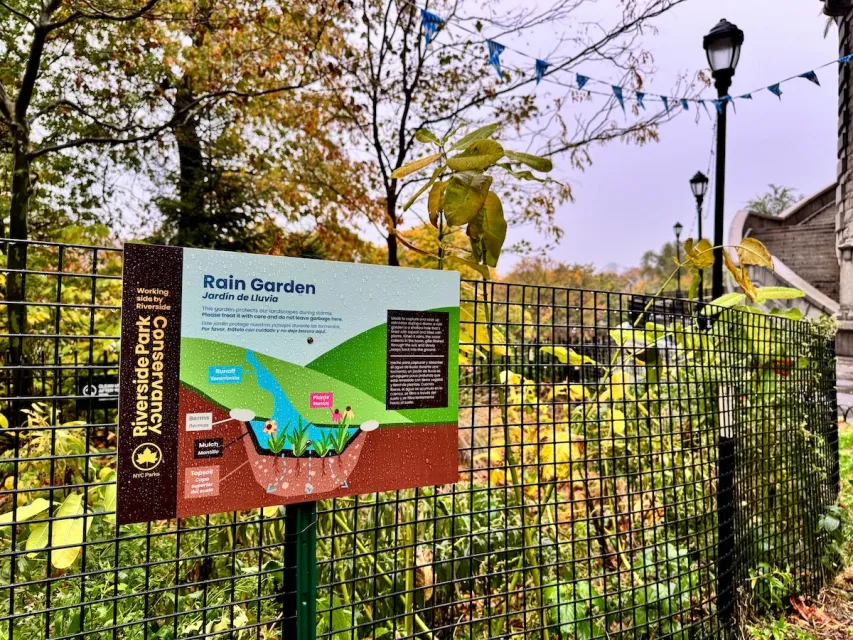
NYC cools commuters with city's first rain garden above a bus stop
New York City officials say the plants in the rain garden can absorb 16 gallons of rainwater during heavy storms.

Brightline West’s future may rely on $6 billion federal loan
The company has until Nov. 2 to make a $400 million equity investment into its proposed high-speed rail line.

FREE Course: Walkable City 1: Why Walkability?
After describing his path towards focusing on walkability as the essence of good planning, Jeff Speck marches through his five principal reasons for making more walkable places.
Reinventing Malls: Planning Alchemy—Turning Gray Fields Into Gold
The course focuses on the opportunities and imperatives that shape reinvention of mall sites.

Eagle County Government
Harvard University Graduate School of Design
Nashville Planning Department
The Architects Foundation
University of Cincinnati Online
The Pocatello Development Authority
The Urban Renewal Agency of the City of Pocatello
Journal of the American Planning Association