Vocal users of the wildly popular navigation app Waze have pushed the company's developers to look for a solution to its routing algorithm's tendency to send drivers turning left through crowded intersections.


"The navigation app Waze is beloved for exploiting shortcuts, avoiding traffic, and proving that the shortest distance between two points is not always a straight line," according to a post by David Yanofsky. "But its sinuous directions can also be a source of annoyance for drivers, who are often asked to make treacherous left turns through oncoming traffic at dicey intersections."
Yanofsky reports, however, that the company is studying ways to remove the so-called "Waze left" from its routing algorithm. The company is responding to user feedback and media pushback, given the much greater dangers associated with turning left. The article goes on to survey some of the user feedback available online, as well as some specific examples of "Waze lefts" as provided by streets found in the city of Los Angeles.
Read the full story: The End of the 'Waze Left'


Are Traffic Apps More a Problem Than a Solution?
The companies behind navigation apps say they want to decrease congestion in cities. But a tool that is essentially designed to help individuals isn’t going to provide a collective benefit.
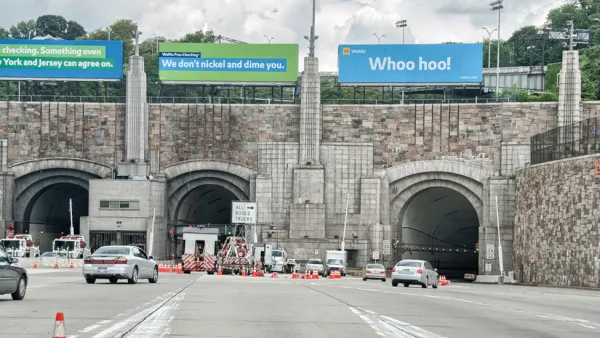
Waze Outfits NYC Tunnels with Beacons for Underground Navigation
The tech is part of a public-private partnership meant to improve connectivity to Waze and other navigation apps from underground.
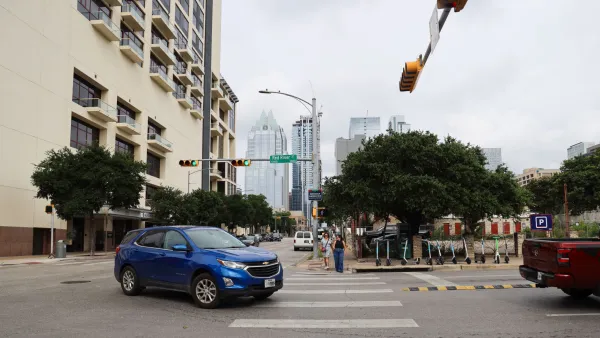
Austin ‘Turn Calming’ Cut Pedestrian-Involved Left Turn Crashes by Nearly Half
A pilot program at 16 intersections led to a dramatic reduction in injury crashes and is saving residents roughly $3 million in emergency response and medical expenses.

Planetizen Federal Action Tracker
A weekly monitor of how Trump’s orders and actions are impacting planners and planning in America.

California plans to bury El Niño’s downpour
If the state plays its cards right, it may be able to store a billion acre-feet of El Niño’s water in aquifers.

Desperate measures: Advocates weigh draining Lake Powell to fill Colorado River
Draining the reservoir could reduce evaporation losses by a couple hundred thousand acre-feet.

California city breaks ground on transit connector
The project includes three mobility hubs and a pedestrian bridge.

After public outcry, Massachusetts city releases housing development tracker
Cambridge’s tracker currently shows 250 housing projects in various stages of development.

40 years after approval, Chicago breaks ground on new park
The park honors Jean Baptiste Point du Sable, the city’s first permanent non-native settler.

FREE Course: Walkable City 1: Why Walkability?
After describing his path towards focusing on walkability as the essence of good planning, Jeff Speck marches through his five principal reasons for making more walkable places.
Reinventing Malls: Planning Alchemy—Turning Gray Fields Into Gold
The course focuses on the opportunities and imperatives that shape reinvention of mall sites.

City of Rosemead
Rutgers University, Edward J. Bloustein School of Planning and Public Policy
One Hundred Miles
Hunter College, City University of New York (CUNY)
The Architects Foundation
University of Cincinnati Online
City of Cambridge
Montrose County
The Pocatello Development Authority