Changes to left turn infrastructure and signal timing led to a 47 to 72 percent drop in fatal and serious injury crashes.



A new Vision Zero report from the city of Austin’s Transportation and Public Works (TPW) department shows that changes to left-turn signal infrastructure at 100 intersections led to a 47 to 72 percent reduction in injuries and fatal crashes involving left turns, which make up over 12 percent of all serious non-freeway crashes in the city. Lina Fisher outlines the report’s findings in in the Austin Monitor.
The TPW report notes that “Of the 73 [intersections] that have collected at least three months of crash data, there has been a 72 percent decrease in injuries and fatalities when compared to the five years prior. That amounts to 37 fewer per year. Notably, all locations also saw decreases in other types of crashes, meaning protected left turns can reduce the overall riskiness of intersections, a ‘positive multiplier effect.’”
This May, a lane reduction on Barton Springs Road led to a 65 percent reduction in speeding, while fatal and serious injury crashes across the city are down by 22 percent.
FULL STORY: Vision Zero’s improvements to protected left turns cut traffic injuries and fatalities in half


Austin Businesses Call for Sixth Street Bike Lanes
Local business owners say bike lanes would improve safety and boost local business.
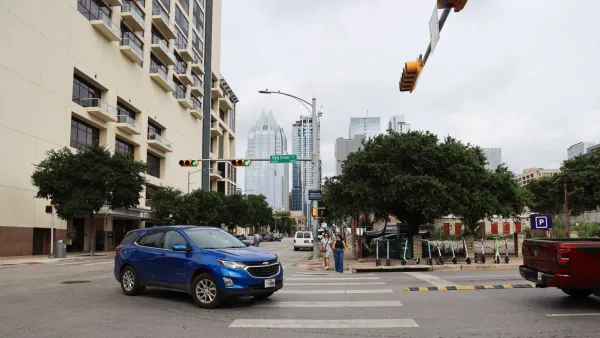
Austin ‘Turn Calming’ Cut Pedestrian-Involved Left Turn Crashes by Nearly Half
A pilot program at 16 intersections led to a dramatic reduction in injury crashes and is saving residents roughly $3 million in emergency response and medical expenses.
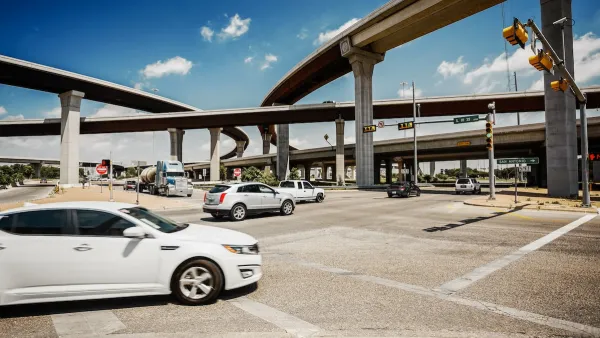
Report: Vision Zero Saving Lives in Austin
Safety improvements at major intersections led to a 22 percent reduction in deaths and severe injuries and saved the city over $28 million.

Planetizen Federal Action Tracker
A weekly monitor of how Trump’s orders and actions are impacting planners and planning in America.

The state-sanctioned urbicide of Austin
People don’t kill cities. Freeways do.

US to reduce Colorado River water deliveries to Mexico
A new Colorado Treaty amendment reduces Mexico’s Colorado River water allocation by 250,000 acre feet.

5 New England states march closer to 800 megawatt wind energy project
Securing federal approval for the project may be complicated under the Trump administration, which has historically been hostile towards domestic wind power.

Baltimore to break ground on $50 million Transit Priority Project
The project will bring faster bus trips, safer streets and better bike connections to Baltimore.

Airbnb launches $250 million 'last-dollar financing' housing accelerator, makes first investment in Austin
The company will put $6.4 million towards affordable housing development in Texas’ capital.

FREE Course: Walkable City 1: Why Walkability?
After describing his path towards focusing on walkability as the essence of good planning, Jeff Speck marches through his five principal reasons for making more walkable places.
Reinventing Malls: Planning Alchemy—Turning Gray Fields Into Gold
The course focuses on the opportunities and imperatives that shape reinvention of mall sites.

Eagle County Government
Harvard University Graduate School of Design
Nashville Planning Department
The Architects Foundation
University of Cincinnati Online
The Pocatello Development Authority
The Urban Renewal Agency of the City of Pocatello
Journal of the American Planning Association