The tech is part of a public-private partnership meant to improve connectivity to Waze and other navigation apps from underground.


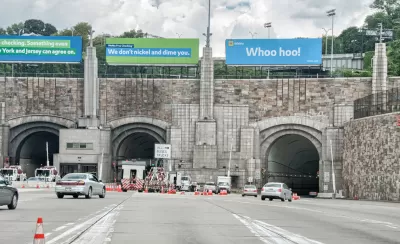
Waze has entered a partnership with the New York MTA and Port Authority aimed at improving navigation for drivers in New York City.
Several tunnels in the city now boast Waze Beacons, an open-source technology meant to allow users of navigation apps to stay connected even when they don't have a signal—particularly useful for drivers entering tunnels, the company expects. The tiny devices stick to tunnel walls and can support any navigation app, not just Waze. Chaim Gartenberg explains in The Verge:
"The Waze Beacons themselves are just battery-powered microcontrollers that use low-powered Bluetooth signals to communicate with smartphones, allowing for Waze to provide alternative location services to drivers even when out of GPS range (relying on Google’s near-field Eddystone technology to communicate)."
Boston, Chicago, and Pittsburgh are among the cities already using the private infrastructure, now also online in New York's Holland, Lincoln, Queens-Midtown, and Brooklyn-Battery Tunnels.
Read the full story: Waze adds Beacons to NYC tunnels so drivers can stay connected to GPS apps

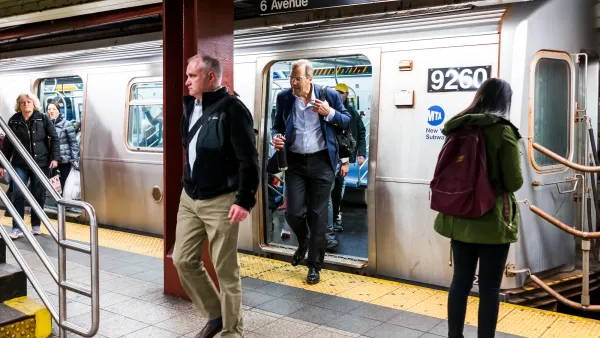
NYC to Upgrade 1/3 of its Subway Car Fleet
The MTA is seeking proposals for up to 2,390 new subway cars to upgrade its aging fleet.
New York MTA Upholds Pause on Congestion Pricing, Scales Back Projects
The agency will not be able to go forward with former plans to improve station facilities and transit safety, and expand service.
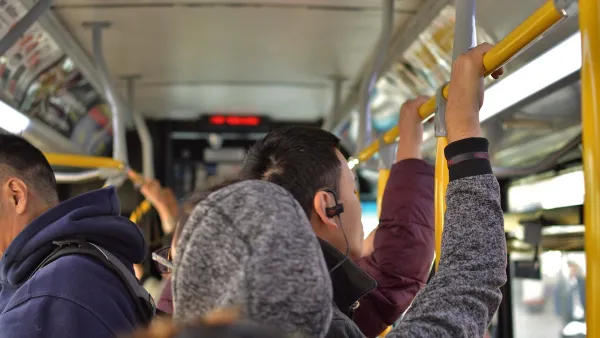
New York MTA Makes Five Bus Routes Fare-Free
The state-funded effort is a way to assess how free fares impact ridership.

Planetizen Federal Action Tracker
A weekly monitor of how Trump’s orders and actions are impacting planners and planning in America.

California plans to bury El Niño’s downpour
If the state plays its cards right, it may be able to store a billion acre-feet of El Niño’s water in aquifers.

Chicago breaks ground on $3 billion megadevelopment
The new neighborhood, titled Foundry Park, will one day host 3,700 residences.

Satanic Place Names
From streams and lakes to valleys and canyons, I mapped more than 1,000 places named after the Devil.

California High-Speed Rail Authority CEO resigns after $600,000 scandal
Under Ian Choudri, the authority used taxpayer dollars to fund first class flights and trips to nightclubs.

Want to study the Missouri River? Soon, you may need unanimous approval from 10 states
Legislation would require 10 governors’ permission to study or build projects moving water outside the basin.

FREE Course: Walkable City 1: Why Walkability?
After describing his path towards focusing on walkability as the essence of good planning, Jeff Speck marches through his five principal reasons for making more walkable places.
Reinventing Malls: Planning Alchemy—Turning Gray Fields Into Gold
The course focuses on the opportunities and imperatives that shape reinvention of mall sites.

City of Rosemead
Rutgers University, Edward J. Bloustein School of Planning and Public Policy
One Hundred Miles
Hunter College, City University of New York (CUNY)
The Architects Foundation
University of Cincinnati Online
City of Cambridge
Montrose County
The Pocatello Development Authority