Innocent until proven guilty—unless you're a pedestrian in the court of opinion.


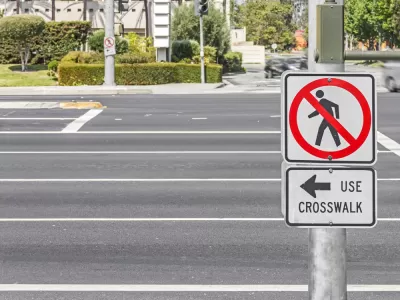
"Media outlets frequently shame walking in the way they cover issues related to walking, and these tactics contribute to a culture where death and destruction are accepted as unavoidable byproducts of our auto-oriented mobility norms," according to the argument of a recent article by Matt Steele.
To help members of the media be more deliberate in their presentation of the issues and politics surrounding walking, Steele goes on to highlight several examples of "walk-shaming," including:
- Misunderstandings about crosswalks. Victim blaming, according to Steele, is especially easy when crosswalks are so poor in so many cities. In Minnesota, for example, every corner is a crosswalk—even when unmarked. That doesn't stop the media from implying the fault of the pedestrian when struck and killed or injured when crossing the street legally.
- The use of the word "accident," which, according to Steele, "serves to entrench the fatalistic concept that, in the absence of intent, carnage is merely an occurrence of chance."
- Walk-shaming advertisements.
Each of the above examples, and the others mentioned in the article, include recent, specific examples of the media perpetrating a walk-shaming narrative.
FULL STORY: Walk-Shaming in the Media

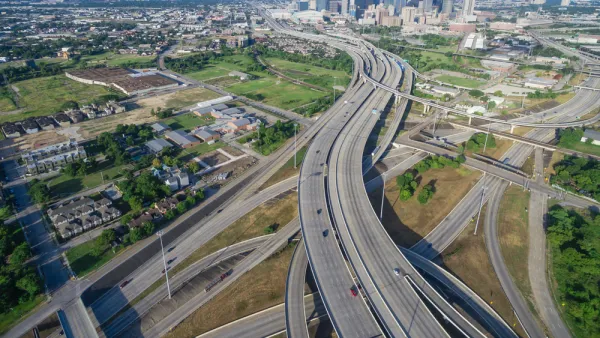
Refugees Learn to Survive as Pedestrians on Houston's Dangerous Streets
For one refugee family, living in Houston has meant facing a host of new challenges as they traverse the city’s roadways without a car.
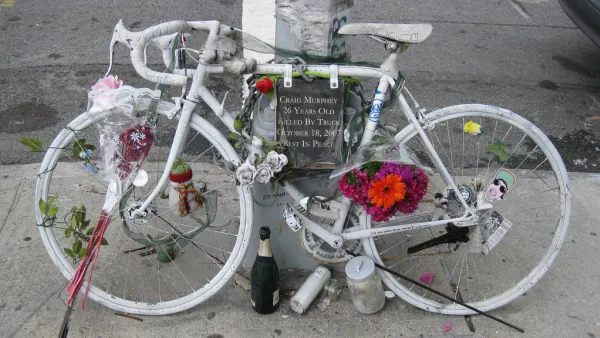
2015 Road Toll: 35,200 Fatalities
The National Highway Traffic Safety Administration (NHTSA) released preliminary fatality estimates for 2015. Deaths jumped by 2,525, an increase of 7.7 percent over 2014. Pedestrians and bicyclists saw the biggest increases.
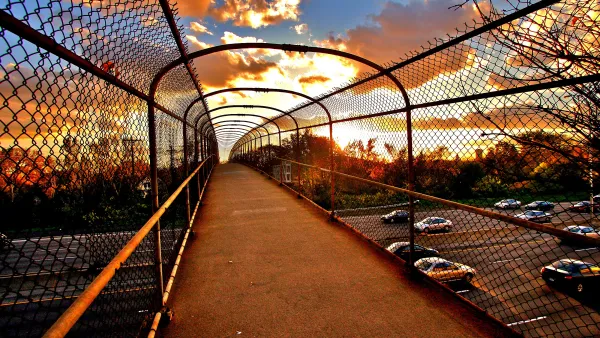
Walkability 'Growing Pains' in Los Angeles
By many estimates, a city known for its pedestrian unfriendliness is developing pockets of local walkability. Minor disputes over pedestrian rights may add up to something bigger.

Planetizen Federal Action Tracker
A weekly monitor of how Trump’s orders and actions are impacting planners and planning in America.

The state-sanctioned urbicide of Austin
People don’t kill cities. Freeways do.

US to reduce Colorado River water deliveries to Mexico
A new Colorado Treaty amendment reduces Mexico’s Colorado River water allocation by 250,000 acre feet.

5 New England states march closer to 800 megawatt wind energy project
Securing federal approval for the project may be complicated under the Trump administration, which has historically been hostile towards domestic wind power.

Baltimore to break ground on $50 million Transit Priority Project
The project will bring faster bus trips, safer streets and better bike connections to Baltimore.

Airbnb launches $250 million 'last-dollar financing' housing accelerator, makes first investment in Austin
The company will put $6.4 million towards affordable housing development in Texas’ capital.

FREE Course: Walkable City 1: Why Walkability?
After describing his path towards focusing on walkability as the essence of good planning, Jeff Speck marches through his five principal reasons for making more walkable places.
Reinventing Malls: Planning Alchemy—Turning Gray Fields Into Gold
The course focuses on the opportunities and imperatives that shape reinvention of mall sites.

Eagle County Government
Harvard University Graduate School of Design
Nashville Planning Department
The Architects Foundation
University of Cincinnati Online
The Pocatello Development Authority
The Urban Renewal Agency of the City of Pocatello
Journal of the American Planning Association