As Joe Fitzgerald Rodriguez of the San Francisco Examiner explains, the 'E' Line has only been over three decades in the making. Credit goes greatly to former mayor, now U.S. Senator Diane Feinstein, and the tireless work of committed advocates.


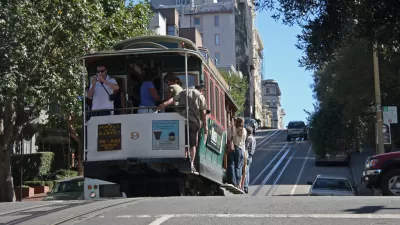
San Francisco's historic or vintage streetcar line is about to double in size. The crowded F Line, operating from Castro Street to Fisherman's Wharf, will soon be sharing streetcars and tracks with its sister line, the E-Embarcadero Line, operating from the Caltrain station, past AT&T (San Francisco Giants) ballpark, merging with the F Line at the Ferry Building, and continuing to Fisherman's Wharf.
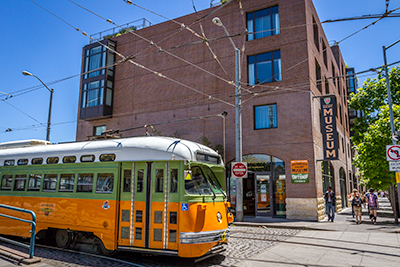
Credit: San Francisco Railway Museum • On the F-Line • Steuart St. Stop
"Originally conceived by San Francisco Tomorrow in the 1970s, it wasn’t until [U.S. Sen. Dianne Feinstein, then-San Francisco mayor] backed the project in the ’80s that the trolley’s future was secured," writes Joe Fitzgerald Rodriguez for the San Francisco Examiner.
"It takes a tremendous amount of patience to make dreams come true in San Francisco,” said Rick Laubscher, president of the Market Street Railway Association, a "non-profit group dedicated to the acquisition, restoration and operation of historic transit vehicles in the city," according to the San Francisco Municipal Transportation Authority (SFMTA), the city's public transit operator.
Rodriguez does an excellent job of explaining the history behind the E Line, crediting those who made it happen; so much so that Market Street Railway wrote their own article, "Great E-line Startup Piece in The Examiner." The new E Line will operate on weekends only beginning August 1 with daily service to start next year. Joe Fitzgerald Rodriguez fittingly provides the recent history for the historic line.
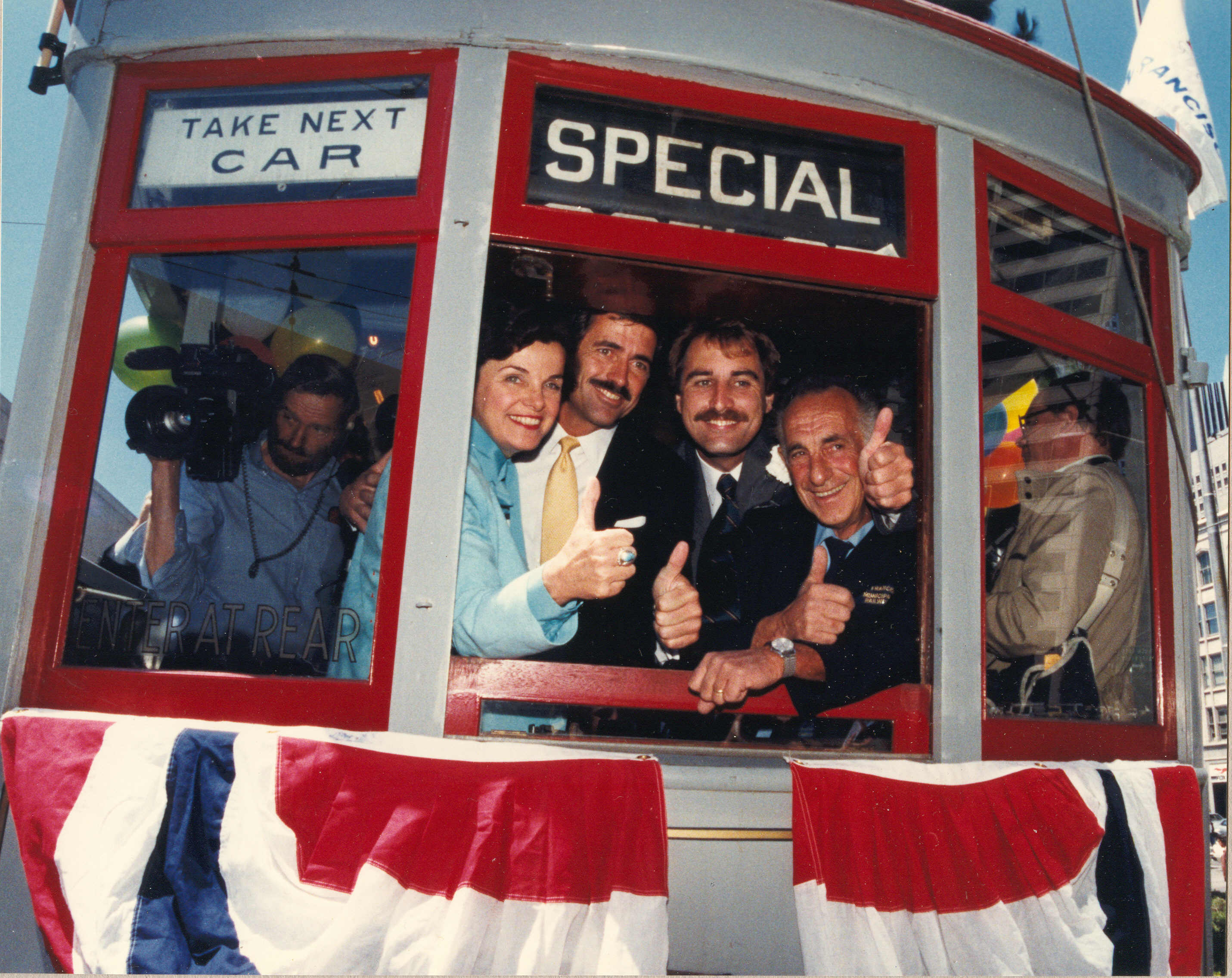
"Right after this shot was snapped, Mayor Dianne Feinstein (left) took the controls of Muni Car No.1 and personally piloted it down Market Street to open the first Trolley Festival in June 1983. That success led to the permanent F-line, and now the E-line." Credit: Market Street Railway.
Feinstein's role can not be downplayed. Just as Mayor Michael Bloomberg played an instrumental role in the creation of New York's High Line after his predecessor, Mayor Rudolph Giuliani, tried to kill it, as noted here, Feinstein, working with MTA and Market Street Railway got the F Line, and now the E Line, launched.
“I congratulate the SFMTA on finally achieving this milestone, one we envisioned when I was Mayor,” Feinstein wrote in an email to the Examiner. “Most especially, I am extremely proud of the Market Street Railway Association, led by Rick Laubscher, for their tireless advocacy; without their support, this never would have come to fruition. Now, onto the next challenge — extend the line from Fisherman’s Wharf to Fort Mason!”
On that last note, she refers to an extension from Fisherman's Wharf "through an old tunnel that links Aquatic Park to Fort Mason." The Environmental Impact Statement [PDF] has been completed.
Unlike other historic or replica streetcar lines, San Francisco's streetcars operates more like the oldest public transit in the United States, the New Orleans streetcars, as it serves the local population as well as tourists, as explained here last August.
Read the full story: Muni set to roll out long-planned waterfront streetcar, the E-line

How San Francisco Integrates Historic Rail Lines into its Transit System
San Francisco has managed to operate and integrate historic rail transit into its overall public transit system. Clement Lau explains how the City does it.

A San Francisco bus that serves thousands of students students is getting some upgrades
Students advocated for changes on the #29 bus, which was notorious for its lack of reliability.
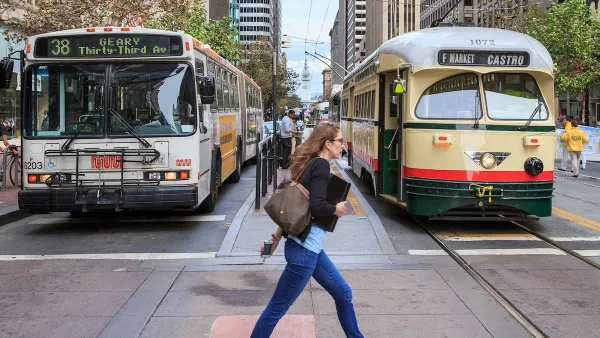
SF’s Muni Transit Slashes Budget as it Approaches Fiscal Cliff
The transit agency, which faces a $322 million budget deficit, has pledged to preserve current routes and schedules, but is making other cuts across the board.

Planetizen Federal Action Tracker
A weekly monitor of how Trump’s orders and actions are impacting planners and planning in America.

The state-sanctioned urbicide of Austin
People don’t kill cities. Freeways do.

US to reduce Colorado River water deliveries to Mexico
A new Colorado Treaty amendment reduces Mexico’s Colorado River water allocation by 250,000 acre feet.

Nation's most wind-powered state turns to coal as data centers increase energy demand
For the first time in decades, Iowa has increased its generation of coal power.

NYC cools commuters with city's first rain garden above a bus stop
New York City officials say the plants in the rain garden can absorb 16 gallons of rainwater during heavy storms.

Brightline West’s future may rely on $6 billion federal loan
The company has until Nov. 2 to make a $400 million equity investment into its proposed high-speed rail line.

FREE Course: Walkable City 1: Why Walkability?
After describing his path towards focusing on walkability as the essence of good planning, Jeff Speck marches through his five principal reasons for making more walkable places.
Reinventing Malls: Planning Alchemy—Turning Gray Fields Into Gold
The course focuses on the opportunities and imperatives that shape reinvention of mall sites.

Eagle County Government
Harvard University Graduate School of Design
Nashville Planning Department
The Architects Foundation
University of Cincinnati Online
The Pocatello Development Authority
The Urban Renewal Agency of the City of Pocatello
Journal of the American Planning Association