An Esquire article about the disappearance of neighborhood dive bars in cities like Chicago asks why people to support their local watering hole.


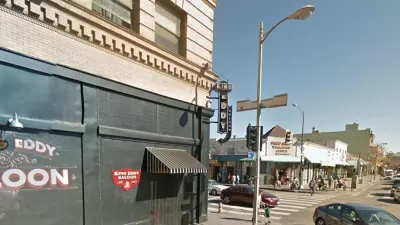
Remy Ayesh writes an eulogy for the dive bar by first describing its appeal: "There’s just something about the edgy, primordial, rock ‘n’ roll nature of these kinds of establishments that speaks to us. And they aren’t just for boozehounds and hipsters. Usually tucked into a neighborhood, they offer convenience and tranquility. Even if you don’t frequent them, they’re still a comfort to have around. They’re the old house shoe and robe to your black dress and heels. And they’re disappearing fast."
The reason for Ayesh's consternation is a recent round of closures: "Four of Chicago’s most iconic dives just shuttered or are for sale," and "[another] New York City dive recently closed its doors…"
Then, a call to action: "If we love these divey places, then why do we collectively scatter when it comes to supporting them? Why aren’t we fighting to keep them around? Where are the millionaire-billionaires that support the new establishments? Where’s the Kickstarter for the old?"
Read the full story: THE SLOW, INEXORABLE DEATH OF THE DIVE BAR

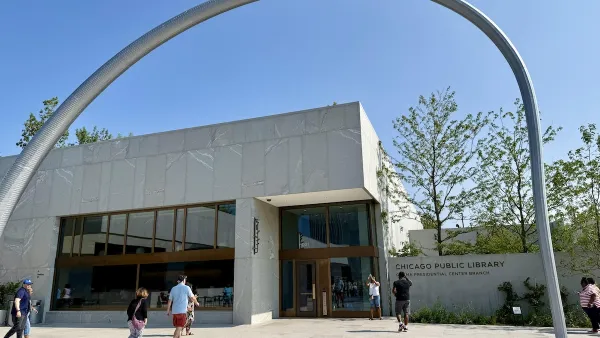
South Chicago development proposal would 'upzone' neighborhoods to increase density
The South Chicago Land Use Framework plan also aims to promote pedestrian and transit-oriented developments.
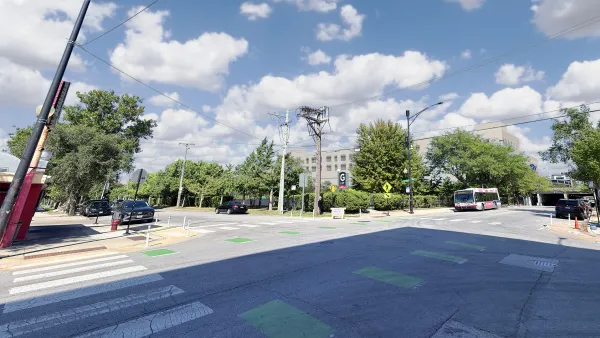
A ‘shady’ deal: Chicagoans rally against planned Amtrak maintenance facility
The $900 million facility would allow Amtrak to maintain entire trains in one building, which the company says will reduce delays.
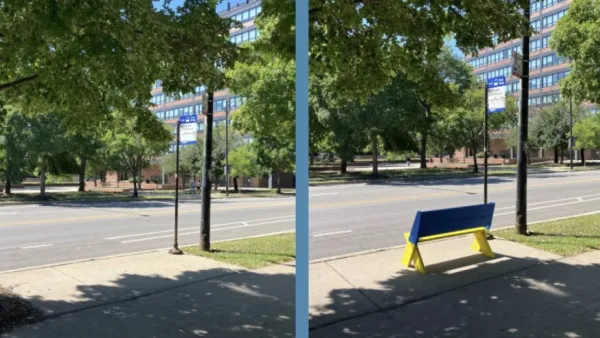
Guerilla urbanists are building DIY bus stop benches in Chicago
The new benches are not officially sanctioned or permitted, but the residents who placed them hope they will be the start of a network of DIY benches across the city.

Planetizen Federal Action Tracker
A weekly monitor of how Trump’s orders and actions are impacting planners and planning in America.

Amtrak, CN end decades-long dispute with eight-year agreement
The new operating agreement establishes an updated framework for the companies to work together, including processes to resolve disputes.

Northwest rail fans eager for Sept. 30 debut of Amtrak’s Airo fleet
Get ready for that new train smell and more seats. But they won’t go faster or run more frequently on the Cascades route in Washington and Oregon.

Brightline Florida files for bankruptcy
The transit company is over $5 billion in debt.

St. Louis Metro to test if single-car trains can reduce operating costs, maintain rider satisfaction
The pilot program will run from October to spring 2027, and begin with one single-car train operating on Metrolink’s Red and Blue lines.

Pennsylvania is building data centers in abandoned mines
Housing data centers in mines provides an alternative to destroying local forests and may spare residents from data centers’ noise and air pollution.

FREE Course: Walkable City 1: Why Walkability?
After describing his path towards focusing on walkability as the essence of good planning, Jeff Speck marches through his five principal reasons for making more walkable places.
Reinventing Malls: Planning Alchemy—Turning Gray Fields Into Gold
The course focuses on the opportunities and imperatives that shape reinvention of mall sites.

City of Thousand Oaks
City of Wisconsin Rapids
Harvard University Graduate School of Design
The Architects Foundation
University of Cincinnati Online
The Pocatello Development Authority
The Urban Renewal Agency of the City of Pocatello