After five deaths, several states have stopped installing FHWA-approved guardrails which have been said "to turn into spears" when hit by vehicles. An Oct. 20 jury verdict awarded $175 million to a whistleblower to be paid by the rail manufacturer.


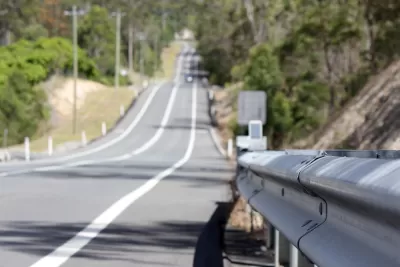
Danielle Ivory and Aaron M. Kessler report on the ongoing investigation of guardrails manufactured by Dallas-based Trinity Industries, centering on a design change they made in 2005.
"Federal highway officials had long insisted that guardrails throughout the state were safe," they write. "But some guardrail heads had apparently malfunctioned, in essence turning the rails into spears when cars hit them and injuring people instead of cushioning the blow, Missouri officials said."
Because of its safety concerns, Missouri banned further installation of the rail heads on Sept. 24. It joined Nevada, which prohibited further purchases in January, and was followed six days later by Massachusetts. Lawsuits say the guardrails were to blame for five deaths, and many more injuries, in at least 14 accidents nationwide.
While "(t)he Federal Highway Administration (FHWA), the agency charged with ensuring the safety of the nation’s roads, continues to say that the guardrails, installed on highways in almost every state, meet crash-test criteria," write Ivory and Kessler, the result of a jury trial on Monday, October 20 may lead many to question that assertion.
ABC news reports that Trinity "made false statements to the government relating to a nearly decade-old modification that critics say made the guardrails more dangerous for motorists across the country, and ordered the company to pay $175 million in damages."
According to The Wall Street Journal [subscription], "(i)t is unclear how much Trinity Industries will have to pay. Damages are usually tripled under the federal rules that govern whistleblower procedures..." Ivory and Kessler draw comparisons to "the National Highway Traffic Safety Administration, a federal agency separate from the Federal Highway Administration, (that) failed to act on multiple reports of faulty ignitions in cars made by General Motors, a defect linked to at least 24 deaths."
In both instances, questions are being raised about the close ties between federal safety agencies and the companies they are charged with overseeing. The internal communications at the Federal Highway Administration show that (FHWA senior engineer) Nicholas Artimovich endorsed the Trinity guardrails after meeting privately with company officials and being assured the tests were adequate.
Correspondent's note: To understand how the guardrails are supposed to operate after a vehicle hits the "end terminal," and photos of actual crash scenes, readers are encouraged to view the ABC News video.
Read the full story: Highway Guardrail May Be Deadly, States Say


FHWA removes bike lanes and speed cameras from list of traffic safety measures
The agency did not announce its intention to eliminate five proven safety measures from its list of suggested interventions.

Ted Cruz Blames Safety Features for the Rising Cost of Cars; Senate Could Roll Back Regulations
A Senate committee will hear testimony by automakers in a hearing that could determine whether autonomous emergency braking and other safety features will be mandatory on new cars.
7% of USDOT Workforce Accept ‘Deferred Resignation’ Offer
Close to half of the 4,127 employees leaving federal agencies will come from the Federal Aviation Administration.

Planetizen Federal Action Tracker
A weekly monitor of how Trump’s orders and actions are impacting planners and planning in America.

Amtrak, CN end decades-long dispute with eight-year agreement
The new operating agreement establishes an updated framework for the companies to work together, including processes to resolve disputes.

Judges permit Denver to divert 77,000 acre feet from the Colorado River for reservoir expansion
Overuse and climate change have caused the Colorado River’s water levels to plummet.

San Diego may kill one-third of its bus routes as budget crisis looms
Under the city's proposed plan, 21% of Metropolitan Transit System riders would lose access to transit services.

Philadelphia to invest $2 billion into upgrading city airports as PHL places last in customer satisfaction
Modernizations to Philadelphia's airports will include baggage system upgrades and a new automated parking garage guidance system.

The LA housing policies making developers turn away from the city
Despite LA’s housing shortage, developers say the city’s "mansion-tax" and pandemic-era policies make it an unappealing place to build housing.

FREE Course: Walkable City 1: Why Walkability?
After describing his path towards focusing on walkability as the essence of good planning, Jeff Speck marches through his five principal reasons for making more walkable places.
Reinventing Malls: Planning Alchemy—Turning Gray Fields Into Gold
The course focuses on the opportunities and imperatives that shape reinvention of mall sites.

City of Wisconsin Rapids
Harvard University Graduate School of Design
KFH Group Inc.
The Architects Foundation
University of Cincinnati Online
The Pocatello Development Authority
The Urban Renewal Agency of the City of Pocatello