"The St. Louis region doesn’t face the prospect, as Western states do, of running out of water," according to Jacob Barker. But the region is facing a water problem: "aging infrastructure and capital spending that isn’t keeping up."


The problem of aging water infrastructure is not unique to St. Louis. See if this sounds familiar: "Local water system managers say water bills will likely have to rise over the next decade to replace the pipes, pumps and plants that in some cases are nearly 100 years old. The St. Louis region isn’t unique in that regard, but most cities are for the first time facing an aging water system that is nearing the end of its useful life."
Barker's article follows a report by the Metro Water Infrastructure Partnership, which says "the region needs to roughly double the pace at which it replaces water pipelines to reach the industry standard of a 1 percent replacement rate — fast enough to swap out each pipe by the time it hits 100 years old."
"That would cost roughly $34 million more a year. Add in the cost of maintenance and other operations, and the group expects average water bills over the next 20 years to rise to around $80 per month from roughly $30 per month."
Read the full story: Aging pipes around St. Louis area will push water bills up, report says

Replacing lead pipes in Chicago costs more than 6 times the national average — and authorities can't explain why
Replacing one lead pipe in Chicago costs around $31,000, while the national average cost sits at around $4,700 per line.
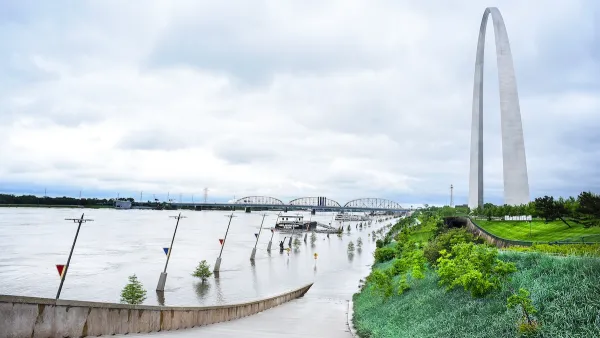
St. Louis has a Secret Stormwater Weapon Saving 100 Million Gallons from the Mississippi
The city reimburses residents who install gardens, rain barrels, and other methods that retain stormwater and decrease the risk of flooding.
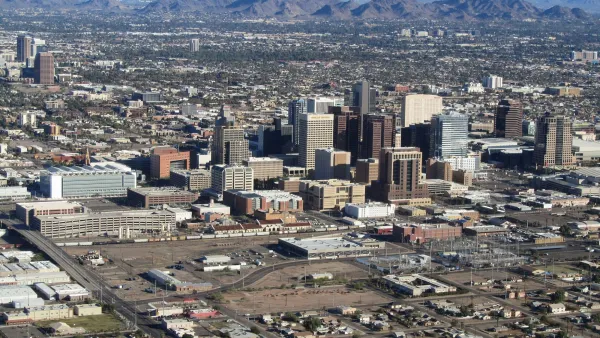
Waterline Breaks Plague Phoenix as City Struggles to Keep Up
Pipeline breaks are a daily occurrence in the city, but funding for an expanded pipe-replacement program has been a contentious issue.

Desperate measures: Advocates weigh draining Lake Powell to fill Colorado River
Draining the reservoir could reduce evaporation losses by a couple hundred thousand acre-feet.

Eastern Nebraska is running out of electricity
Data centers and electrification are straining eastern Nebraska’s grid, throttling economic development.

Malls are becoming the midtowns of the future
Mall and office park redevelopments are a generational opportunity to create new nodes of urbanity.

NYC breaks ground on anti-flooding infrastructure project
New York City's new system will reduce stormwater flows to local sewers by 90%.

One Kentucky town’s secret to affordable housing
The Smoketown Community Land Trust has already built seven affordable homes for community members.

Houston gains petal-shaped cooling infrastructure to make streets more ‘delightful’
The city has installed the pavilions along 15 blocks in Houston.

FREE Course: Walkable City 1: Why Walkability?
After describing his path towards focusing on walkability as the essence of good planning, Jeff Speck marches through his five principal reasons for making more walkable places.
Reinventing Malls: Planning Alchemy—Turning Gray Fields Into Gold
The course focuses on the opportunities and imperatives that shape reinvention of mall sites.

City of Rosemead
Rutgers University, Edward J. Bloustein School of Planning and Public Policy
One Hundred Miles
University of Michigan School for Environment and Sustainability (SEAS)
Hunter College, City University of New York (CUNY)
The Architects Foundation
City of Cambridge
Montrose County
The Pocatello Development Authority