House Bill 1375 in Colorado would rewrite the rules of tax increment finance—sending more money to counties, which hope to gain more funding to provide for services. The bill awaits the signature (or veto) of Governor John Hickenlooper.


"A pending state law would restrict how cities can finance urban renewal projects by changing how much in 'new' taxes can be used to repay city development loans and how much should be sent on to counties and other governments," reports Rachel Sapin. In this case, "new" taxes refer to tax increment finance districts, which have been used in Colorado for decades for redevelopment projects.
"Aurora officials say the changes made by House Bill 1375 could hamper or even stall redevelopment efforts in the city. County officials, however, say changes were needed because the growing number of urban renewal and redevelopment projects across the state were shorting other governments of tax revenues needed to provide county services."
Sapin's coverage provides insight into how the bill would affect the city of Aurora, where "about half of the city’s urban renewal areas use potential property taxes to fund redevelopment projects."
Read the full story: Pending law targeting urban renewal taxes could stall future projects, Aurora says
State Bill Would Add TIFs Along Transit Lines in Chicago
Expanded use of tax increment financing is on the table in Chicago—a city that invests less than its peers on building and running transit.
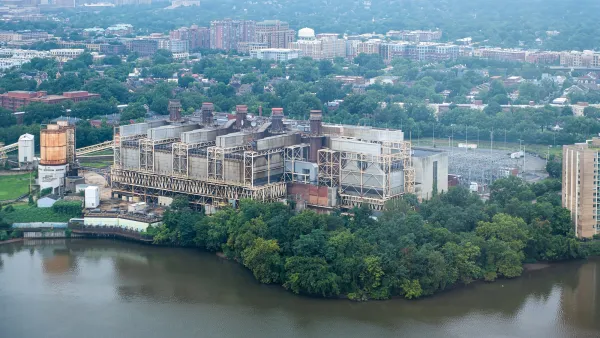
Former power plant in Alexandria to become walkable waterfront neighborhood with 800 homes
The Potomac River Generating Station was once the biggest source of air pollution in northern Virginia.
Cleveland announces new Midline industrial investment district
The plan calls for at least 1.5 million square feet of new industrial and commercial space alongside housing.

Planetizen Federal Action Tracker
A weekly monitor of how Trump’s orders and actions are impacting planners and planning in America.

California plans to bury El Niño’s downpour
If the state plays its cards right, it may be able to store a billion acre-feet of El Niño’s water in aquifers.

Desperate measures: Advocates weigh draining Lake Powell to fill Colorado River
Draining the reservoir could reduce evaporation losses by a couple hundred thousand acre-feet.

Chicago voters approve permanent festival grounds, penalty for vacant property owners
Currently, major summer and fall festivals take over public parks for weeks at a time, drawing criticism from nearby residents

NYC votes to cut outdoor dining red tape, speed up permitting
New York City also voted to allow the Department of Transportation to begin work on urgent projects before notifying elected officials.

California appears to reject Prop. 45
The proposition would have expanded the projects that qualify for a streamlined environmental review, effectively paring down the California Environmental Quality Act.

FREE Course: Walkable City 1: Why Walkability?
After describing his path towards focusing on walkability as the essence of good planning, Jeff Speck marches through his five principal reasons for making more walkable places.
Reinventing Malls: Planning Alchemy—Turning Gray Fields Into Gold
The course focuses on the opportunities and imperatives that shape reinvention of mall sites.

City of Rosemead
Rutgers University, Edward J. Bloustein School of Planning and Public Policy
One Hundred Miles
Hunter College, City University of New York (CUNY)
The Architects Foundation
University of Cincinnati Online
City of Cambridge
Montrose County
The Pocatello Development Authority