The city is creating a strategy for improvements in the Clark Street corridor to improve the area's walkability and stimulate the local economy.



Chicago's Department of Planning and Development is soliciting stakeholder input to develop a plan for Clark Street, a major commercial thoroughfare that connects some of the city's most historic neighborhoods, including Uptown and Wrigleyville.
As part of its study of the area, the city wants to "identify opportunities for new development, zoning enhancements and public realm improvements" that will drive more pedestrians to Clark Street and its businesses. According to the project's website, the study will examine ways to improve streetscapes "to promote additional comfort and safety for pedestrians and cyclists" and introduce "uses that increase foot traffic to the area."
The article notes that the study is funded by $250,000 from the Clark/Montrose Tax Increment Financing (TIF) District, a financing mechanism that uses property tax growth to promote public and private investment in a designated district. The DPD plans to release the final study and its recommendations in June 2022.
Read the full story: City Launches Public Engagement Activities for ‘Clark Street Crossroads’

Risk and Reward in Play With Wrigleyville Developments
A wave of investments is visiting one of the most famous, and notorious, neighborhoods in the city of Chicago. The question is whether the final product will be worth the expense.
Op-Ed: Chicago's Washington Park a Perfect Fit for TIF
An op-ed in the Chicago Tribune addresses the long history of tax increment financing abuse in Chicago, but supports a proposed TIF district for Washington Park.
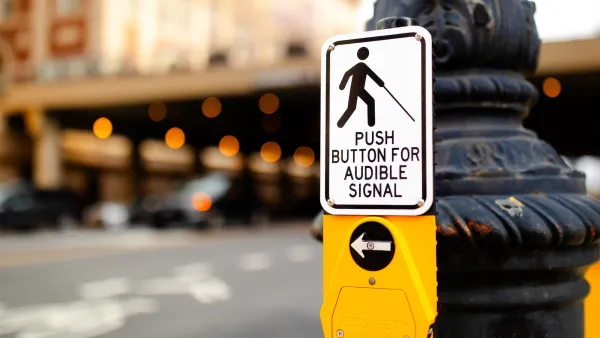
Report: Chicago surpassed its legal mandate for accessible pedestrian signals — but none passed inspections
Gaps in accessibility, placement and functionality highlight the importance of regular inspections and maintenance.

Planetizen Federal Action Tracker
A weekly monitor of how Trump’s orders and actions are impacting planners and planning in America.

California plans to bury El Niño’s downpour
If the state plays its cards right, it may be able to store a billion acre-feet of El Niño’s water in aquifers.

Desperate measures: Advocates weigh draining Lake Powell to fill Colorado River
Draining the reservoir could reduce evaporation losses by a couple hundred thousand acre-feet.

How a Chicago-sized wind farm beat the odds and powered on
The project spanned five presidential administrations and a standoff with a U.S. military base.

MTA gives itself 30 days to transform pit into basketball court
The site has been under construction since 2022; the city originally estimated it would finish the court in 2024.

Non-stop party: Chicago voters weigh permanent festival grounds
A stable place for bleachers, stages and drainage may streamline the setup and teardown of large events.

FREE Course: Walkable City 1: Why Walkability?
After describing his path towards focusing on walkability as the essence of good planning, Jeff Speck marches through his five principal reasons for making more walkable places.
Reinventing Malls: Planning Alchemy—Turning Gray Fields Into Gold
The course focuses on the opportunities and imperatives that shape reinvention of mall sites.

City of Rosemead
Rutgers University, Edward J. Bloustein School of Planning and Public Policy
One Hundred Miles
Hunter College, City University of New York (CUNY)
The Architects Foundation
University of Cincinnati Online
City of Cambridge
Montrose County
The Pocatello Development Authority