Advocates presented a compelling case to remove the aging stretch of Interstate 345 that bisects Dallas adjacent to downtown. But state transportation officials have decided to rehab, rather than remove, the freeway.


The Texas Department of Transportation (TxDOT) has taken a final stand on its plans to rehab I-345 along a 1.7 mile stretch in downtown Dallas. The target for completion of the project, according to an article by Robert Wilonsky, is 2020.
The decision came down to money and traffic. On the former: “TxDOT told the city it will cost $100 million to rehab the bridge, as opposed to the $1 billion it says it would cost to take it down and replace it with, say, a tunnel or some other car-moving option.” And on the latter: “Where do those 170,000 to 200,000 cars per day go?”
The rehab, however, is a band aid solution, allowing the elevated freeway to survive another 20-25 years. In the meantime, proposed park developments wait until the I-345 project is complete and a vision that starts with tearing down the freeway will have to wait.
Read the full story: TxDOT tells Dallas it will repair and not remove the highway separating Deep Ellum and downtown

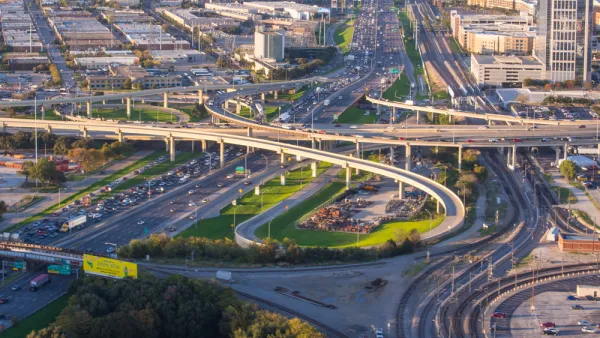
TxDOT Recommends a 10-Lane ‘Infrastructure Grave’ in Dallas
Rather than removing the freeway altogether, which the Texas Department of Transportation calls ‘unfeasible,’ the agency recommends burying the road in a billion-dollar, ten-lane trench through the city’s downtown.
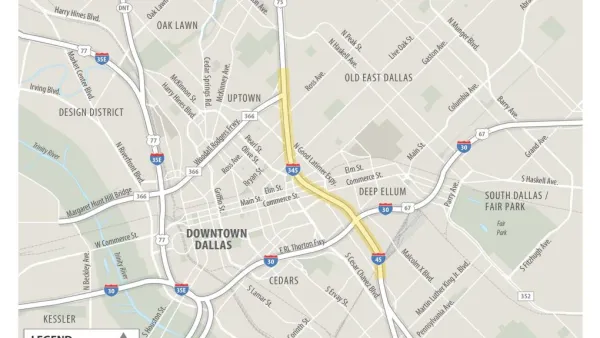
Columnist to Dallas: Tear Down That Freeway
Freeways have been removed before, but if the Texas Department of Transportation decides to tear down the I-345 freeway in Dallas, it would reflect a massive sea change in urban transportation planning.
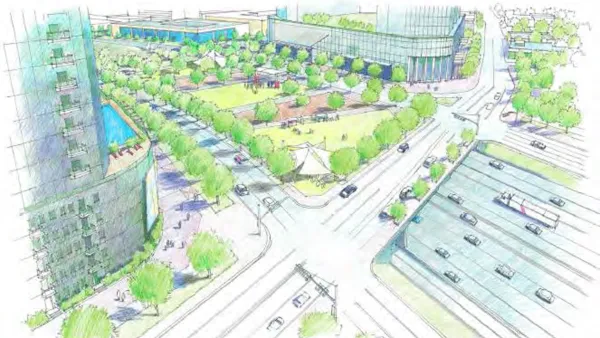
TxDOT Promises to Reverse Some of the Damage Caused by Urban Freeways in Dallas
The Texas Department of Transportation (TxDOT) is in the early stages of planning for two projects that could leverage plans to rebuild two freeways in the city with plan to reconnect the neighborhoods they severed.

Planetizen Federal Action Tracker
A weekly monitor of how Trump’s orders and actions are impacting planners and planning in America.

‘Going backwards:’ Baltimore mayor, students rally against state's transit funding plan
Maryland's proposed six-year plan provides no funding for Baltimore’s BMORE bus program and reduces its road maintenance funding.
Mamdani sent nearly 6,000 pied-à-terre tax warnings to homes that didn’t qualify
A judge has ordered the administration to cancel thousands of pied-à-terre tax notices after it sent 35% of them erroneously.

Newsom vetoes high-speed rail supervision bill after agency receives condemnatory audit
The audit found the CHSRA approved almost $600,000 in unallowable travel expenses.

Nation sees first electric plane-boat hybrid take off in public demo
The Viceroy Seaglider can fly at speeds of 180mph for up to 180 miles.

One of nation’s poorest counties to receive $6 billion data center
The developers estimate the project will create 200 permanent jobs and 1,000 temporary construction jobs.

FREE Course: Walkable City 1: Why Walkability?
After describing his path towards focusing on walkability as the essence of good planning, Jeff Speck marches through his five principal reasons for making more walkable places.
Reinventing Malls: Planning Alchemy—Turning Gray Fields Into Gold
The course focuses on the opportunities and imperatives that shape reinvention of mall sites.

City of Thousand Oaks
City of Wisconsin Rapids
Harvard University Graduate School of Design
The Architects Foundation
University of Cincinnati Online
Northern Illinois Transit Authority (NITA)
The Pocatello Development Authority
The Urban Renewal Agency of the City of Pocatello