The much maligned "Prius tax", an annual registration fee for hybrid and electric vehicles to ensure they pay their share of road costs that was part of former Va. Governor Bob McDonell's landmark transportation bill last year, may soon be history.


Readers may recall that Virginia made headlines last year when then-Gov. Bob McDonell proposed doing away with the state's gasoline excise tax, the first to do so in the country, replacing the lost revenue with an increase in the state sales tax and new fees for hybrids and electric vehicles, dubbed the "Prius tax". The legislature agreed, although it added "a new 3.5 percent wholesale tax on motor fuels" and reduced the $100 hybrid fee to $64. The changes went into effect July 1, 2013.
"As well-intentioned as it may have been, Virginia’s hybrid tax was doomed from the start and, rightly or wrongly, will likely be remembered as a failed attempt by state conservatives to stick their finger in the eyes of greenies," writes Matthew Philips.
While not headline news, unless perhaps you own a hybrid or EV and reside in Virginia, "(o)n Monday [Jan. 20], the Virginia State Senate voted to repeal the [Prius] tax. The bill is now on its way to the Republican-led House of Delegates, which already passed a similar measure in subcommittee," writes Philips.
Though a bold experiment, the tax never made sense, both from an economic and political standpoint. It was supposed to generate only about $11 million in revenue, a rounding error considering McDonnell’s transportation package is projected to raise $1 billion in funding a year.
Jim Nolan of the Richmond Times-Dispatch writes that "Gov. Terry McAuliffe said Monday that if the legislature passed a bill to repeal the hybrid car fee, he would sign it."
Read the full story: Virginia Backtracks on Its Hybrid Car Tax

Hybrid and Electric Vehicle Fees are Here to Stay, and Spreading
It may seem counter-intuitive to charge extra fees for the cleanest, most fuel-efficient vehicles on the road today - including those that qualify for a federal $7,500 credit. But ten states are doing just that to keep roads well-funded.
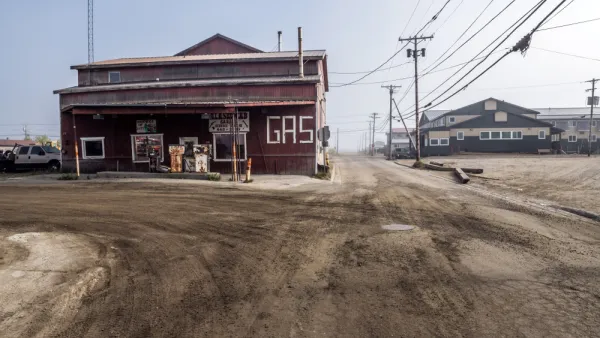
Alaska Fuel Tax Hike Passes First Key Hurdle
A GOP bill to double the nation's lowest state gas tax was approved by the state Senate on Monday. If approved by the House and signed by Gov. Dunleavy, who is facing a possible recall election, the excise tax would jump to 16 cents-per-gallon.
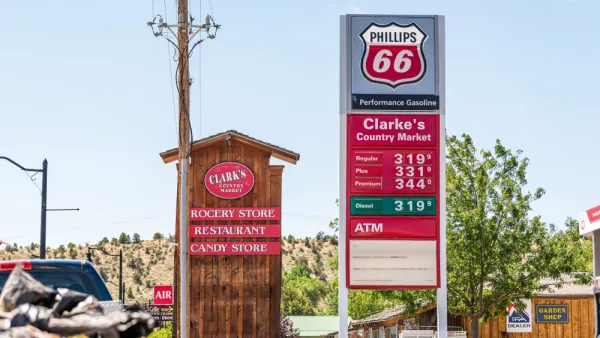
Utah Officials Want to Replace the State Gas Tax
The state auditor and the transportation chief argue that the gas tax is an unsustainable funding source caused by a projected increase in electric vehicle adoption and an increase in fuel efficiency of gas-powered vehicles.

Planetizen Federal Action Tracker
A weekly monitor of how Trump’s orders and actions are impacting planners and planning in America.

California plans to bury El Niño’s downpour
If the state plays its cards right, it may be able to store a billion acre-feet of El Niño’s water in aquifers.

Chicago breaks ground on $3 billion megadevelopment
The new neighborhood, titled Foundry Park, will one day host 3,700 residences.

California High-Speed Rail Authority CEO resigns after $600,000 scandal
Under Ian Choudri, the authority used taxpayer dollars to fund first class flights and trips to nightclubs.

Want to study the Missouri River? Soon, you may need unanimous approval from 10 states
Legislation would require 10 governors’ permission to study or build projects moving water outside the basin.

Desperate measures: Advocates weigh draining Lake Powell to fill Colorado River
Draining the reservoir could reduce evaporation losses by a couple hundred thousand acre-feet.

FREE Course: Walkable City 1: Why Walkability?
After describing his path towards focusing on walkability as the essence of good planning, Jeff Speck marches through his five principal reasons for making more walkable places.
Reinventing Malls: Planning Alchemy—Turning Gray Fields Into Gold
The course focuses on the opportunities and imperatives that shape reinvention of mall sites.

City of Rosemead
Rutgers University, Edward J. Bloustein School of Planning and Public Policy
One Hundred Miles
Hunter College, City University of New York (CUNY)
The Architects Foundation
University of Cincinnati Online
City of Cambridge
Montrose County
The Pocatello Development Authority