California's Office of Planning & Research has been tasked with moving environmental analysis away from standards based solely on level of service. The agency has released its preliminary evaluation of alternative methods of transportation analysis.


One of the most promising elements for promoting sustainable urban development in California to come out of last year's legislative session was a CEQA reform bill that moved environmental impact analysis away from standards based solely on traffic delay.
"Following up on the passage of SB 743, the Governor’s Office of Planning & Research [OPR] is considering a variety of alternatives to vehicle 'level of service' under CEQA, including vehicle miles traveled, auto trips generated, and multi-modal level of service," writes the California Planning & Development Report.
In a preliminary paper [PDF] released last week for public review, OPR looked at the problems with LOS and the prospects for utilizing alternative transportation criteria and metrics that “promote the reduction of greenhouse gas emissions, the development of multimodal transportation networks, and a diversity of land uses,” in addition to several other criteria.
Read the full story: OPR Takes On Level of Service
The Many Benefits of 'Level of Service' Reform
A long read by Eric Jaffe serves as a primer on the "Level of Service" (LOS) requirement in the California Environmental Quality Act (CEQA), as well as predicting the large impact of LOS reform on planning in the state and around the country.
Experts Weigh in on Decision to Move California to VMT as Metric for Impacts
In a significant effort to shift from sprawl toward incentivizing low-carbon transportation options, California is revising the way it measures traffic impacts of development projects under its Environmental Quality Act.

CEQA Reform: The Public Health Community Is Cheering Too
An op-ed describing the public health benefits of CEQA reform and urging California's leaders to finalize the end of "Level of Service" as a measure of project impacts.

Planetizen Federal Action Tracker
A weekly monitor of how Trump’s orders and actions are impacting planners and planning in America.

Washington state to charge fee to drivers with fuel-efficient cars
Revenue from the fee will go towards supporting the state’s highways.
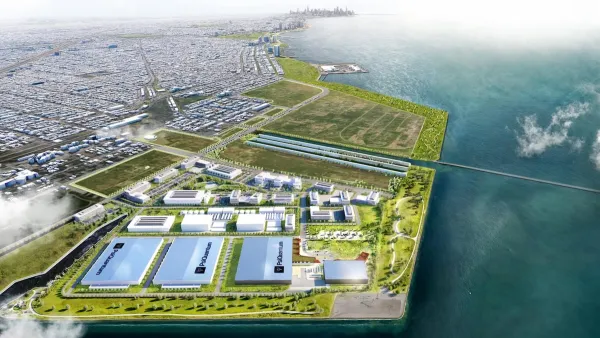
Illinois considers spending $1 billion in taxpayer money on data center
A quantum computing campus and data center are currently under construction in Chicago.

Did data centers change how voters cast their ballots?
Texas, Ohio, and Georgia all flipped party control. But in rural counties, the effect of local data centers was mixed.

Amtrak invests in eight new Airo trainsets
The new trainsets will begin serving passengers in 2031.

HUD to end aid for mixed-immigration-status households
The new rule is projected to impact 80,000 people, nearly half of whom are children.

FREE Course: Walkable City 1: Why Walkability?
After describing his path towards focusing on walkability as the essence of good planning, Jeff Speck marches through his five principal reasons for making more walkable places.
Reinventing Malls: Planning Alchemy—Turning Gray Fields Into Gold
The course focuses on the opportunities and imperatives that shape reinvention of mall sites.

City of Charlotte
City of Rosemead
Rutgers University, Edward J. Bloustein School of Planning and Public Policy
University of Michigan School for Environment and Sustainability (SEAS)
Hunter College, City University of New York (CUNY)
The Architects Foundation
University District Partnership