Not everyone likes the idea of slowing down, but sometimes advocacy for increased speed limits can come from surprising sources, like the editorial director of a UK journal for architects.


Architect’s Journal Editorial Director Paul Finch is concerned with the downward trend in speed limits in the UK, most recently as a result of EU regulations for air quality, which would reduce the speed limit in parts of the UK to 60 mph.
UK regulators and environmentalists, says Finch, consider the punishment of motorists a “favourite pastime”: “What characterises these people is a wilful refusal to acknowledge the world as it is. They will not accept that the vast majority of journeys carried out in the UK are in cars, not on trains; they pretend that there is some sort of transport equivalence, and that if we poured millions more into the railway system everyone would stop using naughty cars and naughty petrol, thereby saving the planet.” Finch also cites “fuel duties, so-called congestions charges (which in reality are just another tax) and deranged parking policies” as additional evidence of misguided, anti-automobile policy.
Finch also raises concerns about the capabilities of planners and engineers to walk the talk: “At the same time as they plan to introduce 60 mph limits, the bureaucrats are also opening up hard shoulders on busy motorway stretches – so traffic can move more quickly!”
Read the full story: The UK has a problem with planning for cars


Madrid Takes Drastic Action to Curb Pollution
With a growing reputation for heavy local pollution, the city of Madrid will impose reduced speed limits and driving restrictions in its central core. On bad days, transit will be free to ride.
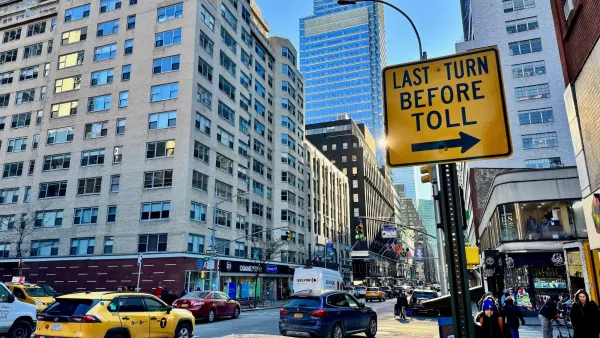
NYC Congestion Pricing Cut Air Pollution by 22% in 6 Months
The program reduced vehicle entries into the toll zone by 11 percent.

Since Zion's Shuttles Went Electric “The Smog is Gone”
Visitors to Zion National Park can enjoy the canyon via the nation’s first fully electric park shuttle system.

Planetizen Federal Action Tracker
A weekly monitor of how Trump’s orders and actions are impacting planners and planning in America.

‘Going backwards:’ Baltimore mayor, students rally against state's transit funding plan
Maryland's proposed six-year plan provides no funding for Baltimore’s BMORE bus program and reduces its road maintenance funding.

Detroit to transform waterfront with $2.2 billion investment
Developers will convert about 18 acres of unused parking lot space into civic spaces.

U.S.-Iran war may have ‘devastating’ impact on cost to warm homes
Vermont and Maine residents may see a 76% increase in the cost of warming their homes this winter.

Senate bill would ‘overhaul’ environmental permitting laws
Under the proposed act, government agencies would also not be able to suspend or rescind permits after granting them.

Exemption applications for NYC’s pied-à-terre tax see 55% success rate
The city sent nearly 40% of its initial pied-à-terre tax warnings erroneously.

FREE Course: Walkable City 1: Why Walkability?
After describing his path towards focusing on walkability as the essence of good planning, Jeff Speck marches through his five principal reasons for making more walkable places.
Reinventing Malls: Planning Alchemy—Turning Gray Fields Into Gold
The course focuses on the opportunities and imperatives that shape reinvention of mall sites.

One Hundred Miles
County of Mendocino
planning NEXT
The Architects Foundation
University of Cincinnati Online
Montrose County
Northern Illinois Transit Authority (NITA)
The Pocatello Development Authority