A change in mayoral administrations means a change at the top of Seattle's Department of Transportation. After almost four years, Peter Hahn will make way for a new director. Lynn Thompson examines his accomplishments and hints at what may be ahead.


Add Seattle to the list of cities looking for a new transportation czar. "Seattle Director of Transportation Peter Hahn resigned late Thursday after being informed by Mayor-elect Ed Murray that he wouldn’t be kept on in the new administration," reports Thompson.
On Friday, alternative transportation advocates mourned his departure: "With his lovably gruff demeanor, Hahn has been instrumental in shifting the mindset at SDOT to start viewing streets as places, 'not just pipes for cars,' as he put it."
"Hahn, the Seattle Department of Transportation (SDOT) director, has been one of the highest-profile of McGinn’s department leaders, helping the mayor implement high-priority projects such as an updated Transit Plan and advancing planning efforts for high-capacity transit corridors," notes Thompson.
How could transportation priorities change under Mayor Murray? "During the mayoral campaign, Murray said he wanted an integrated transportation system in which all the different elements, including roads, buses and light rail, would work well together," writes Thompson.
“Murray wants each mode to complement each other and not compete. Let’s talk about moving people and goods and look at the data to tell us how the modes should be prioritized,” Murray spokesman Jeff Reading said Friday.
Read the full story: Murray to replace city transportation chief, several others
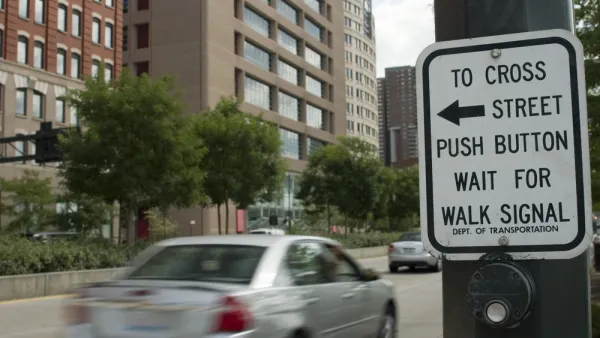
Seattle Recalculates Walk Signal Timing to Make Crossings Safer for Pedestrians
The new formulas for calculating the length of walk signals are designed to give people more time to safely cross the street.
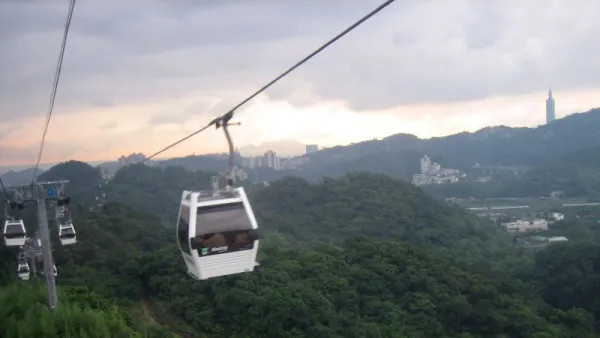
Seattle Neighborhood Groups Propose Aerial Gondola to Replace Light Rail Expansion
Impatient with the city's light rail expansion plans, some residents are looking to aerial gondolas as a new mode of public transit.

Seattle Plans to Connect Bike Network by 2020
Downtown Seattle has many disconnected bike lanes, so to make sure there are more safe routes for bikers, the city council passed a resolution that sets out a timeline to connect them.

Planetizen Federal Action Tracker
A weekly monitor of how Trump’s orders and actions are impacting planners and planning in America.

California plans to bury El Niño’s downpour
If the state plays its cards right, it may be able to store a billion acre-feet of El Niño’s water in aquifers.

Desperate measures: Advocates weigh draining Lake Powell to fill Colorado River
Draining the reservoir could reduce evaporation losses by a couple hundred thousand acre-feet.

US buildings threatened, destroyed by fires set to triple by 2060
Researchers found a high fire risk for socioeconomically vulnerable neighborhoods in the American West.

LA residents may be allowed to paint their own crosswalks
Councilwoman Katy Yaroslavsky put out a motion instructing the Los Angeles Department of Public Transportation to study the feasibility of allowing volunteers to paint crosswalks.

Dallas moves to overhaul its zoning code
The city's zoning reform will allow more multi-family and mixed-use developments.

FREE Course: Walkable City 1: Why Walkability?
After describing his path towards focusing on walkability as the essence of good planning, Jeff Speck marches through his five principal reasons for making more walkable places.
Reinventing Malls: Planning Alchemy—Turning Gray Fields Into Gold
The course focuses on the opportunities and imperatives that shape reinvention of mall sites.

City of Rosemead
Rutgers University, Edward J. Bloustein School of Planning and Public Policy
One Hundred Miles
Hunter College, City University of New York (CUNY)
The Architects Foundation
University of Cincinnati Online
City of Cambridge
Montrose County
The Pocatello Development Authority