Downtown Seattle has many disconnected bike lanes, so to make sure there are more safe routes for bikers, the city council passed a resolution that sets out a timeline to connect them.


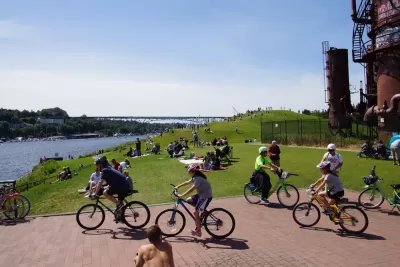
Seattle has a growing number of bike lanes, but many aren't connected. To take advantage of existing resources and to make biking safer in the city, the city council passed a resolution laying out a timeline to connect the routes by 2020.
City Councilmember Mike O’Brien introduced the resolution, arguing that linking the bike lanes would be worth the cost of constructing them. He contends that doing nothing would endanger riders and fail to leverage investments the city has already made. "The resolution, which is not legally binding (O’Brien said that the Council could pass something with more teeth if SDOT doesn’t comply), lays out specific timelines for different segments of a downtown bike network, including design and construction phases," Sarah Anne Lloyd writes for Curbed Seattle.
FULL STORY: Seattle City Council sets timeline for connected downtown bike lanes by 2020

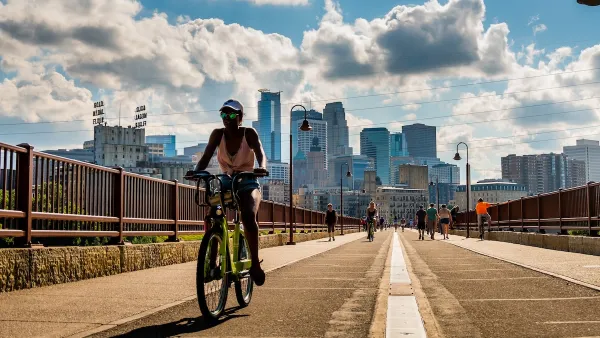
The 5 Safest Cities for Cyclists in America — and What They Have in Common
Cities with low fatality rates for people on bikes have made strong commitments to building safe, protected bike networks and supporting Complete Streets.
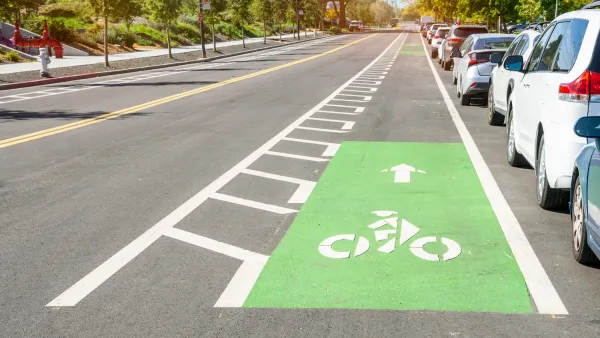
Why Bike Lanes Are Good: An Explainer for the US Transportation Secretary
Sean Duffy says there’s no evidence that bike lanes have benefits. Streetsblog — and federal agencies’ own data — beg to differ.

Transit App Adds Safety-First Bike Routes
Users of the mobile travel planning app can now prioritize safe bike infrastructure when trip planning.

Planetizen Federal Action Tracker
A weekly monitor of how Trump’s orders and actions are impacting planners and planning in America.

The state-sanctioned urbicide of Austin
People don’t kill cities. Freeways do.

US to reduce Colorado River water deliveries to Mexico
A new Colorado Treaty amendment reduces Mexico’s Colorado River water allocation by 250,000 acre feet.

5 New England states march closer to 800 megawatt wind energy project
Securing federal approval for the project may be complicated under the Trump administration, which has historically been hostile towards domestic wind power.

Baltimore to break ground on $50 million Transit Priority Project
The project will bring faster bus trips, safer streets and better bike connections to Baltimore.

Airbnb launches $250 million 'last-dollar financing' housing accelerator, makes first investment in Austin
The company will put $6.4 million towards affordable housing development in Texas’ capital.

FREE Course: Walkable City 1: Why Walkability?
After describing his path towards focusing on walkability as the essence of good planning, Jeff Speck marches through his five principal reasons for making more walkable places.
Reinventing Malls: Planning Alchemy—Turning Gray Fields Into Gold
The course focuses on the opportunities and imperatives that shape reinvention of mall sites.

Eagle County Government
Harvard University Graduate School of Design
Nashville Planning Department
The Architects Foundation
University of Cincinnati Online
The Pocatello Development Authority
The Urban Renewal Agency of the City of Pocatello
Journal of the American Planning Association