From permeable paving to green roofs, a number of cost-effective and sustainable strategies have emerged for managing water closer to where it falls, rather than directing it into pipes. SPUR explains 8 promising tools for managing stormwater.


"While 'grey' or traditional infrastructure remains an essential part of safe and effective design for flood control and urban watershed management, it is no longer the only tool in the toolbox," write Kurt Pelzer and Laura Tam. "Green infrastructure systems, by contrast, harness natural processes to infiltrate, recharge, evaporate, harvest and reuse stormwater. They use soils, topography, vegetation and engineered materials to soften the impact of urban development on water resources and ecosystems in cities. And the benefits of such systems extend beyond stormwater treatment and flood control to include carbon sequestration, recreational amenities, habitat creation and beautification."
Pelzer and Tam explain the mechanics and advantages and disadvantages of eight different tools for sinking, slowing, reusing, and moving stormwater.
Read the full story: 8 Shades of Green Infrastructure

Adapting Combined Sewer-Stormwater Systems to Climate Change
Only one coastal city has a sewer system that must handle stormwater as well as wastewater. San Francisco's efforts to adapt its combined sewer-stormwater system has put it on the vanguard of the city's climate adaptation efforts.
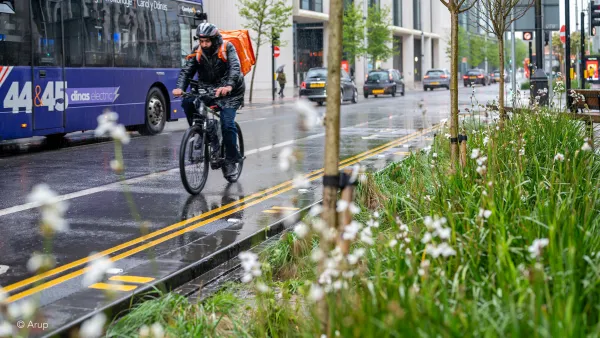
This UK city's bike lanes double as rain gardens and wildlife habitats
Cardiff is combining mobility infrastructure with greening measures to help conserve water, clean the air, and provide shade and greenery.
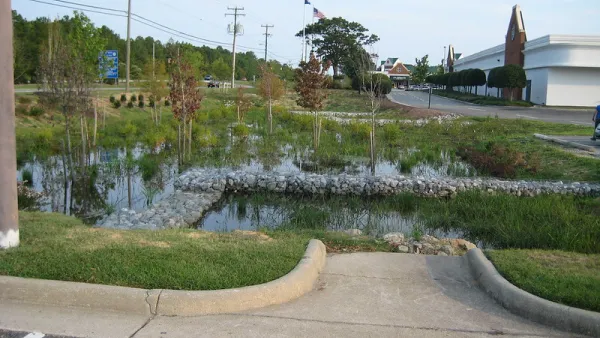
Opinion: Cities Need Green Infrastructure to Weather Future Storms
How ‘sponge cities’ can protect residents and conserve water.

Planetizen Federal Action Tracker
A weekly monitor of how Trump’s orders and actions are impacting planners and planning in America.

Data reveals that NYC’s bet on congestion pricing has paid off
After almost two years of the program, reports show positive impacts on traffic and air quality and no disruptions to parking.

Denver is solving homelessness. Why aren't the rest of us?
Since 2023, Denver's street homeless population has decreased by 64%, proving that effective tools exist to support those in need of housing.

Will sprawl save California?
California residents will vote on Proposition 45 in November, which would make it easier to build large housing developments on the outskirts of the state’s cities.

Texas suburbs are popping up around old oil wells. Some are starting to leak
Several plugged wells in Texas have failed in recent years, endangering those who unknowingly settled nearby.

This Chicago neighborhood is using planning to increase life expectancy
The Garfield Park Quality-Of-Life Plan aims to bring residents everything from easier access to fresh food to revitalized commercial corridors.

FREE Course: Walkable City 1: Why Walkability?
After describing his path towards focusing on walkability as the essence of good planning, Jeff Speck marches through his five principal reasons for making more walkable places.
Reinventing Malls: Planning Alchemy—Turning Gray Fields Into Gold
The course focuses on the opportunities and imperatives that shape reinvention of mall sites.

Rutgers University, Edward J. Bloustein School of Planning and Public Policy
One Hundred Miles
County of Mendocino
The Architects Foundation
University of Cincinnati Online
Montrose County
Northern Illinois Transit Authority (NITA)
The Pocatello Development Authority