It's the state transportation version of an hotel tax - increase a fee predominantly paid by outsiders. However, increasing and extending the toll on the West Virginia Turnpike won't be sufficient to meet all of the state's transportation needs.


Phil Kabler reports on the recommendations of Gov. Earl Ray Tomblin's Blue Ribbon Commission on Highways to increase revenue for the sagging Road Fund. According to Kabler, the current tolls on the West Virginia Turnpike, operated by the West Virginia Parkways Authority, are due to expire in 2019. The commission's proposal, modeled on a July 1st increase of Ohio Turnpike tolls that would fund statewide transportation improvements, would raise and extend the tolls for an additional 30 years in order "to issue $1 billion in road bonds".
Jason Pizatella, chief counsel to Gov. Earl Ray Tomblin and chairman of the commission, noted that out-of-state vehicles account for 76 percent of the tolls collected on the Turnpike.
"Essentially, what we have here is out-of-state drivers subsidizing one of our most heavily traveled highways," he said.
For the 24% of in-state users of the turnpike - which, according to Wikipedia, also operates as "Interstate 77 for its entire length as well as Interstate 64 from Charleston to just south of Beckley", they would be spared any rate increase for five years if they used WV Turnpike E-ZPass.
Other recommendations from the blue ribbon commission include:
- Increasing the vehicle registration, title and driver's license fees. that haven't been increased for 40 years.
- A new "$200-a-year fee on alternative-fuel vehicles, and a $100 annual fee on gas/electric hybrid vehicles" [See "Hybrid and Electric Vehicle Fees are Here to Stay, and Spreading"].
- "(D)edicating sales tax collections on purchases of auto parts, services or repairs to the state Road Fund."
While Gov. Tomblin vetoed a bill two years ago to increase registration fees, Kabler noted (in a phone call) that he was up for re-election and that he is now termed-out.
Like the Ohio Turnpike funding plan, revenue will be insufficient to meet W.Va's transportation needs. Two commissioners noted that "the funding proposals still fall far short of the $1.3 billion a year of additional funding that consultants said is needed to complete and maintain all state highway projects". [The $1 billion generated by from the turnpike tolls are generated over a 30-year period].
Finally, Kabler wrote that the commission approved studying "the possibility of replacing the gas tax with a vehicle-miles-traveled tax, as well as dedicating a portion of a proposed Marcellus Shale natural gas Future Fund to state roads", similar to the Texas measure that goes before voters next year. They rejected an increase in the state gas tax of 34.7 cents, 11th highest (PDF) in the nation. According to West Virginia Watchdog, the gas tax "based on wholesale prices" increased last year by 1.2 cents."
Contributor's note: Tolls on I-77 and I-64 that are part of the W.Va turnpike are "grandfathered". Interstates, by definition, lack tolls except for those segments that had tolls prior to becoming an interstate highway. See a Trucking Info article for more information.
Read the full story: Tolls, Fees Eyed for West Virginia Roads
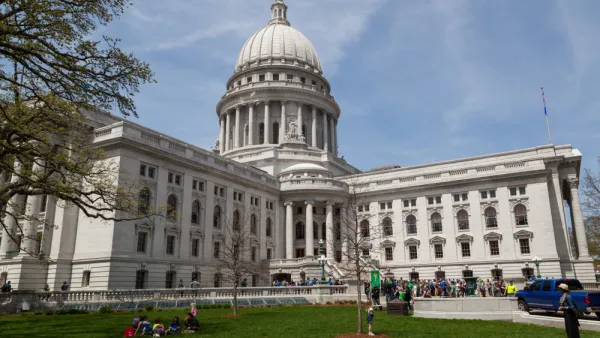
Wisconsin Republicans Unite to Support Road Tolling Over Gas Tax Hike
Assembly and Senate Republicans agree that the best way to fill the transportation funding gap is to add tolls to existing highways and bridges, yet they won't add toll infrastructure funding to the budget. A gas tax could be implemented immediately.
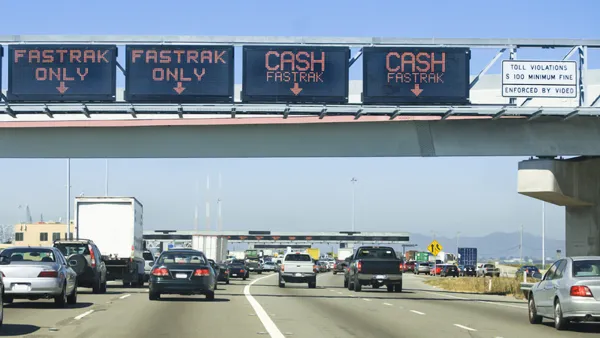
Another Reason Motorists Should Support Road Tolling
Two things motorists detest: tolls and congestion. Tolls, if effectively applied, lessen congestion, but at a high cost to drivers. However, steep tolls also provide a political incentive to "fix the bottlenecks," as shown by the 66 Express Lanes.
Restructured Gas Tax, EV Fees Proposed in Wisconsin
Gov. Scott Walker's transportation secretary is proposing a four-part tax, fee, and transfer plan to raise $750 million over the next two years. It would lower the gas tax while adding a wholesale sales tax and charge EVs and hybrids an annual fee.

Planetizen Federal Action Tracker
A weekly monitor of how Trump’s orders and actions are impacting planners and planning in America.

Eastern Nebraska is running out of electricity
Data centers and electrification are straining eastern Nebraska’s grid, throttling economic development.

Move over, LA: St. Louis gears up for Olympics, invests millions in downtown redevelopment
The Missouri city will host the 2028 Olympic soccer group stage and knockout matches.

Dallas releases zoning code overhaul to officials
The drafted overhaul is over 400 pages long.

NYC renovations for dangerous, ‘mercilessly crammed’ street delayed until 2027
Construction was supposed to begin this fall.

San Diego’s Midway Rising project gets greenlight from city council
The project looks to become the largest affordable housing development in California's history.

FREE Course: Walkable City 1: Why Walkability?
After describing his path towards focusing on walkability as the essence of good planning, Jeff Speck marches through his five principal reasons for making more walkable places.
Reinventing Malls: Planning Alchemy—Turning Gray Fields Into Gold
The course focuses on the opportunities and imperatives that shape reinvention of mall sites.

City of Rosemead
Rutgers University, Edward J. Bloustein School of Planning and Public Policy
One Hundred Miles
University of Michigan School for Environment and Sustainability (SEAS)
Hunter College, City University of New York (CUNY)
The Architects Foundation
City of Cambridge
The Pocatello Development Authority
The Urban Renewal Agency of the City of Pocatello