A joint project by technology company Esri and the city of San Francisco shows the promising confluence of open data and innovative visualization techniques.


Ariel Schwartz looks at the successful collaboration that created the San Francisco Urban Revitalization Map,
"a visualization of the city's explosive
growth, and how it has affected different neighborhoods." Created using open data that captures the past 12 years of San Francisco's growth, the animated map shows the city's transformation in vivid colors.
"The map doesn't venture outside San Francisco," says Schwartz, "but there's no reason why
other cities with open data policies can't do similar projects. For
Esri, this is just the beginning--the company is considering doing a
mapathon or maphacking event where data scientists and cartographers get
together to see what they can do with open data. 'We want to show that
web mapping is growing up,' explains [Esri's Jim] Young."
Read the full story: Visualizing San Francisco’s Urban Growth With Open Data
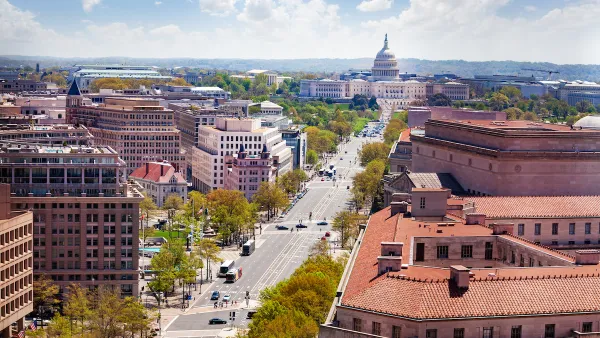
Washington DC Launches Open Data Chatbot
City data is now available literally at the public’s fingertips, no data analytics skills required.
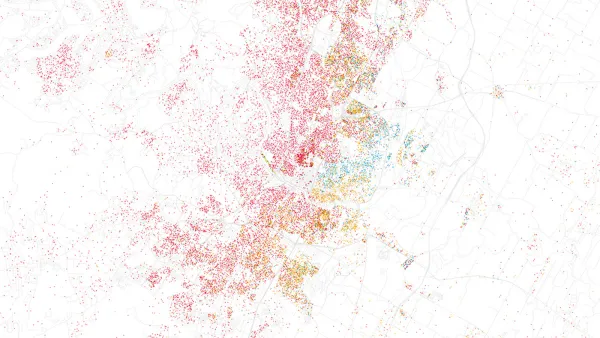
Esri App Makes Data Visualization Easy
A wealth of pre-authored policy maps lets users access data to explore public policy issues.
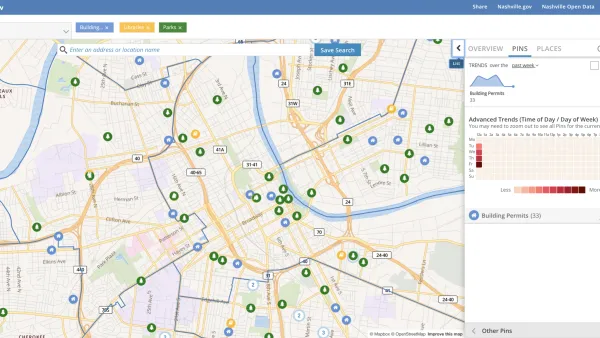
Presenting Municipal Data in an Interactive Map, Nashville Style
The city of Nashville launched the NashView interactive data map earlier this month.

Desperate measures: Advocates weigh draining Lake Powell to fill Colorado River
Draining the reservoir could reduce evaporation losses by a couple hundred thousand acre-feet.

Eastern Nebraska is running out of electricity
Data centers and electrification are straining eastern Nebraska’s grid, throttling economic development.
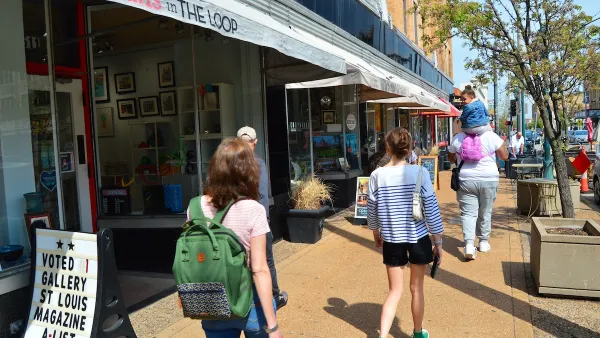
Move over, LA: St. Louis gears up for Olympics, invests millions in downtown redevelopment
The Missouri city will host the 2028 Olympic soccer group stage and knockout matches.

Mass. votes against statewide minimum lot size for single-family homes
Over 2 million residents voted on Question 7; it was decided by just over 30,000 votes.

Maryland’s $15 billion bridge project gains key approval
The Maryland Transit Authority said the project will create over 60,000 jobs and add $23 billion to the local economy.

‘No clear next steps’ for Chicago's permanent festival grounds
Eleventh Ward Ald. Nicole Lee has suggested Soldier Field as a possible location for the permanent event space.

FREE Course: Walkable City 1: Why Walkability?
After describing his path towards focusing on walkability as the essence of good planning, Jeff Speck marches through his five principal reasons for making more walkable places.
Reinventing Malls: Planning Alchemy—Turning Gray Fields Into Gold
The course focuses on the opportunities and imperatives that shape reinvention of mall sites.

City of Rosemead
Rutgers University, Edward J. Bloustein School of Planning and Public Policy
One Hundred Miles
University of Michigan School for Environment and Sustainability (SEAS)
Hunter College, City University of New York (CUNY)
The Architects Foundation
City of Cambridge
Montrose County
The Pocatello Development Authority