WA state is considering the nation's first fee on electric cars to cover road wear since they pay no gas tax, the primary funding mechanism for funding road maintenance and construction. However, critics point out that the fee is flat, not variable.


"After years of urging residents to buy fuel-efficient cars and giving them tax breaks to do it, Washington state lawmakers are considering a measure to charge them a $100 annual fee - what would be the nation's first electric car fee."
The state confronts a $5 billion deficit and declining gas tax revenues.
"Electric vehicles put just as much wear and tear on our roads as gas vehicles," said Democratic state Sen. Mary Margaret Haugen, the bill's lead sponsor. "This simply ensures that they contribute their fair share to the upkeep of our roads."
However, the flat fee approach has its critics, who point out that vehicles should pay according to their usage.
"Plug In America, a California-based electric car advocacy group, has come out against the proposed flat fee and has urged the state to consider one based on odometer readings that owners would self-report each year."
Thanks to Christopher Childs
Read the full story: Wash. Considers Annual Flat Fee for Electric Cars
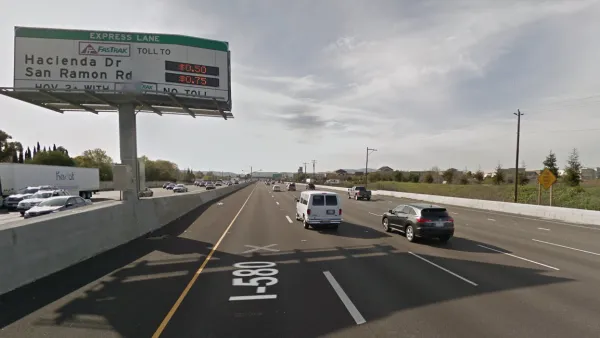
Innovative Road Funding Pilot Program Advances in California
State Sen. Scott Wiener authored legislation dubbed the Gas Tax Alternative Pilot to extend the California Road Charge Program that completed its pilot in 2017. The program takes on more significance with the 2035 sales ban of gas-powered vehicles.
Need Convincing that Vehicle-Miles-Traveled Fees Make Sense?
Eric Jaffe's July 1 article in CityLab has 18 reasons, and not one in opposition. The date is significant as it marks the official kickoff of the Oregon Road Usage Charge program.
Why does Maryland's gas tax change every year?
The state's annual gas tax update may still not be enough to keep up with changes in the transportation sector and rising project costs.

Planetizen Federal Action Tracker
A weekly monitor of how Trump’s orders and actions are impacting planners and planning in America.

Washington state to charge fee to drivers with fuel-efficient cars
Revenue from the fee will go towards supporting the state’s highways.

Study reveals best places in the U.S. for cycling, walking
New research from Streetlight Data examines bicycle and pedestrian miles per capita in the 100 largest U.S. cities by population.

Mamdani unveils his ‘most ambitious bus lane project’ so far
The city has added two new bus lanes, which it expects to speed up tens of thousands of bus riders’ commutes.

New Jersey and New York suggest $10.3 billion budget for transit
Some of the budget is dedicated to replacing Manhattan's Midtown Bus Terminal.

States split over EPA’s proposal to drop greenhouse gas rules for power plants
The proposed rule drew over 165K comments, including from officials, health and environmental groups, and private citizens.

FREE Course: Walkable City 1: Why Walkability?
After describing his path towards focusing on walkability as the essence of good planning, Jeff Speck marches through his five principal reasons for making more walkable places.
Reinventing Malls: Planning Alchemy—Turning Gray Fields Into Gold
The course focuses on the opportunities and imperatives that shape reinvention of mall sites.

City of Charlotte
City of Rosemead
Rutgers University, Edward J. Bloustein School of Planning and Public Policy
University of Michigan School for Environment and Sustainability (SEAS)
Hunter College, City University of New York (CUNY)
The Architects Foundation
University District Partnership
City of Cambridge
The Pocatello Development Authority