With “the deck stacked” against rural areas, will the great electric American road trip ever be a reality?


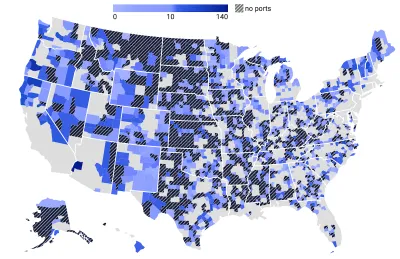
Electric car charging infrastructure is growing at a slower rate in rural parts of the United States, according to an analysis from EV charging data analytics firm Paren.
In an article in The Daily Yonder, Julia Tilton notes that “As of the first quarter of 2025, 45% of rural counties had at least one fast EV charging port installed, compared to 76.5% of metropolitan counties.” Chargers in rural areas tend to have lower utilization rates. “In order for privately funded charging stations to break even on their investment, utilization rates have to hit certain percentages, usually greater than the teens or low twenties.”
State and federal funding can offset this “emerging charging divide” by covering the cost of connecting to utilities, hardware rebates, and other incentives — actions less likely to happen under President Trump, who attempted to end the National Electric Vehicle Infrastructure (NEVI) program (the fate of the program is still pending a court decision).
Loren McDonald, chief analyst at Paren, compared EV infrastructure to electricity. In the 1930s, the federal Rural Electrification Act provided federal loans to ensure rural areas could install electrical systems. “There are some things that literally require government help, or otherwise it’s never going to happen.”
FULL STORY: We Mapped Fast EV Charging Ports Across Rural America. Here’s What We Found.

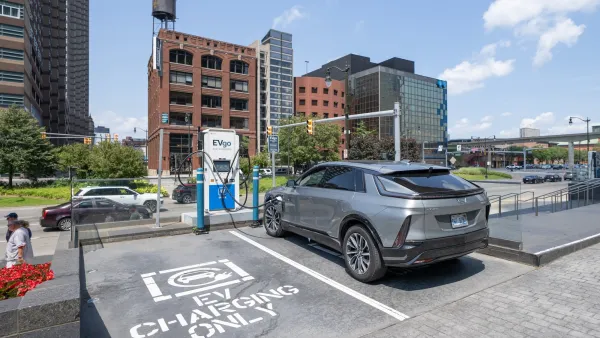
96% of federal EV charging funds from 2021-2022 are unspent
New Buy America requirements and other stipulations are slowing the process for accessing federal funds.
USDOT Wants to Require 100% American-made Materials for EV Charging Stations
The proposal comes after a judge ruled against the agency’s attempt to rescind federal funds for electric car charging projects.
DC Installing Public, Curbside EV Chargers in All Wards
DDOT hopes the pilot program will make EV charging easier and more accessible for residents in denser neighborhoods and apartment dwellers.

Planetizen Federal Action Tracker
A weekly monitor of how Trump’s orders and actions are impacting planners and planning in America.

The state-sanctioned urbicide of Austin
People don’t kill cities. Freeways do.

US to reduce Colorado River water deliveries to Mexico
A new Colorado Treaty amendment reduces Mexico’s Colorado River water allocation by 250,000 acre feet.

5 New England states march closer to 800 megawatt wind energy project
Securing federal approval for the project may be complicated under the Trump administration, which has historically been hostile towards domestic wind power.

Baltimore to break ground on $50 million Transit Priority Project
The project will bring faster bus trips, safer streets and better bike connections to Baltimore.

Airbnb launches $250 million 'last-dollar financing' housing accelerator, makes first investment in Austin
The company will put $6.4 million towards affordable housing development in Texas’ capital.

FREE Course: Walkable City 1: Why Walkability?
After describing his path towards focusing on walkability as the essence of good planning, Jeff Speck marches through his five principal reasons for making more walkable places.
Reinventing Malls: Planning Alchemy—Turning Gray Fields Into Gold
The course focuses on the opportunities and imperatives that shape reinvention of mall sites.

Eagle County Government
Harvard University Graduate School of Design
Nashville Planning Department
The Architects Foundation
University of Cincinnati Online
The Pocatello Development Authority
The Urban Renewal Agency of the City of Pocatello
Journal of the American Planning Association