The tri-state fight over water in Alabama, Georgia and Florida is still raging, but some believe a negotiated settlement is not far off. However, there is potential for the fight to go all the way to the Supreme Court.


The Economist gives the background on this decades-long fight, and why negotiations have so far failed.
"Congressional authorisation seems unlikely, since the combined delegations of Florida and Alabama are so much larger than Georgia's (and there is no guarantee that congressmen from downstate Georgia would side with their Atlanta counterparts). Negotiations are difficult too: since a failure to reach a negotiated consensus would principally harm Atlanta, Alabama and Florida have little motivation to come to the table. Sonny Perdue, Georgia's governor, asked his fellow governors in August for more talks, but all three are lame ducks and will be gone in January.
Still, a negotiated settlement appears inevitable. The alternative is escalating the fight to the Supreme Court, and there is little appetite for that; neither side has a clear road to victory."
Read the full story: Chattahoochee blues

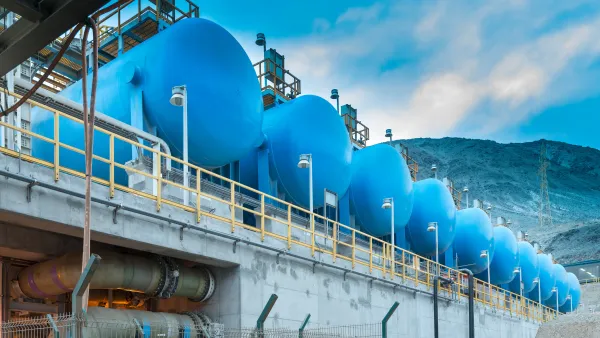
To guarantee residents fresh water, Tijuana looks to the sea
Construction on one of the largest desalination plants in Latin America will soon break ground to reduce reliance on the dwindling Colorado river.
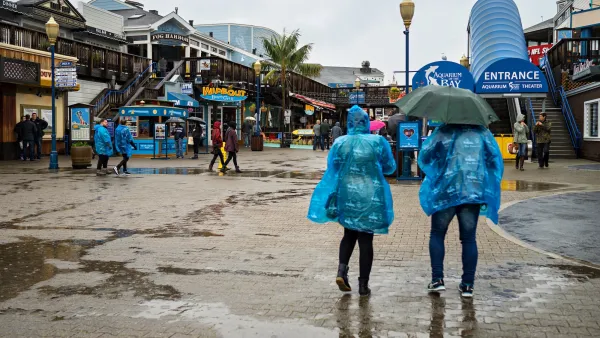
Rain gardens keep up to 99% of pollutants out of San Francisco Bay
The city's roadside rain gardens soak up stormwater and filter out dozens of harmful micropollutants.

Planetizen Federal Action Tracker
A weekly monitor of how Trump’s orders and actions are impacting planners and planning in America.

Amtrak, CN end decades-long dispute with eight-year agreement
The new operating agreement establishes an updated framework for the companies to work together, including processes to resolve disputes.

Judges permit Denver to divert 77,000 acre feet from the Colorado River for reservoir expansion
Overuse and climate change have caused the Colorado River’s water levels to plummet.

Atlanta City Council unanimously backs $3.5 billion Beltline light rail project
The resolution was drafted after Atlanta Mayor Andre Dickens pulled support for the Atlanta Streetcar extension last year.

SEPTA to bring nearby frequent transit to over 1 million new riders as part of decade-long plan
The agency's Accelerate plan will also bring frequent transit to twice the amount of jobs that are currently located near it.

NYC plants over 18,000 trees, the most new foliage in a decade
Many of the trees were planted in communities vulnerable to extreme heat.

FREE Course: Walkable City 1: Why Walkability?
After describing his path towards focusing on walkability as the essence of good planning, Jeff Speck marches through his five principal reasons for making more walkable places.
Reinventing Malls: Planning Alchemy—Turning Gray Fields Into Gold
The course focuses on the opportunities and imperatives that shape reinvention of mall sites.

City of Thousand Oaks
City of Wisconsin Rapids
Harvard University Graduate School of Design
The Architects Foundation
University of Cincinnati Online
The Pocatello Development Authority
The Urban Renewal Agency of the City of Pocatello