Cuts at a lab that monitors water quality in the Great Lakes region could harm efforts to prevent dangerous algal blooms.


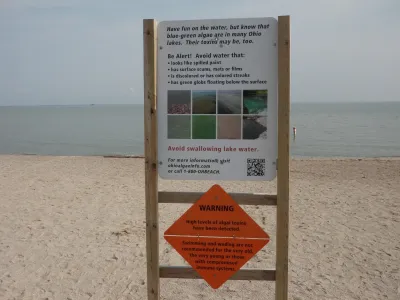
Funding cuts to the National Oceanic and Atmospheric Administration (NOAA) are impacting labs that test and monitor water quality in the Great Lakes, putting key resources for coastal communities in peril.
As Anna Clark explains in a report for ProPublica, data collected by NOAA’s Great Lakes Environmental Research Laboratory “has helped to successfully avoid a repeat of a 2014 crisis in Toledo, Ohio, when nearly half a million people were warned to not drink the water or even touch it.”
The lab now faces “serious gaps” in its monitoring of algal blooms, having lost 35 percent of its workforce since February. “An earlier document obtained by ProPublica and reported widely proposed a 74% funding cut to NOAA’s research office, home of the Great Lakes lab.”
NOAA is a target of Project 2025, the Heritage Foundation plan that has influenced much of the Trump administration’s policy decisions. Project 2025 suggests the administration should consider whether NOAA “should be dismantled and many of its functions eliminated, sent to other agencies, privatized, or placed under the control of states and territories.”
FULL STORY: Millions of People Depend on the Great Lakes’ Water Supply. Trump Decimated the Lab Protecting It.

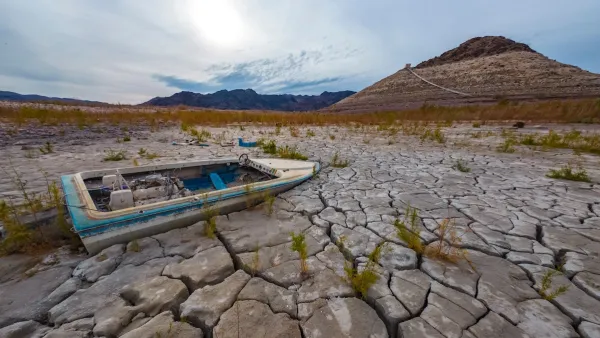
NOAA: Southwest ‘Megadrought’ to Persist
Roughly 40 percent of the 48 lower U.S. states are currently in some state of ‘abnormally dry conditions.’
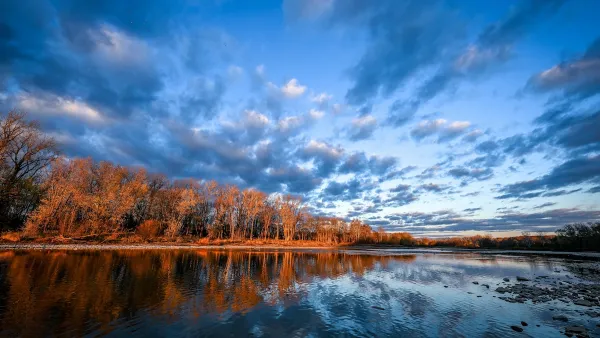
Great Lakes Water Quality Project Seeks to Restore Coastal Vegetation
A plan to restore perennial plants to agricultural land could help reduce runoff and improve water quality across the Great Lakes region.

USDOT secretary plans to pull $1.73B from 'DEI bike lanes'
The move jeopardizes dozens of road safety projects around the country.

The state-sanctioned urbicide of Austin
People don’t kill cities. Freeways do.

US to reduce Colorado River water deliveries to Mexico
A new Colorado Treaty amendment reduces Mexico’s Colorado River water allocation by 250,000 acre feet.

New Jersey’s second-largest city bans standalone data centers
Jersey City will continue to allow co-location facilities, such as those meant for research institutions that store their own data.

Amtrak not solely to blame for New Jersey commuter rail's unreliability, report finds
A new study from the Garden State Initiative found that NJ Transit’s budget grew 20% across a 4 year period, but reliability declined significantly over the same period.

EPA erases limits on planet-warming pollution from power plants
Under Monday’s plan, power plants would still have some limits on how much mercury, arsenic and other contaminants they can emit.

Phoenix announces new on-demand transit service, more frequent RAPID buses
Both new services will launch in October, and are part of Phoenix's Project Effective Access Solutions for Easing Congestion.

FREE Course: Walkable City 1: Why Walkability?
After describing his path towards focusing on walkability as the essence of good planning, Jeff Speck marches through his five principal reasons for making more walkable places.
Reinventing Malls: Planning Alchemy—Turning Gray Fields Into Gold
The course focuses on the opportunities and imperatives that shape reinvention of mall sites.

.jpg)
Eagle County Government
Harvard University Graduate School of Design
Nashville Planning Department
The Architects Foundation
University of Cincinnati Online
The Pocatello Development Authority
The Urban Renewal Agency of the City of Pocatello
Journal of the American Planning Association