Unlike at other beach resorts, the New Smyrna Beach traffic accidents happen on the beach itself. Sea turtles receive protection from the traffic allowed on the beach, but not children. On Sept. 5, a 4-year was run over fatally, the 2nd this year.


Beach front driving and parking here go back to the horse and buggy days, and even marked the first Nascar racing strips. Despite over 40 beach deaths by vehicles in the last 5 years, the town of 24,000 has no desire to change the practice, though the Volusia County Council agreed to installation of signs warning motorists of children at the entrances.
"Debates over the practice are nothing new. Over the decades, several lawsuits have been filed, either by environmentalists looking to protect sea turtles or by waterfront homeowners complaining about property rights. Turtle nests now mean that driving is prohibited in some areas."
"On weekends as far as you can see in either direction, there are thousands of cars," said Brandon McKenney, 39, whose family owns the Breakers (beachfront restaurant), which sits beside a tollbooth charging $5 for each car let onto the beach. "Where are you going to put them? They'd have to buy or build parking lots, and my taxes are high enough."
The speed limit is 10-mph. Neither motorist that ran over the two children this year were cited.
Read the full story: A Challenge to Florida Beach-Driving Tradition

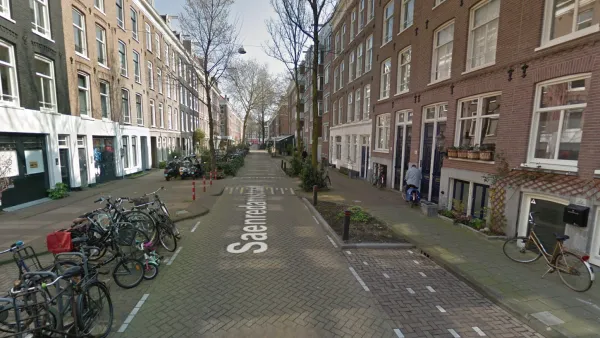
Watch: How to Remove Thousands of Parking Spaces
What the city of Amsterdam will gain by removing cars from on-street parking space.
In New Jersey, Beach Parking Located Right on the Sand
This summer, the seashore town of Wildwood is charging a fee for people with the right cars to park in a very convenient location.
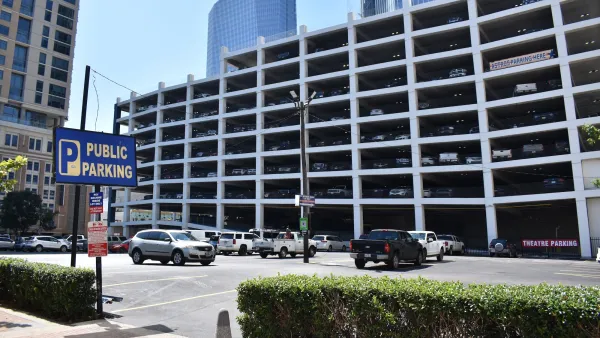
Downtown Houston parking garage will take up an entire block
The garage will connect to the Houston Center retail complex, a 4.6-million square foot office and commercial site.

Planetizen Federal Action Tracker
A weekly monitor of how Trump’s orders and actions are impacting planners and planning in America.

The state-sanctioned urbicide of Austin
People don’t kill cities. Freeways do.

US to reduce Colorado River water deliveries to Mexico
A new Colorado Treaty amendment reduces Mexico’s Colorado River water allocation by 250,000 acre feet.

Nation's most wind-powered state turns to coal as data centers increase energy demand
For the first time in decades, Iowa has increased its generation of coal power.

NYC cools commuters with city's first rain garden above a bus stop
New York City officials say the plants in the rain garden can absorb 16 gallons of rainwater during heavy storms.

Brightline West’s future may rely on $6 billion federal loan
The company has until Nov. 2 to make a $400 million equity investment into its proposed high-speed rail line.

FREE Course: Walkable City 1: Why Walkability?
After describing his path towards focusing on walkability as the essence of good planning, Jeff Speck marches through his five principal reasons for making more walkable places.
Reinventing Malls: Planning Alchemy—Turning Gray Fields Into Gold
The course focuses on the opportunities and imperatives that shape reinvention of mall sites.

Greater Baltimore Committee
Eagle County Government
Harvard University Graduate School of Design
The Architects Foundation
University of Cincinnati Online
The Pocatello Development Authority
The Urban Renewal Agency of the City of Pocatello
Journal of the American Planning Association