Neighbors are in uproar over a 71-unit affordable housing project planned on a bus-turnaround in a residential area of San Francisco because it provides only 7 parking spaces. Is smart growth planning getting ahead of itself by becoming top-down?


Almost 500 residents signed a petition opposing this project (proposed to be built on land owned by the transit district) primarily because its felt that the lack of parking would exacerbate the existing parking shortage in the neighborhood. While the 'transit-first' policy, devised in 1973, is cited as the reason for the limited parking as well the project being 100% affordable, other neighborhood planning areas allow for ratios of one parking stall for two units.
"Parking is the battleground in the transit-first world of San Francisco development. Planners and environmental activists argue that limits on parking are the only way to keep congestion from strangling city streets, while developers and many residents complain that the tough new rules reflect a hazy vision of some car-free urban utopia and not the reality of life in a major American city."
"Without limiting parking, people will choose an auto-oriented lifestyle and continue to drive," says a "Parking and Better Neighborhoods" report on the city Planning Department's website. "Traffic will continue to worsen."
Apparently, the neighbors think otherwise....
Thanks to John Holtzclaw
Read the full story: Housing plan sets off S.F. parking debate
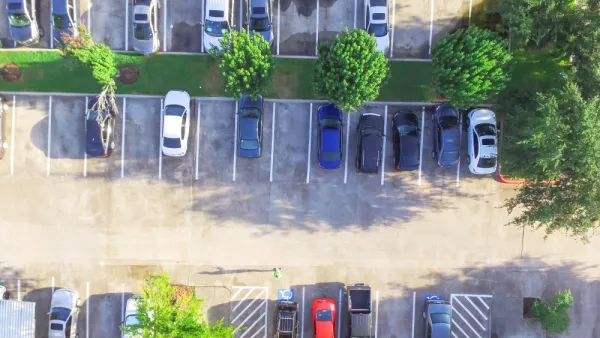
Parking Induces Driving, Study Says
New research published in the Urban Studies journal does the difficult work of connecting the dots between parking and driving.
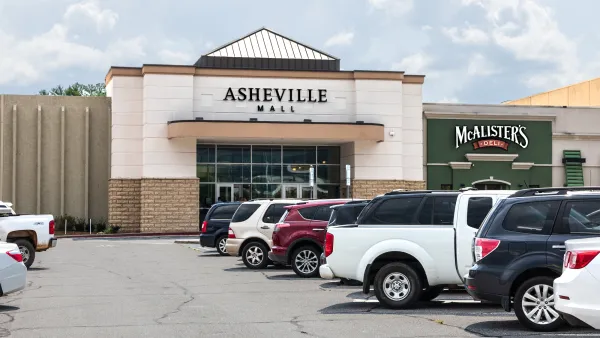
Asheville reconsiders parking minimums as surface parking eats up over a third of downtown real estate
Housing advocates say parking requirements are unnecessary and induce sprawl.
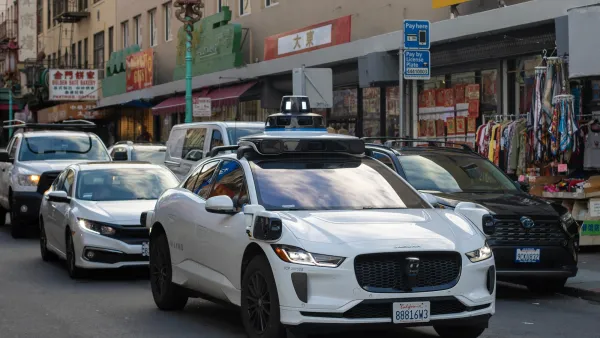
Luxury condo owners fight robotaxis in the most San Francisco conflict ever
Waymos parking in a condo building's garage are causing headaches as they get stuck and block other cars from exiting.

Planetizen Federal Action Tracker
A weekly monitor of how Trump’s orders and actions are impacting planners and planning in America.

California plans to bury El Niño’s downpour
If the state plays its cards right, it may be able to store a billion acre-feet of El Niño’s water in aquifers.

Desperate measures: Advocates weigh draining Lake Powell to fill Colorado River
Draining the reservoir could reduce evaporation losses by a couple hundred thousand acre-feet.

Los Angeles just elected an urban planner as its mayor
Transportation analysts are optimistic that Raman will be more aggressive in addressing transit issues than Bass.

Mamdani’s pied-à-terre tax survives legal challenge
A panel of judges found that the plaintiffs failed to demonstrate injury as a result of New York City's implementation of the tax.

Eastern Nebraska is running out of electricity
Data centers and electrification are straining eastern Nebraska’s grid, throttling economic development.

FREE Course: Walkable City 1: Why Walkability?
After describing his path towards focusing on walkability as the essence of good planning, Jeff Speck marches through his five principal reasons for making more walkable places.
Reinventing Malls: Planning Alchemy—Turning Gray Fields Into Gold
The course focuses on the opportunities and imperatives that shape reinvention of mall sites.

City of Rosemead
Rutgers University, Edward J. Bloustein School of Planning and Public Policy
One Hundred Miles
University of Michigan School for Environment and Sustainability (SEAS)
Hunter College, City University of New York (CUNY)
The Architects Foundation
City of Cambridge
Montrose County
The Pocatello Development Authority