The Federal Railroad Administration does not allow for the mixing of train types for safety reasons, which proved a key obstacle for Caltrain's plan for electrification. As a pilot project,they are allowing the line to utilize electric multiple units


Caltrain, the San Jose to San Francisco commuter rail line wants to use EMUs where each rail car receives power from overhead catenary wire, as opposed to an electric locomotive hauling the present rolling stock. However, current regulations prohibit the electric multiple units in the corridor. They got their wish.
"Although common in Europe, the smaller electric trains are illegal in the United States because federal officials have long considered them too small, poorly designed and unsafe. But after three years of tests and research, Caltrain will become the first railroad in the nation to use the technology after being granted a waiver.
Caltrain will essentially be a pilot operation for the trains...If successful, commuter railroads and planned high-speed rail networks throughout the nation would have access to cheaper, greener and faster trains.
The waiver allows all passenger trains, whether diesel or electric, to run on the same tracks. Freight locomotives can continue to operate in the wee hours while passenger trains are parked."
Caltrain is pinning its long-time survival on its electrification plan in order to greatly reduce its operating costs.
Thanks to Streetsblog
FULL STORY: Electric train plan granted key waiver


Despite 47% growth in ridership, Caltrain could close a third of its stations
Riders can currently travel up to 79 miles between San Francisco and Gilroy, California.
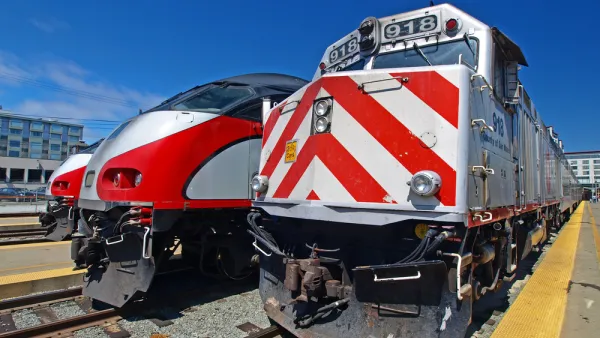
$1.25 Billion Approved for Caltrain Electrification; More Funding Needed
At their July 7 meeting, the Caltrain Joint Powers Board, a 3-county body that administers the crowded San Jose-to-San Francisco commuter rail line, unanimously approved $1.25 billion in contracts to rail and infrastructure firms for electrification.
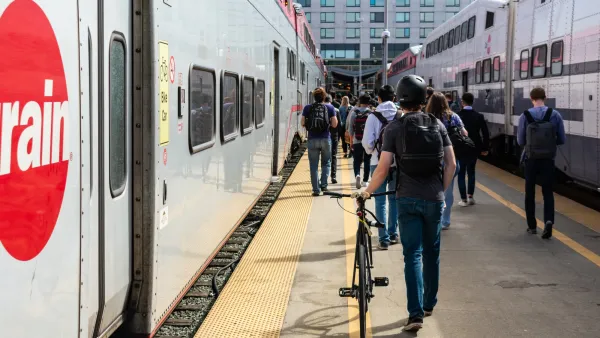
Caltrain Outlaws Cargo Bikes, Child Seats as Demand Overwhelms Bike Cars
Around 20 percent of Caltrain passengers use a bike to get to or from stations.

Planetizen Federal Action Tracker
A weekly monitor of how Trump’s orders and actions are impacting planners and planning in America.

The state-sanctioned urbicide of Austin
People don’t kill cities. Freeways do.

US to reduce Colorado River water deliveries to Mexico
A new Colorado Treaty amendment reduces Mexico’s Colorado River water allocation by 250,000 acre feet.

Guerilla urbanists are building DIY bus stop benches in Chicago
A before-and-after of one of the bus stops with a new bench. The new benches are not officially sanctioned or permitted, but the residents who placed them hope they will be the start of a network of DIY benches across the city.

Mamdani overhauls NYC's Vision Zero plan with 100 new policy goals
The overhaul aims to reduce traffic deaths and make streets safer for pedestrians, cyclists and drivers through lower speed limits, new safety infrastructure and more.

Amtrak not solely to blame for New Jersey commuter rail's unreliability, report finds
A new study from the Garden State Initiative found that NJ Transit’s budget grew 20% across a 4 year period, but reliability declined significantly over the same period.

FREE Course: Walkable City 1: Why Walkability?
After describing his path towards focusing on walkability as the essence of good planning, Jeff Speck marches through his five principal reasons for making more walkable places.
Reinventing Malls: Planning Alchemy—Turning Gray Fields Into Gold
The course focuses on the opportunities and imperatives that shape reinvention of mall sites.

Eagle County Government
Harvard University Graduate School of Design
Nashville Planning Department
The Architects Foundation
University of Cincinnati Online
The Pocatello Development Authority
The Urban Renewal Agency of the City of Pocatello
Journal of the American Planning Association