The new electric trains are running faster and more reliably, leading to strong ridership growth on the Bay Area rail system.


Ridership on Northern California’s Caltrain system was up by 41 percent from the prior year in December 2024, according to a press release from Governor Gavin Newsom’s office. Additionally, Caltrain says the system is generating and sending even more energy than expected back to the electric grid.
Caltrain launched its fully electrified (minus a segment south to Gilroy) rail system in September 2024. “Caltrain’s electrification was made possible by successful state and local partnerships, combining $714 million from the High-Speed Rail Authority with $1.7 billion from local, federal, and other state sources, including $387 million from the Transit and Intercity Rail Capital Program (TIRCP).”
The rise in ridership is attributed in part to the increased reliability of the electric trains, according to a Mercury News article. Caltrain spokesperson Dan Lieberman told the Mercury News, “It’s faster than ever before, running more service than ever before, and there’s more frequency, so there are fewer wait times.”
FULL STORY: Ridership for this critical train line is surging thanks to California’s investments in rail

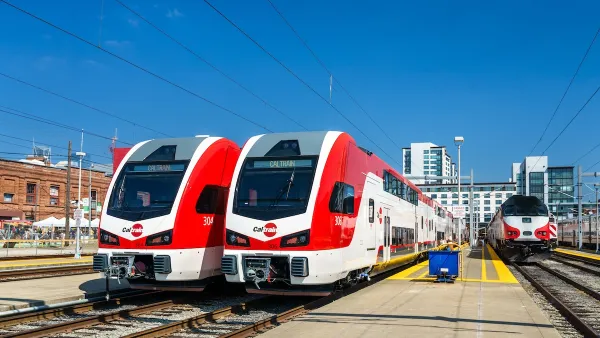
Caltrain Ridership Up 54 Percent Over October 2023
The system made the switch to faster, more modern all-electric trains in September.

Despite 47% growth in ridership, Caltrain could close a third of its stations
Riders can currently travel up to 79 miles between San Francisco and Gilroy, California.
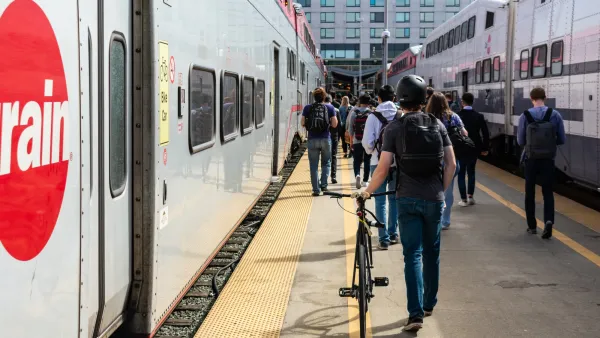
Caltrain Outlaws Cargo Bikes, Child Seats as Demand Overwhelms Bike Cars
Around 20 percent of Caltrain passengers use a bike to get to or from stations.

Planetizen Federal Action Tracker
A weekly monitor of how Trump’s orders and actions are impacting planners and planning in America.

The state-sanctioned urbicide of Austin
People don’t kill cities. Freeways do.

US to reduce Colorado River water deliveries to Mexico
A new Colorado Treaty amendment reduces Mexico’s Colorado River water allocation by 250,000 acre feet.

5 New England states march closer to 800 megawatt wind energy project
Securing federal approval for the project may be complicated under the Trump administration, which has historically been hostile towards domestic wind power.

Baltimore to break ground on $50 million Transit Priority Project
The project will bring faster bus trips, safer streets and better bike connections to Baltimore.

Airbnb launches $250 million 'last-dollar financing' housing accelerator, makes first investment in Austin
The company will put $6.4 million towards affordable housing development in Texas’ capital.

FREE Course: Walkable City 1: Why Walkability?
After describing his path towards focusing on walkability as the essence of good planning, Jeff Speck marches through his five principal reasons for making more walkable places.
Reinventing Malls: Planning Alchemy—Turning Gray Fields Into Gold
The course focuses on the opportunities and imperatives that shape reinvention of mall sites.

Eagle County Government
Harvard University Graduate School of Design
Nashville Planning Department
The Architects Foundation
University of Cincinnati Online
The Pocatello Development Authority
The Urban Renewal Agency of the City of Pocatello
Journal of the American Planning Association