Finding financing is one of the biggest challenges for transit-oriented development. How did Portland convince its lenders to get on board?


Noah Kazis looks at how Portland, Oregon overcame the resistance of lenders to new forms of development:
"Megan Gibb runs Metro's transit-oriented development program, which works with developers and offers financial incentives for TOD. The Crossings, for example, received discounted land, tax breaks, and other financial incentives from Metro. "Our whole program is to build more market-comparables," said Gibb. "The more TOD projects there are, the more it builds on itself." Each project that gets built makes the next one easier to finance."
Kazis says that cities often need to "double down" on new projects, offering considerable incentives to break through the inertia and create new models.
Thanks to Noah Kazis
Read the full story: How Portland Sold Its Banks on Walkable Development

Zoning Around Transit Stations in NYC Getting Downzoned, Study Shows
New York City's Dept. of City Planning says that it is committed to fostering transit-oriented development. But in neighborhood after neighborhood, the city is downzoning around the corner from the subway, argues Noah Kazis.
Bank Lending Habits Hurting TOD
Transit oriented development is having a hard time taking hold in Salt Lake City. Some say the parking preferences of lenders are to blame.
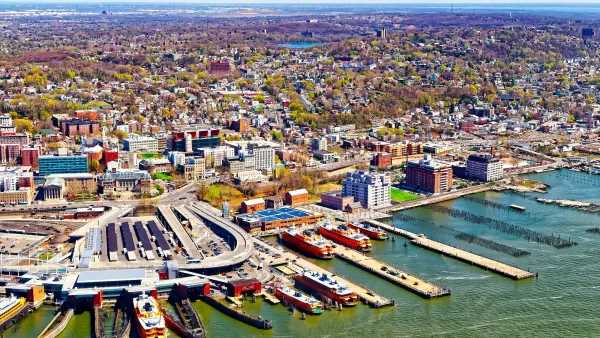
Staten Island Resists ‘City of Yes’ Zoning Reforms
One year after New York City approved major zoning changes, some residents continue to fight increased density.

Planetizen Federal Action Tracker
A weekly monitor of how Trump’s orders and actions are impacting planners and planning in America.

Chicago breaks ground on $3 billion megadevelopment
The new neighborhood, titled Foundry Park, will one day host 3,700 residences.

This MA town is drowning in its own sewage — and residents like it that way
Susan Murcott, a waste water expert, said if Carlisle didn't address their leaking sewage, the problem could turn “deadly.”

Feds to more closely scrutinize proposed Amtrak facility’s environmental impact
The Federal Railroad Administration had initially said the facility qualified for a less extensive environmental review.

Boston is hard to build housing in: its chief of planning wants to keep it that way
Chief of Planning Kairos Shen said she would not make changes to Boston’s affordability requirements for new housing, which critics say have slowed down development.

California plans to bury El Niño’s downpour
If the state plays its cards right, it may be able to store a billion acre-feet of El Niño’s water in aquifers.

FREE Course: Walkable City 1: Why Walkability?
After describing his path towards focusing on walkability as the essence of good planning, Jeff Speck marches through his five principal reasons for making more walkable places.
Reinventing Malls: Planning Alchemy—Turning Gray Fields Into Gold
The course focuses on the opportunities and imperatives that shape reinvention of mall sites.

City of Rosemead
Rutgers University, Edward J. Bloustein School of Planning and Public Policy
One Hundred Miles
Hunter College, City University of New York (CUNY)
The Architects Foundation
University of Cincinnati Online
Montrose County
The Pocatello Development Authority
The Urban Renewal Agency of the City of Pocatello