Very few large cities can claim to know how many parking spaces they have. San Francisco has counted its publicly accessibly parking supply and released the data to through Data SF website.


"No sizable city in the country, or likely the world, has been able to say with any certainty how many parking spaces it has, public or private, until now. Over the last 18 months, the San Francisco Municipal Transportation Agency (MTA) has tallied every publicly accessible parking space within city limits, including free and metered spaces on-street and every publicly accessible garage [PDF map].
The total number of spaces, as Mayor Gavin Newsom recently announced on his Youtube site, is 441,541. Of the total, over 280,000 are on-street spaces, 25,000 of which are metered. For just the on-street spaces, that is roughly the equivalent area of Golden Gate Park."
Streetsblog reports on the parking Census and give a look into how that data may be used to help solve the city's mobility and congestion issues.
Thanks to Matthew Roth
Read the full story: San Francisco Counts Its Parking Spaces in First Parking Census

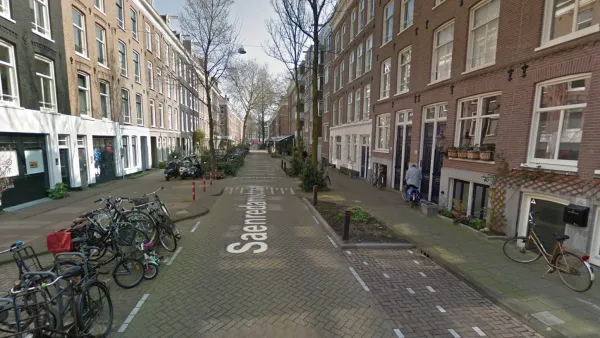
Watch: How to Remove Thousands of Parking Spaces
What the city of Amsterdam will gain by removing cars from on-street parking space.
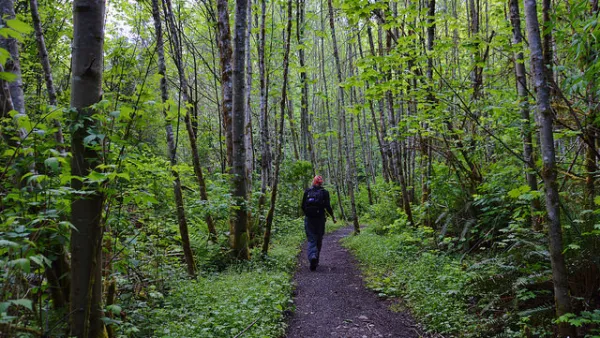
A Shuttle Ride to the Trailhead
A pilot program by King County Metro and the King County Parks Department in the state of Washington found success in 2017, and is spending the beginning of 2018 looking at options to expand.
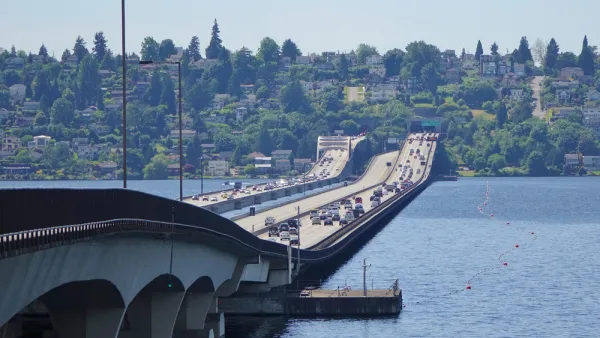
New Levels of Car Dependence Follow Seattle's Growth
By any measure, Seattle is growing at a breakneck pace. But with those new residents come cars, and all the infrastructure and land use inefficiencies they bring.

Planetizen Federal Action Tracker
A weekly monitor of how Trump’s orders and actions are impacting planners and planning in America.

California plans to bury El Niño’s downpour
If the state plays its cards right, it may be able to store a billion acre-feet of El Niño’s water in aquifers.

Chicago breaks ground on $3 billion megadevelopment
The new neighborhood, titled Foundry Park, will one day host 3,700 residences.

California High-Speed Rail Authority CEO resigns after $600,000 scandal
Under Ian Choudri, the authority used taxpayer dollars to fund first class flights and trips to nightclubs.

Want to study the Missouri River? Soon, you may need unanimous approval from 10 states
Legislation would require 10 governors’ permission to study or build projects moving water outside the basin.

Desperate measures: Advocates weigh draining Lake Powell to fill Colorado River
Draining the reservoir could reduce evaporation losses by a couple hundred thousand acre-feet.

FREE Course: Walkable City 1: Why Walkability?
After describing his path towards focusing on walkability as the essence of good planning, Jeff Speck marches through his five principal reasons for making more walkable places.
Reinventing Malls: Planning Alchemy—Turning Gray Fields Into Gold
The course focuses on the opportunities and imperatives that shape reinvention of mall sites.

City of Rosemead
Rutgers University, Edward J. Bloustein School of Planning and Public Policy
One Hundred Miles
Hunter College, City University of New York (CUNY)
The Architects Foundation
University of Cincinnati Online
City of Cambridge
Montrose County
The Pocatello Development Authority