A huge but largely under-noticed portion of public transit money goes to paratransit -- equipment and services to transport disabled people. Now, cheaper alternatives are emerging.


"[I]t's a piece of the public transportation puzzle that's often forgotten-by everyone except transit agencies and those who depend on the service. The agencies can't ignore paratransit because they're legally obliged to provide it under the federal Americans with Disabilities Act. But it's hugely expensive. Sioux Falls' cost per trip is actually lower than most-a one-way ride for a single disabled person costs more than $30 in many places. While most big cities don't spend as much proportionately as Sioux Falls, it's common for a transit agency to devote 10 percent or more of its operating budget to paratransit. And the fares normally cover less than 10 percent of the costs."
Providing the door-to-door services can be expensive, but cities across the U.S. are developing new strategies to reduce costs.
Read the full story: The Costliest Ride

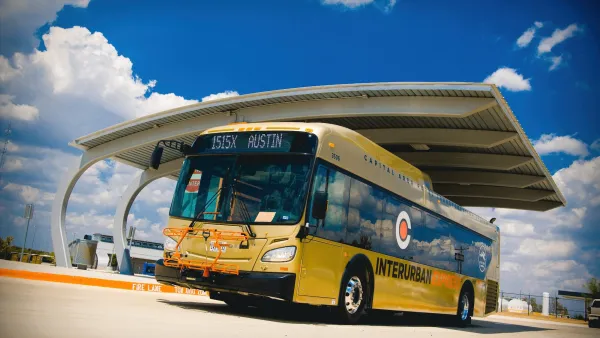
Rural Texas transit program is a 'lifeline' for seniors
A Central Texas program offers free transit to residents over 60.
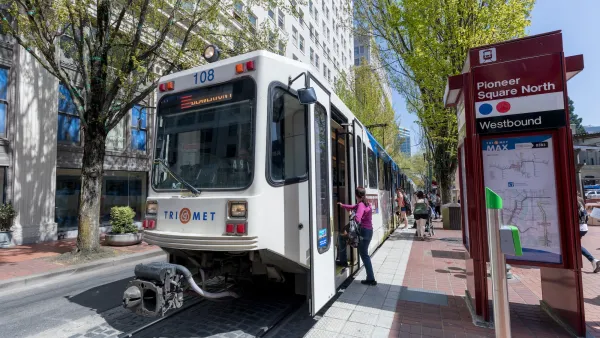
TriMet will eliminate 'Hand-to-Hand' paratransit service for half of its users
Roughly 300 Portland-area paratransit riders will lose access to a program that lets drivers escort them into their destination.
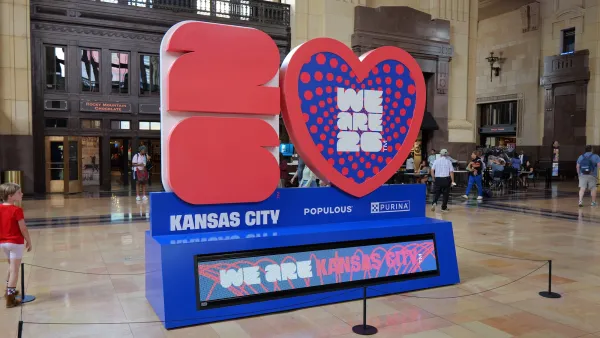
World Cup crowds offer 'stress test' for Kansas City transit planners
Transportation officials are closely monitoring travel patterns during the World Cup to understand how the city's transit system can be improved as the population grows.

Planetizen Federal Action Tracker
A weekly monitor of how Trump’s orders and actions are impacting planners and planning in America.

Amtrak, CN end decades-long dispute with eight-year agreement
The new operating agreement establishes an updated framework for the companies to work together, including processes to resolve disputes.

Judges permit Denver to divert 77,000 acre feet from the Colorado River for reservoir expansion
Overuse and climate change have caused the Colorado River’s water levels to plummet.

NYC DOT wants faster, more permanent street upgrades
The city is examining ways to build more concrete infrastructure without getting entangled in 'decades-long' projects.

'Something we’ve never seen before:' rising utility rates could strain city finances nationwide
Data centers, climate change and other factors have caused utility rates in the United States to increase by 38% since 2020.

Trump to overrule local leaders, lease millions of acres of America’s Pacific Island territories’ seafloors to mining companies
International law says that the Indigenous people of America’s territories have a right to prior and informed consent regarding projects that impact their countries.

FREE Course: Walkable City 1: Why Walkability?
After describing his path towards focusing on walkability as the essence of good planning, Jeff Speck marches through his five principal reasons for making more walkable places.
Reinventing Malls: Planning Alchemy—Turning Gray Fields Into Gold
The course focuses on the opportunities and imperatives that shape reinvention of mall sites.

Harvard University Graduate School of Design
KFH Group Inc.
Greater Baltimore Committee
The Architects Foundation
University of Cincinnati Online
The Pocatello Development Authority
The Urban Renewal Agency of the City of Pocatello