More Americans than ever will age beyond their safe ability to drive. How will they meet their mobility needs in a car-centric society?


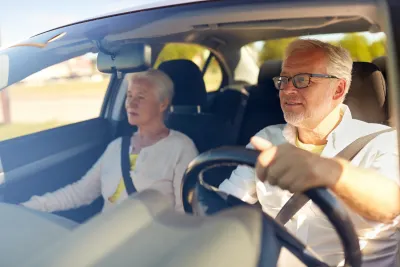
As more Americans age beyond their “driving life expectancy,” is our transportation system ready to handle their needs? In a piece for Streetsblog USA, Kea Wilson outlines the challenges highlighted by professor Greg Shill in an upcoming anthology, “Law and the 100 Year Life” for aging Americans as they navigate their environments after it is no longer safe for them to drive.
Shill calls on policymakers and planners to consider the needs of older adults with more tools than the “‘important’ but ‘incomplete’ strategy of re-designing streets and vehicles, which can all too easily get mired in years of NIMBY gridlock or take decades to ripple across the fleet.” For Shill, other interventions like stronger seat belt laws, more speeding stops, and rewards for good drivers would make an impact in the shorter term.
For Shill, the key is options. “Critically, Shill argues that many kinds of communities can evolve to serve the needs of a graying population as they lose the ability to drive, whether with walkable main streets in intergenerational small towns, bustling big-city bus systems, or even micotransit vehicles in gated communities built for seniors alone.”
FULL STORY: Is U.S. Transportation Policy Ready For The 'Silver Tsunami'?

Study: Automobile Dependency Reduces Life Satisfaction
Automobile dependency has negative implications for wellbeing. This academic study finds that relying on a car for more than 50 percent of out-of-home travel is associated with significant reductions in life satisfaction.
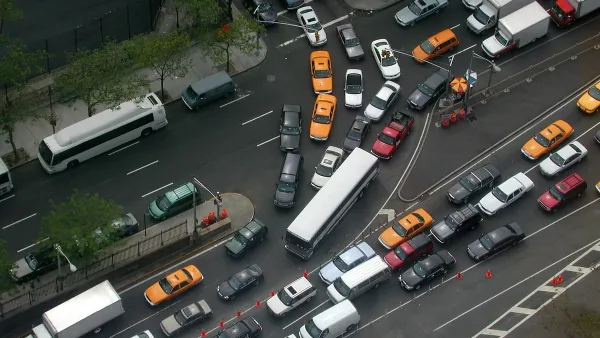
Report Highlights Economic Benefits of Reducing Car Dependence
Encouraging Americans to drive less — and supporting cities where it’s possible to do so — could save the country trillions more than just electrifying the transportation sector.
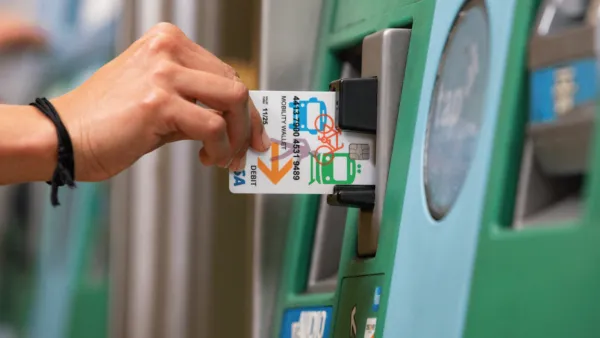
LA’s ‘Mobility Wallet’ Helps Bridge Transportation Gaps
The city gave 1,000 residents a $150 monthly transportation stipend that covered transit, bike share, ride hailing, and car rentals.

Planetizen Federal Action Tracker
A weekly monitor of how Trump’s orders and actions are impacting planners and planning in America.

The state-sanctioned urbicide of Austin
People don’t kill cities. Freeways do.

US to reduce Colorado River water deliveries to Mexico
A new Colorado Treaty amendment reduces Mexico’s Colorado River water allocation by 250,000 acre feet.

Mamdani overhauls NYC's Vision Zero plan with 100 new policy goals
The overhaul aims to reduce traffic deaths and make streets safer for pedestrians, cyclists and drivers through lower speed limits, new safety infrastructure and more.

Amtrak not solely to blame for New Jersey commuter rail's unreliability, report finds
A new study from the Garden State Initiative found that NJ Transit’s budget grew 20% across a 4 year period, but reliability declined significantly over the same period.

EPA erases limits on planet-warming pollution from power plants
Under Monday’s plan, power plants would still have some limits on how much mercury, arsenic and other contaminants they can emit.

FREE Course: Walkable City 1: Why Walkability?
After describing his path towards focusing on walkability as the essence of good planning, Jeff Speck marches through his five principal reasons for making more walkable places.
Reinventing Malls: Planning Alchemy—Turning Gray Fields Into Gold
The course focuses on the opportunities and imperatives that shape reinvention of mall sites.

Eagle County Government
Harvard University Graduate School of Design
Nashville Planning Department
The Architects Foundation
University of Cincinnati Online
The Pocatello Development Authority
The Urban Renewal Agency of the City of Pocatello
Journal of the American Planning Association