During a round table discussion between four of Toronto's most prominent architects conclude that the city's planning, deemed dysfunctional by one, falls short.


"According to Babak Eslahjou, of Core Architects, the planning process 'pits neighbourhoods against developers.' And once the subject of height is raised, he argued, backs go up and civility flies out the door. We should be talking about density, he insisted, not height.
David Pontarini of Hariri Pontarini Architects pointed out that because the planning regime is so dysfunctional, fully half his firm's projects end up at the Ontario Municipal Board, the quasi-judicial tribunal that has final say on development in the province. He would prefer a design review process, like that of Vancouver.
But as Roland Rom Colthoff of Raw Design pointed out: 'The approval process is democratic.' As he also noted, however, democracy isn't particularly effective; it's just better than any other system."
Read the full story: Current planning system a 'messy democracy'

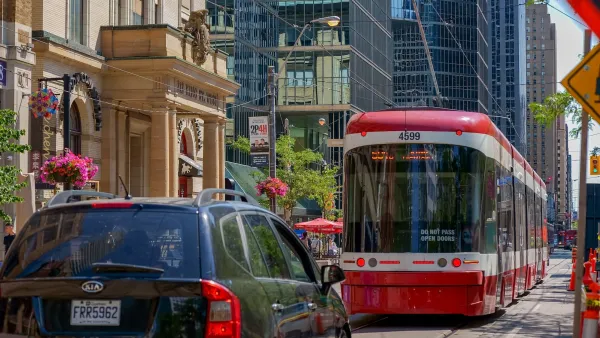
Toronto Man Beats Streetcar on Foot to Highlight Traffic Delays
Runner Mac Bauer says he hopes his project spurs the city to improve transit speed and reliability.

Ontario Judge Saves Toronto Bike Lanes
A court order bars the provincial government from removing bike lanes, saying the decision would make roads more dangerous and fail to reduce congestion.
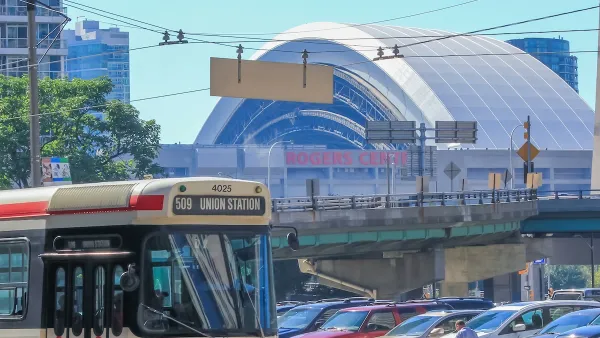
Toronto Weighs Cheaper Transit, Parking Hikes for Major Events
Special event rates would take effect during large festivals, sports games and concerts to ‘discourage driving, manage congestion and free up space for transit.”

Planetizen Federal Action Tracker
A weekly monitor of how Trump’s orders and actions are impacting planners and planning in America.

Chicago breaks ground on $3 billion megadevelopment
The new neighborhood, titled Foundry Park, will one day host 3,700 residences.

This MA town is drowning in its own sewage — and residents like it that way
Susan Murcott, a waste water expert, said if Carlisle didn't address their leaking sewage, the problem could turn “deadly.”

Feds to more closely scrutinize proposed Amtrak facility’s environmental impact
The Federal Railroad Administration had initially said the facility qualified for a less extensive environmental review.

Boston is hard to build housing in: its chief of planning wants to keep it that way
Chief of Planning Kairos Shen said she would not make changes to Boston’s affordability requirements for new housing, which critics say have slowed down development.

California plans to bury El Niño’s downpour
If the state plays its cards right, it may be able to store a billion acre-feet of El Niño’s water in aquifers.

FREE Course: Walkable City 1: Why Walkability?
After describing his path towards focusing on walkability as the essence of good planning, Jeff Speck marches through his five principal reasons for making more walkable places.
Reinventing Malls: Planning Alchemy—Turning Gray Fields Into Gold
The course focuses on the opportunities and imperatives that shape reinvention of mall sites.

City of Rosemead
Rutgers University, Edward J. Bloustein School of Planning and Public Policy
One Hundred Miles
Hunter College, City University of New York (CUNY)
The Architects Foundation
University of Cincinnati Online
Montrose County
The Pocatello Development Authority
The Urban Renewal Agency of the City of Pocatello