Catherine Tumber writes in defense of the small city, long neglected in policy and revitalization, but poised to be an excellent resource for sustainable living.


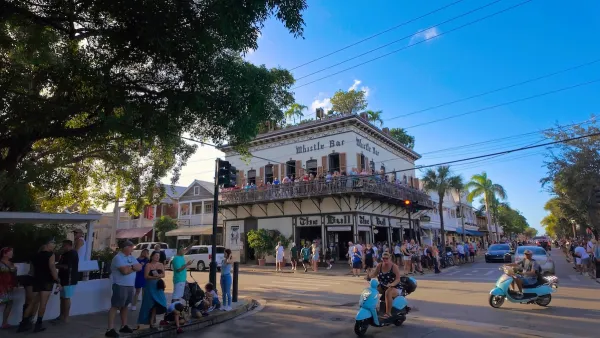
"That is too bad. Smaller cities have idiosyncratic charms of their own–worthy of sustained attention and renewal. And, fortuitously, they have a distinctive and vital role to play in the work of the new century: small cities will be critical in the move to local agriculture and the development of renewable energy industries. These tasks will almost certainly require a dramatic rethinking of land–use policy, and small cities have assets that large cities lack. Their underused or vacant industrial space and surrounding tracts of farmland make them ideal sites for sustainable land-use policies, or "smart growth."
Yet current urban planning models offer little guidance on how we might begin to make those changes. Nor, until recently, has there been a national forum that matches smaller–city renewal initiatives to national needs. The Revitalizing Older Cities Congressional Task Force, formed just last year, held its first national summit (organized by the Northeast–Midwest Institute) in mid–February. Local governments and advocates of eco–sustainability must build on this new conversation for they have a shared stake in the future."
Read the full story: Small, Green and Good


Op-ed: if transit agencies want sustainability, they should focus on their buildings
In the Washington region, buildings can account for nearly 70% of greenhouse gas emissions. If WMATA wants to be a sustainable agency, it must upgrade its developments as well as its transit.
$2 trillion in economic growth may hide in ‘micropolitan communities’
Small cities hold 39% of America’s population, but receive only 10% of U.S. venture capital investment.

Planetizen Federal Action Tracker
A weekly monitor of how Trump’s orders and actions are impacting planners and planning in America.

California plans to bury El Niño’s downpour
If the state plays its cards right, it may be able to store a billion acre-feet of El Niño’s water in aquifers.

Chicago breaks ground on $3 billion megadevelopment
The new neighborhood, titled Foundry Park, will one day host 3,700 residences.

Satanic Place Names
From streams and lakes to valleys and canyons, I mapped more than 1,000 places named after the Devil.

California High-Speed Rail Authority CEO resigns after $600,000 scandal
Under Ian Choudri, the authority used taxpayer dollars to fund first class flights and trips to nightclubs.

Want to study the Missouri River? Soon, you may need unanimous approval from 10 states
Legislation would require 10 governors’ permission to study or build projects moving water outside the basin.

FREE Course: Walkable City 1: Why Walkability?
After describing his path towards focusing on walkability as the essence of good planning, Jeff Speck marches through his five principal reasons for making more walkable places.
Reinventing Malls: Planning Alchemy—Turning Gray Fields Into Gold
The course focuses on the opportunities and imperatives that shape reinvention of mall sites.

City of Rosemead
Rutgers University, Edward J. Bloustein School of Planning and Public Policy
One Hundred Miles
Hunter College, City University of New York (CUNY)
The Architects Foundation
University of Cincinnati Online
City of Cambridge
Montrose County
The Pocatello Development Authority