In an effort to improve gas mileage, 400 drivers in Denver participated in an experiment that tracked and reported the bad driving habits -- idling, rapid accelerating and braking -- that waste fuel. Faced with the data, driving habits have changed.


"For nearly a year, every time a group of Denver drivers stomped on the gas pedal, slammed on the brake or spent an extra minute idling at the curb, the actions were recorded by a device called an accelerometer and assessed for effects on gas consumption."
"The drivers -- half of them city employees and half residents who volunteered for the constant surveillance -- were subjects in a city experiment to see whether motorists would drop aggressive driving habits when they saw how much gasoline they were burning."
"Over seven months, the 400 drivers cut their tailgating, hard braking and speeding -- and improved their gas mileage by 10%, according to results released last week."
Read the full story: The high cost of bad driving habits

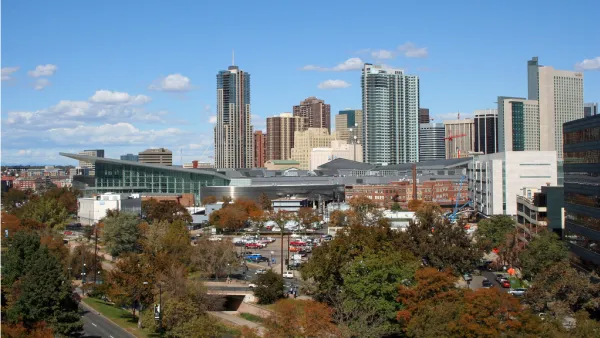
So Far, Higher Parking Fees Not Reducing Denver Traffic
The city’s efforts to reduce driving and parking downtown by raising parking fees and ticket fines seem to have little effect on driving habits.
Drive-Thru Pollution
Leaders in Arlington, Texas, near Dallas, are studying how to reduce pollution generated by idling cars at drive-thru windows.
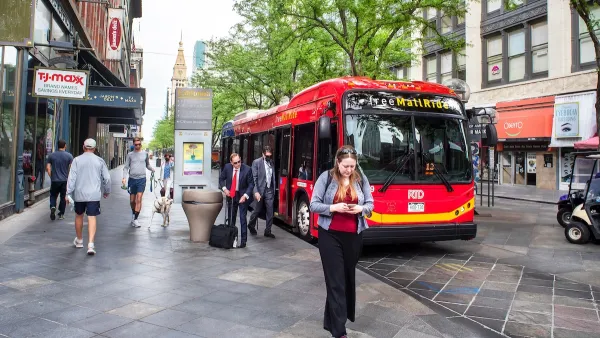
One of Denver’s busiest corridors to gain BRT
The project will span 18 miles and contain 74 bus rapid transit stations.

Planetizen Federal Action Tracker
A weekly monitor of how Trump’s orders and actions are impacting planners and planning in America.

California plans to bury El Niño’s downpour
If the state plays its cards right, it may be able to store a billion acre-feet of El Niño’s water in aquifers.

Chicago breaks ground on $3 billion megadevelopment
The new neighborhood, titled Foundry Park, will one day host 3,700 residences.

Desperate measures: Advocates weigh draining Lake Powell to fill Colorado River
Draining the reservoir could reduce evaporation losses by a couple hundred thousand acre-feet.

This road in NYC is infamously dangerous — and Mamdani can't fix it
New York City's Ocean Parkway is known for reckless driving, but the power to implement safety measures lies with the state rather than the city.

One of Denver’s busiest corridors to gain BRT
The project will span 18 miles and contain 74 bus rapid transit stations.

FREE Course: Walkable City 1: Why Walkability?
After describing his path towards focusing on walkability as the essence of good planning, Jeff Speck marches through his five principal reasons for making more walkable places.
Reinventing Malls: Planning Alchemy—Turning Gray Fields Into Gold
The course focuses on the opportunities and imperatives that shape reinvention of mall sites.

City of Rosemead
Rutgers University, Edward J. Bloustein School of Planning and Public Policy
One Hundred Miles
Hunter College, City University of New York (CUNY)
The Architects Foundation
University of Cincinnati Online
City of Cambridge
Montrose County
The Pocatello Development Authority