Whether for exercise, eco-consciousness or necessity, a growing number of suburban New York commuters are using two wheels instead of four.


"It was 7:30 a.m. on a humid Monday, and David Muller, a doctor and a suburban bike commuter, was sweating his way to work. As he rode along the George Washington Bridge and into Manhattan, Dr. Muller, 44, seemed indifferent to the low roar of rush-hour traffic. He was halfway from Teaneck - where he lives - to Mount Sinai Medical Center - where he works - and was happy to be on his bicycle.
'It's free, it's good for the environment, good for your health,' he said, beads of sweat collecting under his helmet and underneath his backpack, about 5 miles into his 12-mile ride. 'And it's a little dangerous, so you get a little thrill at the beginning and the end of each day.' He also gets satisfaction from beating cars across the bridge. 'I love it,' he said.
Five minutes later, another commuter pedaled along. Henry Minnerop, a partner in a Manhattan law firm and '70-plus' years old, said he drives each day - year round - to Englewood Cliffs, and then bikes about 12 miles into Midtown. 'I park my bike in the garage I used to use when I drove in,' he said before riding off. 'There's a gym in my office. I shower and come out looking like a lawyer.'"
FULL STORY: For the Hard Core, Two Wheels Beat Four

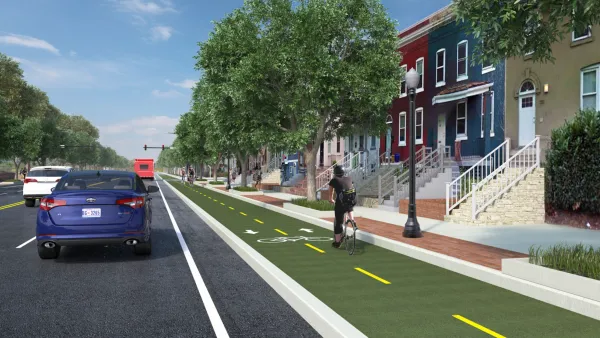
Bike Ridership Outpaces Infrastructure in D.C.
D.C.'s bike-sharing programs are gaining popularity, but the city's infrastructure might not be enough to support the new riders.
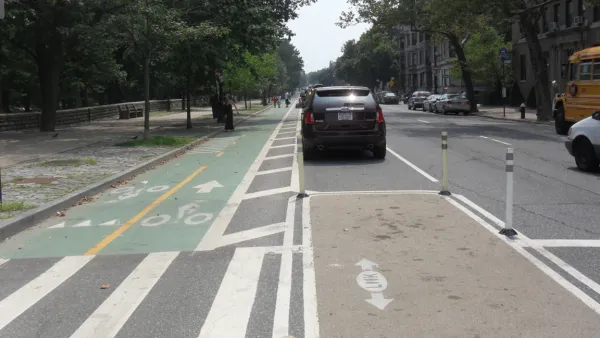
More Bicycle Infrastructure Equals More Riders
Analysis of Census data shows that, while still small in number, more Americans are taking to two-wheels as part of their daily commute.
The New Wonder Drug? Cycling, Some Advocates Say
Cycling has positive impacts both for cyclists and non-cyclists alike, helping to reduce pollution and congestion and improving health and economic factors with just two wheels.

Planetizen Federal Action Tracker
A weekly monitor of how Trump’s orders and actions are impacting planners and planning in America.

The state-sanctioned urbicide of Austin
People don’t kill cities. Freeways do.

US to reduce Colorado River water deliveries to Mexico
A new Colorado Treaty amendment reduces Mexico’s Colorado River water allocation by 250,000 acre feet.

5 New England states march closer to 800 megawatt wind energy project
Securing federal approval for the project may be complicated under the Trump administration, which has historically been hostile towards domestic wind power.

Baltimore to break ground on $50 million Transit Priority Project
The project will bring faster bus trips, safer streets and better bike connections to Baltimore.

Airbnb launches $250 million 'last-dollar financing' housing accelerator, makes first investment in Austin
The company will put $6.4 million towards affordable housing development in Texas’ capital.

FREE Course: Walkable City 1: Why Walkability?
After describing his path towards focusing on walkability as the essence of good planning, Jeff Speck marches through his five principal reasons for making more walkable places.
Reinventing Malls: Planning Alchemy—Turning Gray Fields Into Gold
The course focuses on the opportunities and imperatives that shape reinvention of mall sites.

Eagle County Government
Harvard University Graduate School of Design
Nashville Planning Department
The Architects Foundation
University of Cincinnati Online
The Pocatello Development Authority
The Urban Renewal Agency of the City of Pocatello
Journal of the American Planning Association