D.C.'s bike-sharing programs are gaining popularity, but the city's infrastructure might not be enough to support the new riders.



Increasing bike ridership is a major part of Washington, D.C.'s long-range plan to reduce urban congestion. The city has five bike-share programs, each more high-tech than the last. According to the New York Times, those programs may boost the percentage of D.C. commuters who cycle to work beyond that of Portland.
But some worry that the ridership effort may yet be thwarted by "the segmented nature of the city’s designated bicycle lanes"—disconnected and often unprotected paths. The Times identifies two main barriers to more connected infrastructure, both of which advocates say prioritize driving over alternative modes of transportation: local resistance (known as "bikelash"), and the metric for calculating traffic impacts known as Level of Service.
Read the full story: Bike-Sharing Is Flourishing in Washington. Can the City Handle It?

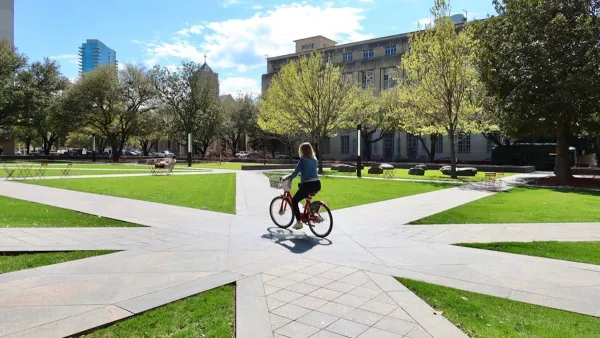
Fort Worth To Relaunch Bike Share System in January
Trinity Metro shuttered its current system at the end of November and plans to relaunch with a mostly-electric system.
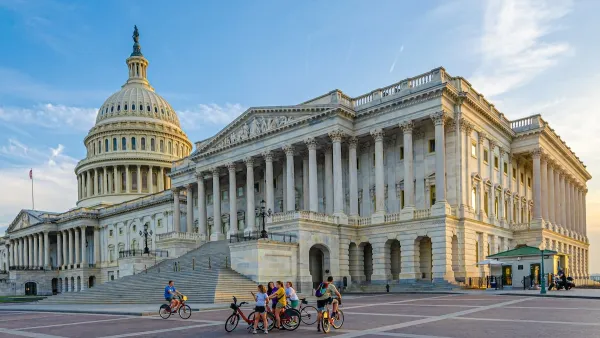
Biking Outpaces Transit Use in DC
D.C. residents and visitors take as many as 30 million trips on bikes or shared mobility, yet bike lanes cover just one quarter of one percent of the District’s streets.
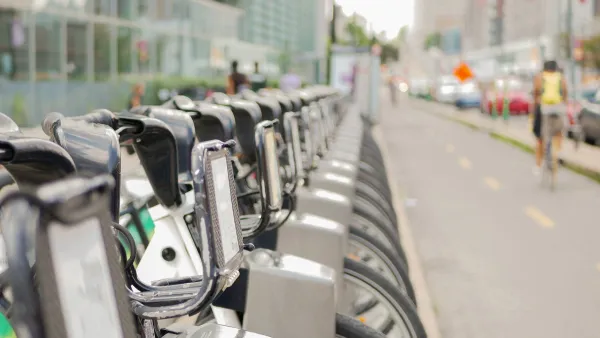
Montreal Shatters Stereotypes on Cold Weather Biking
A combination of infrastructure, connectivity, and quality equipment has made the Canadian city’s bike share system successful despite frigid winters and challenging geography.

Planetizen Federal Action Tracker
A weekly monitor of how Trump’s orders and actions are impacting planners and planning in America.

‘Going backwards:’ Baltimore mayor, students rally against state's transit funding plan
Maryland's proposed six-year plan provides no funding for Baltimore’s BMORE bus program and reduces its road maintenance funding.

Detroit to transform waterfront with $2.2 billion investment
Developers will convert about 18 acres of unused parking lot space into civic spaces.

Newsom vetoes giving CA tribes greater voice in water projects
In his veto letter, Newsom said the bill would add ‘uncertainty’ to the state’s fight to secure Californians’ water supplies.

Michigan Senate votes to revise 'lax' dam safety laws
A Bridge Michigan investigation found more than 100,000 Michigan residents live in the floodpath of a high or significant-hazard dam.

NYC’s landfills will soon overflow — expanding them invites health risks
In as little as 16 years, New York City will have to find new places to dump its trash.

FREE Course: Walkable City 1: Why Walkability?
After describing his path towards focusing on walkability as the essence of good planning, Jeff Speck marches through his five principal reasons for making more walkable places.
Reinventing Malls: Planning Alchemy—Turning Gray Fields Into Gold
The course focuses on the opportunities and imperatives that shape reinvention of mall sites.

City of Thousand Oaks
City of Wisconsin Rapids
Harvard University Graduate School of Design
The Architects Foundation
University of Cincinnati Online
Northern Illinois Transit Authority (NITA)
The Pocatello Development Authority
The Urban Renewal Agency of the City of Pocatello