New transit towns around the Bay Area's BART stations are attracting residents who value the convenience and savings of a walkable community and nearby transit.


"When DeeDee and Doug Ligibel saw the townhouse they now own in Hayward, DeeDee was taken by the old-fashioned brownstone look and the entryway's fragrant wisteria bloom.
Four years later, she's thrilled with something else: the luxury of living near a BART station, close by a downtown that includes a weekly farmers' market.
"I hardly ever drive," Ligibel said. "I love it, absolutely love it."
Ligibel is part of a small but growing slice of the Bay Area population that lives in a transit village, a term coined to describe high-density housing within easy walking distance of train and bus stops. Long touted by city planners as the cure for everything from sprawl to obesity, they're now being built across the region.
The trend is fueled by more than planning logic or consumer demand. Environmental considerations kick in as well, with the newest prod being concern over climate change. The state government has set a goal of reducing carbon levels to 1990 levels by 2020 - and many supporters say an essential tool is to emphasize compact growth patterns that make it easy for residents to leave their cars at home."
Read the full story: Transit towns a step to cut carbon footprint
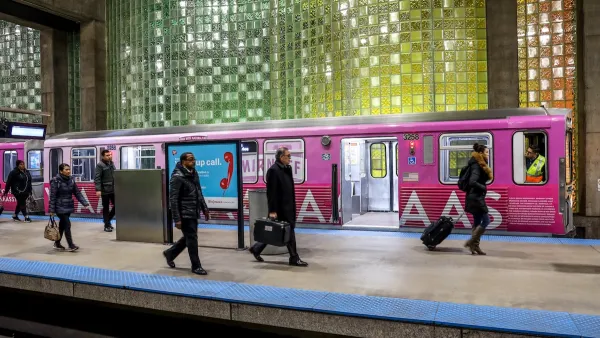
Chicago’s new transit authority has ‘unprecedented’ land development power
The Northern Illinois Transit Authority is allowed to buy and develop land for reasons unrelated to transit, a power that is fairly unique among transit authorities.

Op-ed: if transit agencies want sustainability, they should focus on their buildings
In the Washington region, buildings can account for nearly 70% of greenhouse gas emissions. If WMATA wants to be a sustainable agency, it must upgrade its developments as well as its transit.
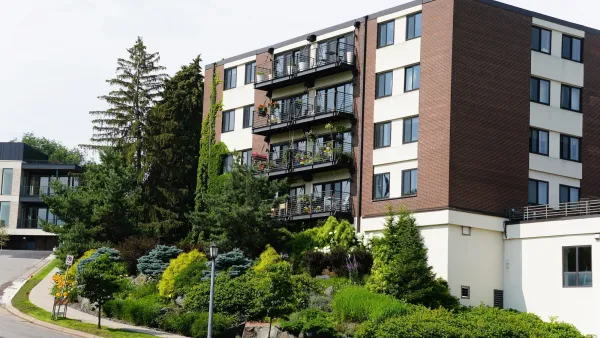
How policy changes helped Minneapolis beat rent inflation
Despite a boom in population, Minneapolis has managed to keep rents relatively steady through a combination of legislative action and private investment.

Planetizen Federal Action Tracker
A weekly monitor of how Trump’s orders and actions are impacting planners and planning in America.

California plans to bury El Niño’s downpour
If the state plays its cards right, it may be able to store a billion acre-feet of El Niño’s water in aquifers.

Desperate measures: Advocates weigh draining Lake Powell to fill Colorado River
Draining the reservoir could reduce evaporation losses by a couple hundred thousand acre-feet.

Voters choose public transit, approve $31 billion in funding
Approved projects include $101,000 for reduced-cost transit in a Michigan town and $14 billion for regional transit in the San Francisco Bay Area.

Study reveals best places in the U.S. for cycling, walking
New research from Streetlight Data examines bicycle and pedestrian miles per capita in the 100 largest U.S. cities by population.

Los Angeles just elected an urban planner as its mayor
Transportation analysts are optimistic that Raman will be more aggressive in addressing transit issues than Bass.

FREE Course: Walkable City 1: Why Walkability?
After describing his path towards focusing on walkability as the essence of good planning, Jeff Speck marches through his five principal reasons for making more walkable places.
Reinventing Malls: Planning Alchemy—Turning Gray Fields Into Gold
The course focuses on the opportunities and imperatives that shape reinvention of mall sites.

City of Rosemead
Rutgers University, Edward J. Bloustein School of Planning and Public Policy
One Hundred Miles
University of Michigan School for Environment and Sustainability (SEAS)
Hunter College, City University of New York (CUNY)
The Architects Foundation
City of Cambridge
Montrose County
The Pocatello Development Authority