Proposed state legislation would close a ‘legal gap’ that lets drivers who kill get away with few repercussions.


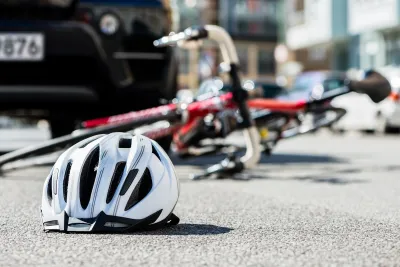
A series of bills proposed in the Michigan state legislature would protect cyclists and other vulnerable road users by strengthening the state’s laws against drivers who kill pedestrians or cyclists in crashes.
As David Horak explains in an article for Wood TV, “Under current law, drivers who kill or seriously injure a vulnerable road user are often charged with a misdemeanor, “moving violation causing death,” which carries a maximum penalty of one year in jail.” In more severe cases, charges such as second degree murder have been brought, but these are an exception, creating a significant gap between a misdemeanor with little penalty and a second-degree murder charge.
Now, a proposed package of legislation would close the legal gap by introducing “new felony charges with penalties of up to 10 years in prison and a $7,500 fine for crashes that result in a death, and up to five years or $5,000 for serious injuries.”
According to Horak, “The updated legislation also consolidates earlier versions of the bills to streamline the process and improve their chances of passage.”
Read the full story: Bills would bridge legal ‘gap’ for deadly crashes, cyclists say
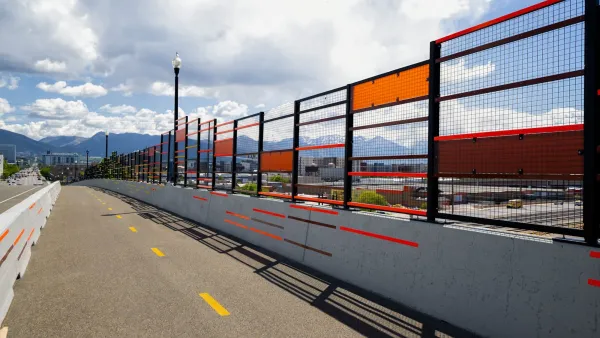
Salt Lake City opens protected bike path on viaduct trail
The 400 South Viaduct Trail features the state's longest continuous piece of public art.

Traffic deaths rise by 15% on major album release days
Enjoy those new tracks, but don't forget to keep your eyes on the road.
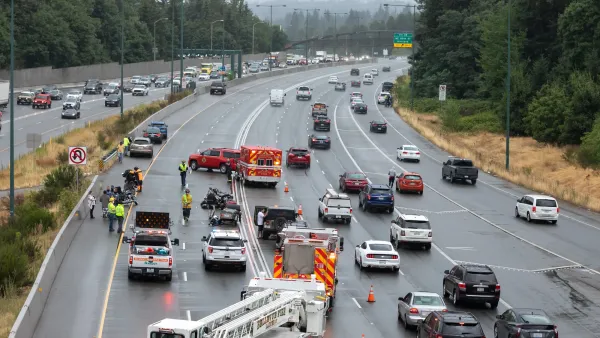
Commentary: Counting Road Deaths by VMT Minimizes the Harm and Normalizes Traffic Violence
When measured per capita, traffic fatalities in the United States far outstrip those in peer countries.

Planetizen Federal Action Tracker
A weekly monitor of how Trump’s orders and actions are impacting planners and planning in America.

California plans to bury El Niño’s downpour
If the state plays its cards right, it may be able to store a billion acre-feet of El Niño’s water in aquifers.

Desperate measures: Advocates weigh draining Lake Powell to fill Colorado River
Draining the reservoir could reduce evaporation losses by a couple hundred thousand acre-feet.

Chicago voters approve permanent festival grounds, penalty for vacant property owners
Currently, major summer and fall festivals take over public parks for weeks at a time, drawing criticism from nearby residents

NYC votes to cut outdoor dining red tape, speed up permitting
New York City also voted to allow the Department of Transportation to begin work on urgent projects before notifying elected officials.

California appears to reject Prop. 45
The proposition would have expanded the projects that qualify for a streamlined environmental review, effectively paring down the California Environmental Quality Act.

FREE Course: Walkable City 1: Why Walkability?
After describing his path towards focusing on walkability as the essence of good planning, Jeff Speck marches through his five principal reasons for making more walkable places.
Reinventing Malls: Planning Alchemy—Turning Gray Fields Into Gold
The course focuses on the opportunities and imperatives that shape reinvention of mall sites.

City of Rosemead
Rutgers University, Edward J. Bloustein School of Planning and Public Policy
One Hundred Miles
Hunter College, City University of New York (CUNY)
The Architects Foundation
University of Cincinnati Online
City of Cambridge
Montrose County
The Pocatello Development Authority