The plan would allocate 0.5 percent of the general fund toward mobility subsidies for low-income households.


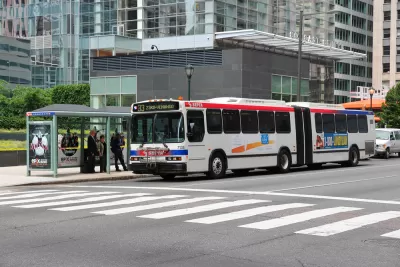
In an interview with Streetsblog USA editor Kea Wilson, Philadelphia Councilmember-at-large Nicolas O’Rourke describes his plan to expand the city’s Zero-Fare transit program beyond its current scope.
For O’Rourke, “as a member of the Working Families Party and a pastor, he sees investing in mobility for the poorest among us as both a moral and political must.” The councilmember supports a proposal called the Philadelphia Transit Access Fund, introduced today, that would set aside 0.5 percent of the city’s general fund for transit access for the lowest-income residents. Along with the 0.5 percent already set aside for the city’s housing trust fund, this secure revenue source would provide housing and mobility security for thousands of low-income Philadelphians.
O’Rourke urges city and state leaders to take initiative and rely less on federal funding to achieve their goals. “I think it is high time for states and cities to see what their rainy day funds are looking like, to look at what their reserves are, and to begin to try to govern a way that does not rely on a ruling party that, without logic or reason — other than, maybe, cruelty and domination — has no desire to support those who are in need of the most support.”
Read the full story: This Philadelphia Council Member Wants To Stand Up to Trump By Investing in Mobility For the Poorest

Report: Reduced Fare Transit Programs Reach Less Than Half of Eligible Riders
Discount programs designed to help low-income transit riders have participation rates that rarely hit 50%, signaling a lack of effective outreach to eligible households.
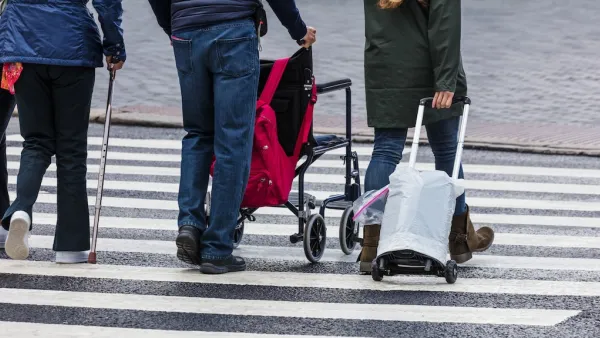
‘Week Without Driving’ Highlights Needs of Non-Drivers
The event encourages public officials to use their local public transit and engage with the people who rely on it every day.
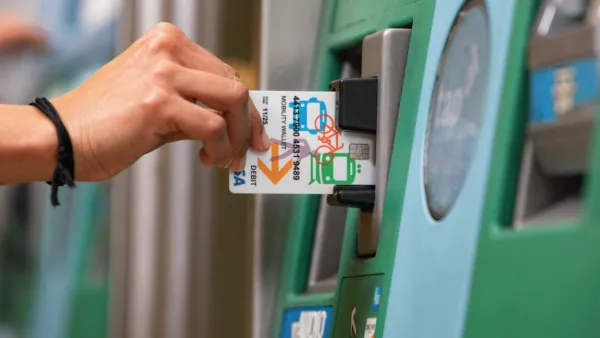
LA’s ‘Mobility Wallet’ Helps Bridge Transportation Gaps
The city gave 1,000 residents a $150 monthly transportation stipend that covered transit, bike share, ride hailing, and car rentals.

Planetizen Federal Action Tracker
A weekly monitor of how Trump’s orders and actions are impacting planners and planning in America.

California plans to bury El Niño’s downpour
If the state plays its cards right, it may be able to store a billion acre-feet of El Niño’s water in aquifers.

Chicago breaks ground on $3 billion megadevelopment
The new neighborhood, titled Foundry Park, will one day host 3,700 residences.

California High-Speed Rail Authority CEO resigns after $600,000 scandal
Under Ian Choudri, the authority used taxpayer dollars to fund first class flights and trips to nightclubs.

Want to study the Missouri River? Soon, you may need unanimous approval from 10 states
Legislation would require 10 governors’ permission to study or build projects moving water outside the basin.

Desperate measures: Advocates weigh draining Lake Powell to fill Colorado River
Draining the reservoir could reduce evaporation losses by a couple hundred thousand acre-feet.

FREE Course: Walkable City 1: Why Walkability?
After describing his path towards focusing on walkability as the essence of good planning, Jeff Speck marches through his five principal reasons for making more walkable places.
Reinventing Malls: Planning Alchemy—Turning Gray Fields Into Gold
The course focuses on the opportunities and imperatives that shape reinvention of mall sites.

City of Rosemead
Rutgers University, Edward J. Bloustein School of Planning and Public Policy
One Hundred Miles
Hunter College, City University of New York (CUNY)
The Architects Foundation
University of Cincinnati Online
City of Cambridge
Montrose County
The Pocatello Development Authority